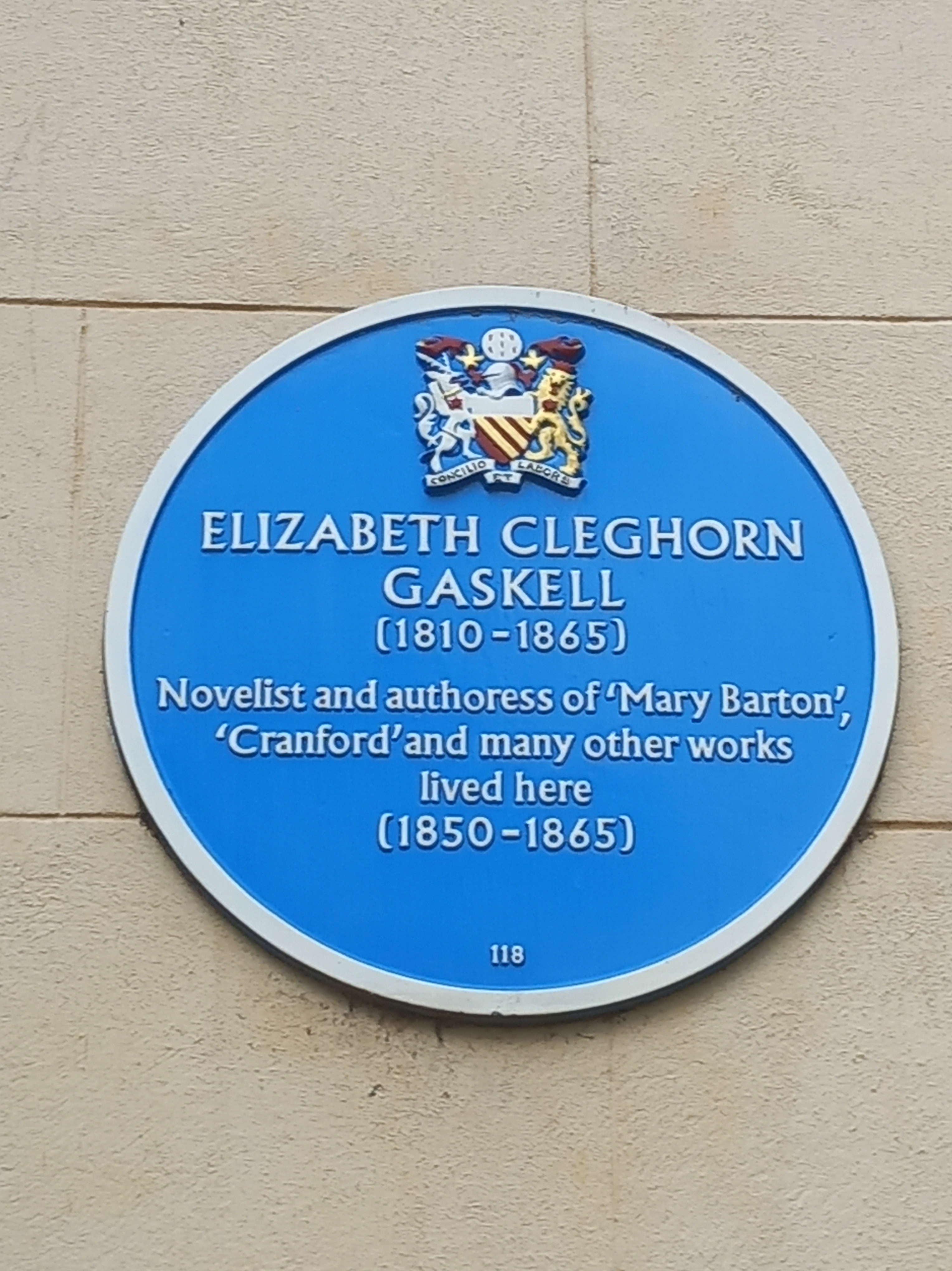
Elizabeth Gaskell was a Victorian novelist who wrote on social issues of the day, often with a particular focus on the plight of the poor. Her house at Plymouth Grove in Manchester is now a museum and a visit to it gives a real insight into Elizabeth and her husband William’s living conditions, and their philanthropic ideals.
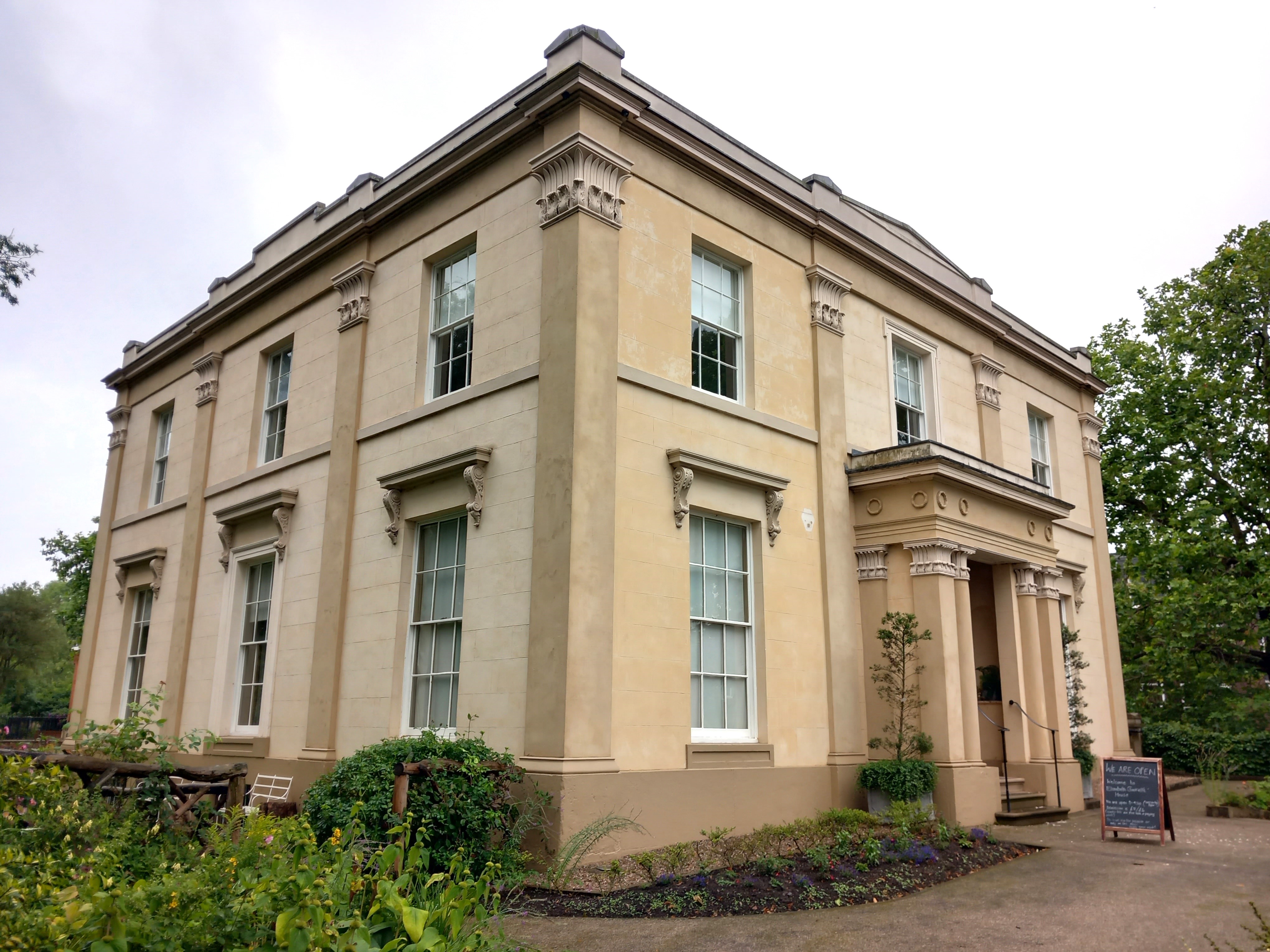
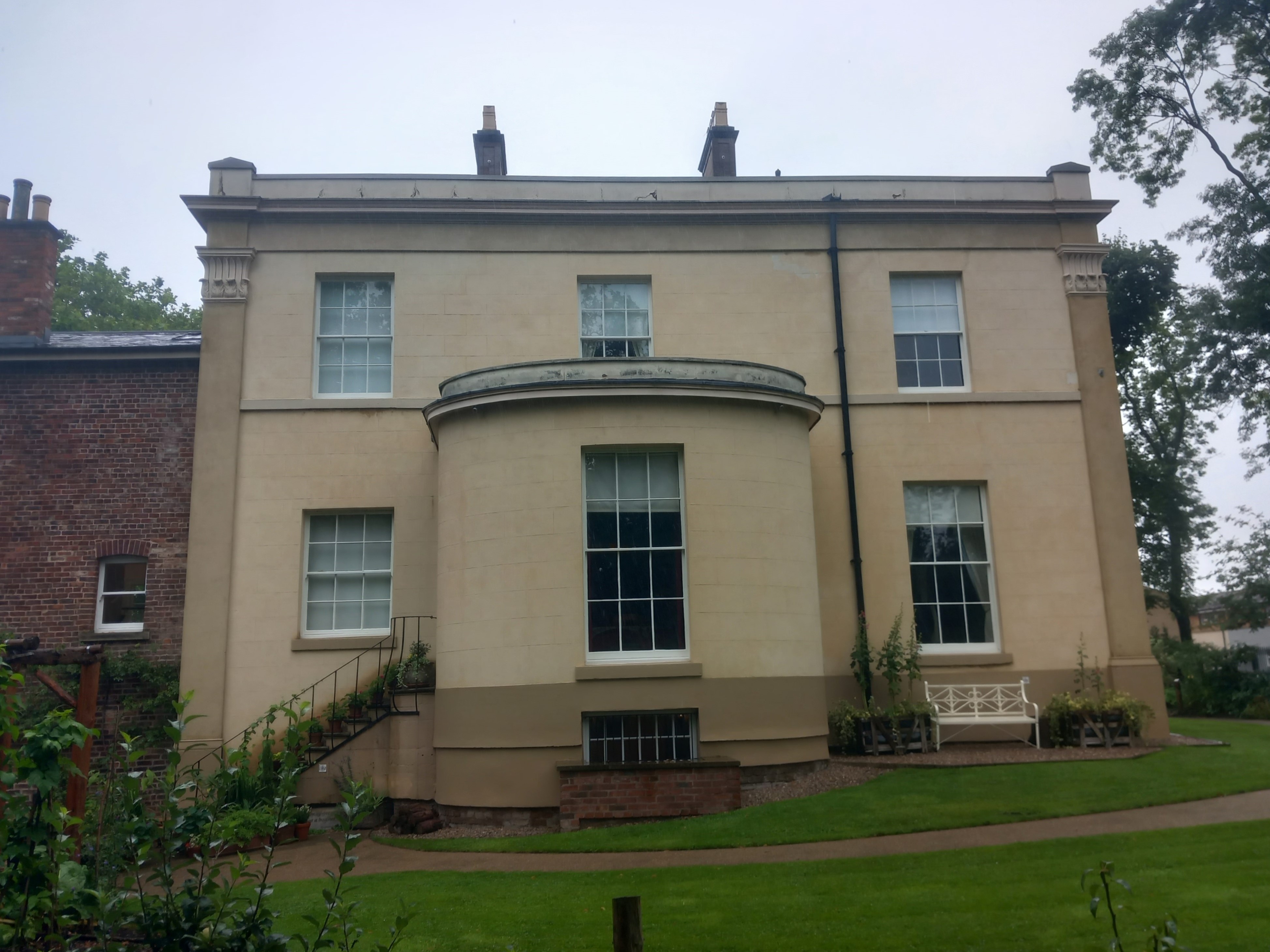
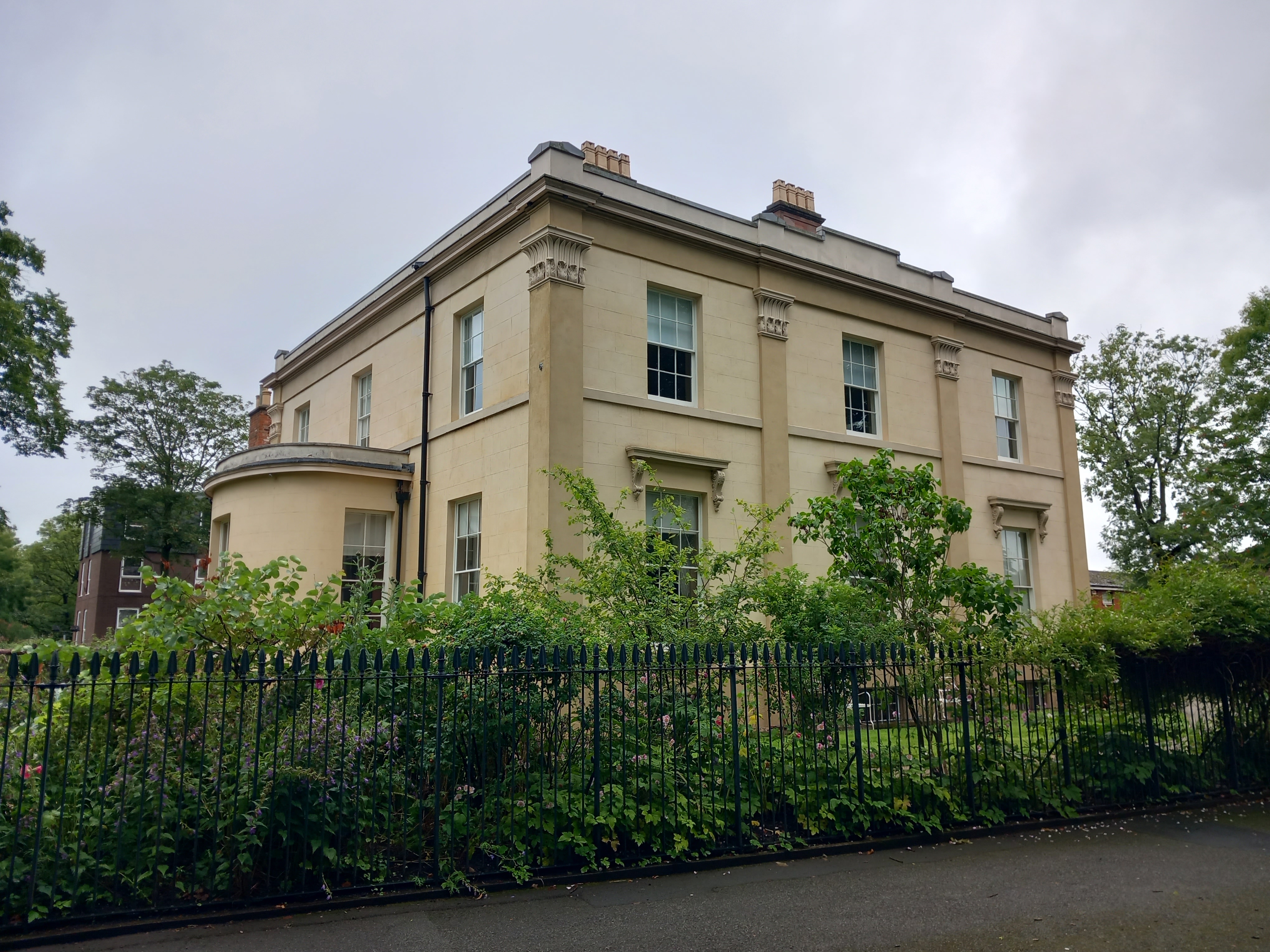
The house was constructed in 1838 as part of a newly developed area, planned by Manchester architect Richard Lane. Around a dozen mansions were built, at a convenient distance from the city, far removed from the pollution of the factories. The houses were set in a tree-lined street, each home with its own grounds, looking out onto fields. Wealthy cotton merchants and factory owners could afford these houses. At the time of the Gaskells moving in, it cost half of husband William’s wage as a minister. Elizabeth described the property as “A large cheerful, airy house, quite out of Manchester smoke”.
Fredrich Engels lived close by to the Gaskells in nearby Dover Street. In 1845, he published the Condition of the Working Class in England, a book inspired in part from his direct contact with the accommodation mill workers were forced to live in. In contrast to the leafy streets and country fields around Plymouth Grove, he described the working class part of the city as “Hell upon Earth. Everything here arouses horror and indignation.” Lack of clean water, poor sanitation and basement dwellings with little light and a dirt floor were common for many.
The Plymouth Grove house had six bedrooms for the family, and two attic rooms for servants, with a further bedroom over the coach house. In 1850, when Elizabeth and William moved in with their daughters, Marianne was age 15, Meta 13, Florence 7 and Julia 3. The Gaskells had five servants, and they tended to recruit from families that they already knew, such as the Prestons of Skelworth Bridge in Westmorland. It was at the Preston’s farmhouse (which also served as a guest house) that Elizabeth had first met Wordsworth. William Preston worked for the Gaskell’s as an ‘outdoorsman’ and slept in the room above the coach house. Two of his sisters, Mary and Margaret, were also employed by the family, with Margaret being later promoted from housemaid to cook. William married another of the Gaskell’s servants, a Margaret Huddlestone from Elterwater, Westmorland.
Ann Hearn was Elizabeth’s maid, and remained in service with the family for over 50 years. Elizabeth was heavily reliant on her, and when the family travelled abroad Ann would accompany them. When she went home for Christmas one year, her first time in 12 years, Elizabeth wrote that the house was “all bustle and confusion”.
Elizabeth Gaskell’s Novels
Elizabeth knew how privileged her position was to have such a home, and felt guilty “while so many are wanting”. At the house, she would write most of her books including Mary Barton, North and South, and Cranford, along with a biography of her friend Charlotte Bronte. It was through her novels that she was able to bring to light the difficult conditions of the working poor and unemployed. As she wrote to a friend “I can tell stories better than any other way of expressing myself”.
In Mary Barton, she wrote in the preface that her inspiration came from her experience of being in the streets of Manchester each day. She described the terrible conditions of the cellar dwellers, recession, unemployment, and described the cholera epidemic that hit Manchester. In North and South she wrote of conflict between factory owners and workers, and of the dangerous conditions in the mills. She was able to draw attention to the need to have safety guards on machinery, and the long-term effect of breathing in airborne fibres that caused respiratory diseases. Her use of local dialect gave the characters a realness, and William would write explanatory notes on dialect words in the novels for the general reader.
Unitarian and Philanthropic Ideals
William was a Unitarian Minister at Cross Street Chapel. He played a particularly important role in helping the working classes and raising educational standards within the city. Unitarians had a track record for being involved in many social causes. These included improving workers’ rights, womens’ rights, prison reform and the temperance movement. In Manchester they had set up the Mechanics Institute, which William became involved in. He clearly valued education highly, becoming chairman of the Portico Library as well as being Professor of English and Literature at Manchester New College. He also taught at the Working Men’s College and Owen’s College. William founded the Unitarian Home Missionary Board in the city, which enabled working class people to train to be ministers. He published the Unitarian Herald, a religious newspaper for the working class
Elizabeth taught at Sunday school for poorer families. During the Lancashire Cotton Famine she ran a sewing school for women, in which they earned a small wage and received a meal. Their babies and young children were provided with fresh milk. Elizabeth also worked on welfare committees and with groups that helped mill workers find alternative work. As her fame grew, she donated to worthy causes, and encouraged her wealthy acquaintances, such as Charles Dickens, to do the same.
The Gaskells and the Arts
The Gaskells were a music-loving family. William both composed and translated hymns. Elizabeth and her daughters played piano and sang. The family were active concert and opera goers. They regularly attended Charles Halle’s concerts, first at the Gentleman’s Concert Hall and then at Free Trade Hall. Halle gave Elizabeth’s daughter Marianne regular piano lessons.
Daughters Meta and Julia became accomplished water colour painters. Meta would copy pictures in exhibitions, and would always carry a sketch book on her travels abroad. It was through her interest that the family met the art critic and philanthropist John Ruskin, and the famed Pre-Raphaelite painter Dante Gabriel Rossetti.
Elizabeth had a firm friendship with fellow novelist Charlotte Bronte who described Elizabeth as “kind, clever, animated and unaffected”. Charlotte stayed three times at the house, and on the second occasion she clearly enjoyed it, writing “The week I spent in Manchester has impressed me as the very brightest and healthiest I have known for the last five years”. Her last visit was in 1854, just before her marriage to Arthur Bells Nicholls, the curate of her father, Patrick Bronte. Her new husband disapproved of the Gaskell’s Unitarianism, and it is likely that this became a block on their relationship. When Charlotte died, Elizabeth wrote the first biography of her, which is still in print today. She came under the threat of libel for her description of the cruelties Charlotte and her sisters suffered while at boarding school in Cowan Bridge.
Elizabeth and her daughters were well also well travelled. Early on in their marriage, William went to Belgium, France and Germany with Elizabeth, but later he preferred to stay at home, just venturing as far as the Lake District or Scotland. Elizabeth and her daughters made trips to France to visit Normandy, Brittany, Paris and in Italy they saw Rome, Florence, Perugia, Venice and Milan. Daughters Meta and Julia would continue these trips after their parents died, bringing back artworks for display in their home, and to donate to local institutions.
After Elizabeth and William
In 1865 Elizabeth died, with her novel Wives and Daughters almost finished. William died 19 years later. After their father’s death, Meta and Julia redecorated the house. They displayed antique furniture and ornaments, and Dutch furniture that was fashionable in the 1880s and 1890s. The house became very well known for the sisters’ dinner parties. The Manchester Guardian described it as “a place of light and warmth for the hearts and minds” of their guests. Another contemporary description stated that the drawing room was the “nearest possible approach to an absolute centre of the social life of educated Manchester”.
Meta and Julia believed that art and culture could ameliorate some of the negative effects of industrialisation on people’s lives. They donated to the Manchester College of Music, Whitworth Art Gallery, Halle Concert Society and Owen College (which would later become the University of Manchester). Meta gave a substantial sum to Manchester Corporation to set up Swinton Grove, a public park, opposite the house. She was also one of the founders of Manchester High School for Girls. Julia supported Manchester Social Club along with Salford Sick Poor and Private Nursing Institution. She was a founder member of Manchester and Salford Women’s Trade Union Council, working alongside Christabel Pankhurst.
Julia died in 1908, and Meta in 1913. Following Meta’s death, there was a campaign to preserve the house for the public. The campaign failed, and the house and its entire contents were put up for sale. George H Larmuth and Sons presided over the auction, and their sale catalogue advertised: “Furniture, linen, glass, china, brass, cutlery, silver and jewellery, prints, etchings, engravings, water colours, drawing etc and about 4000 volumes of books including many rare and valuable First Editions of the works of Mrs Gaskell, Charlotte Bronte, George Elliot etc, etc”. It was a six day sale, the first day starting with the rather humble “quantity of plant pots, plants in top greenhouse, garden utensils, pig trough, stable utensils, buckets etc, pair of steps, shears, rake syringe, scythe, ladder, oil drum”. Tuesday focused on the Drawing Room which listed “blue felting on the floor, Persian mats, handsome pierced brass fender, brass ashpan, oak coal box, pair of bellows”.
The house was sold to Charles William Harper, a manufacturing chemist from nearby Stockport Road. He brought his large family to the home, where they remained for many years. In 1969, Lillian Harper sold the house to the University of Manchester as accommodation for their International Society. Rooms were converted into residences for students coming from around the world to study at the university. The outside was painted bright pink, leading it to be dubbed the ‘Pink House’ for many years.
In 1998, Manchester Historic Building Trust formed with the aim of buying the house. They managed to do this in 2004. The trust then set about applying for money, and successfully gained grants from Heritage Lottery and English Heritage. This was used to pay for the renovations of the premises. Investigations into the fabric of the building gave clues as to the paint colours and wallpaper patterns used during Elizabeth’s time. Some of the ornaments donated by her daughters to local institutions were returned to the house. Elizabeth’s correspondence gave further clues, so that similar pieces to those that the family originally owned could be sourced. After a decade of work, the house was opened to the public on October 2014.
Visiting the House Today
There are a good number of rooms and the garden that visitors can see today, with the ground floor set out as it would have been when the Gaskells lived there. The morning room was used for breakfast, facing south-east for the light to facilitate activities at the start of the day. It was used at first by the Gaskells as a school room for their children. Here they were taught by their parents and tutors. Elizabeth wrote in 1852 “Mr Gunton is going to give Meta two lessons a week till the holidays…Two afternoons she is to draw; & she is reading Alferi (pretty difficult Italian) with Rosa, & beginning mathematics with Papa”.
When the Gaskells first moved in, they left the Drawing Room unfurnished, but as their money situation improved they installed a semi-grand Brandwood piano. The large windows afforded light for Elizabeth to write while seated at a round table. While the light may have been good, the room did not offer her much in the way of privacy for her writing. She would be frequently be interrupted by her children, the house servants, or visitors calling.
The Dining Room adjoined the Drawing Room. It had a large table, with room enough for 20 guests. Elizabeth would stand at one end of the table, and serve the soup. William would be at the other, and carve the roast.
Elizabeth wrote that William would keep his study “terribly hot”. She commented “I do believe he likes Manchester better than any other place in the world; and his study is the best place in Manchester”. Here he would spend many hours working on writing his newspaper, pamphlets, sermons, hymns and poems. William also used the study to tutor his students. The woodwork was painted to make it look like oak wood grain, a technique known as ‘graining’. This has been reproduced in the room today. The shelves have been stocked with books that the auction revealed the family owned.
The upstairs rooms were once the bedrooms for the family. Despite it being a large house, the Gaskells had guests staying on a regular basis, and this could cause problems as to who slept where, especially at Christmas. The girls and servants could end up sharing their beds to make way for visitors. Elizabeth wrote during the Manchester Art Treasures Exhibition “Our house has been fuller than full, day and night…and this last fortnight it will be fuller than ever, as everyone will want to see the Exhibition before it closes”. Today Elizabeth’s bedroom has been restored to give an idea of how it would have appeared.
The basement was where the kitchen and the laundry area was. Its plain stone floor and walls painted with whitewash reveal its lower status. A kitchen flue carried up heat to warm the conservatory above. The Servant Hall was also located in the basement, a place for the servants to eat once a day. Today the area has the café and books for sale.
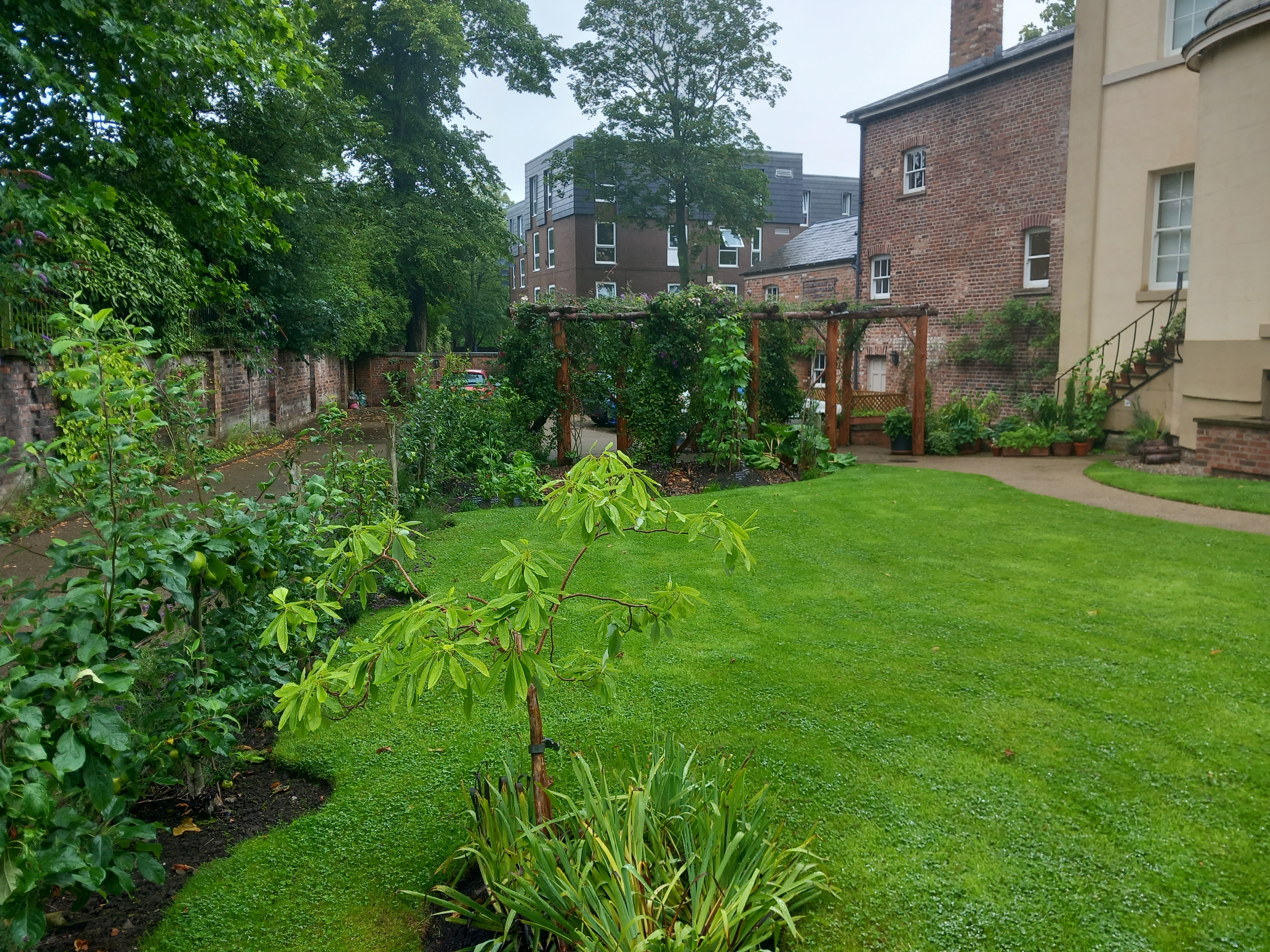
The garden was a walled-off private area, where Elizabeth felt she could relax “without a bonnet”. Originally larger than what is seen now, here Elizabeth grew carnations, campion, gladioli and pinks. For food she cultivated radishes, peas, lettuce and cauliflower. Chickens and ducks provided eggs. Milk was provided by their cow that grazed in a field behind the house, along with their horse Tommy, who pulled the family’s carriage. The original coach house has now been converted to a classroom.
Elizabeth Gaskell’s House provides a rare glimpse into the Victorian lifestyle of the middle class. The determination of the Manchester Historic Building Trust to open the house to the public is to be applauded, and their cause supported. It is fitting that such an literary important house has been restored and is now open for all.
Site visited by A. and S. Bowden 2023. This page written 2024.
Access
The house is open Wednesdays, Thursdays and Sundays 11am -4.30pm. There is a modest entrance fee.
The tea room closes at 4pm
On street parking (with variable charges) available
The website is here
Nearby
Manchester’s Collegiate Church
Manchester’s Medieval Colege of Priests: Cheham’s School and Library
References
On site interpretation
Elizabeth Gaskell’s House: 84 Plymouth Grove, Manchester (undated) Manchester Historic Buildings Trust
Elizabeth Gaskell’s Manchester Alan Shelston (2009) The Gaskell Society
gaskellsociety.co.uk/elizabeth-gaskell/
elizabethgaskellhouse.co.uk/3-the-life-of-charlotte-bronte-the-aftermath/
en.wikipedia.org/wiki/Cowan_Bridge_School
 Lancashire Past
Comments are closed.