At the beginning of the twentieth century, the Pigeon Tower was built as a focal point for William Lever’s Rivington Terraced Gardens. The gardens were designed by landscape architect Thomas Mawson for the local hugely wealthy soap magnate. Many of Mawson’s other constructions are still in place, and have been recently renovated, including his summerhouses, pools and lakes.
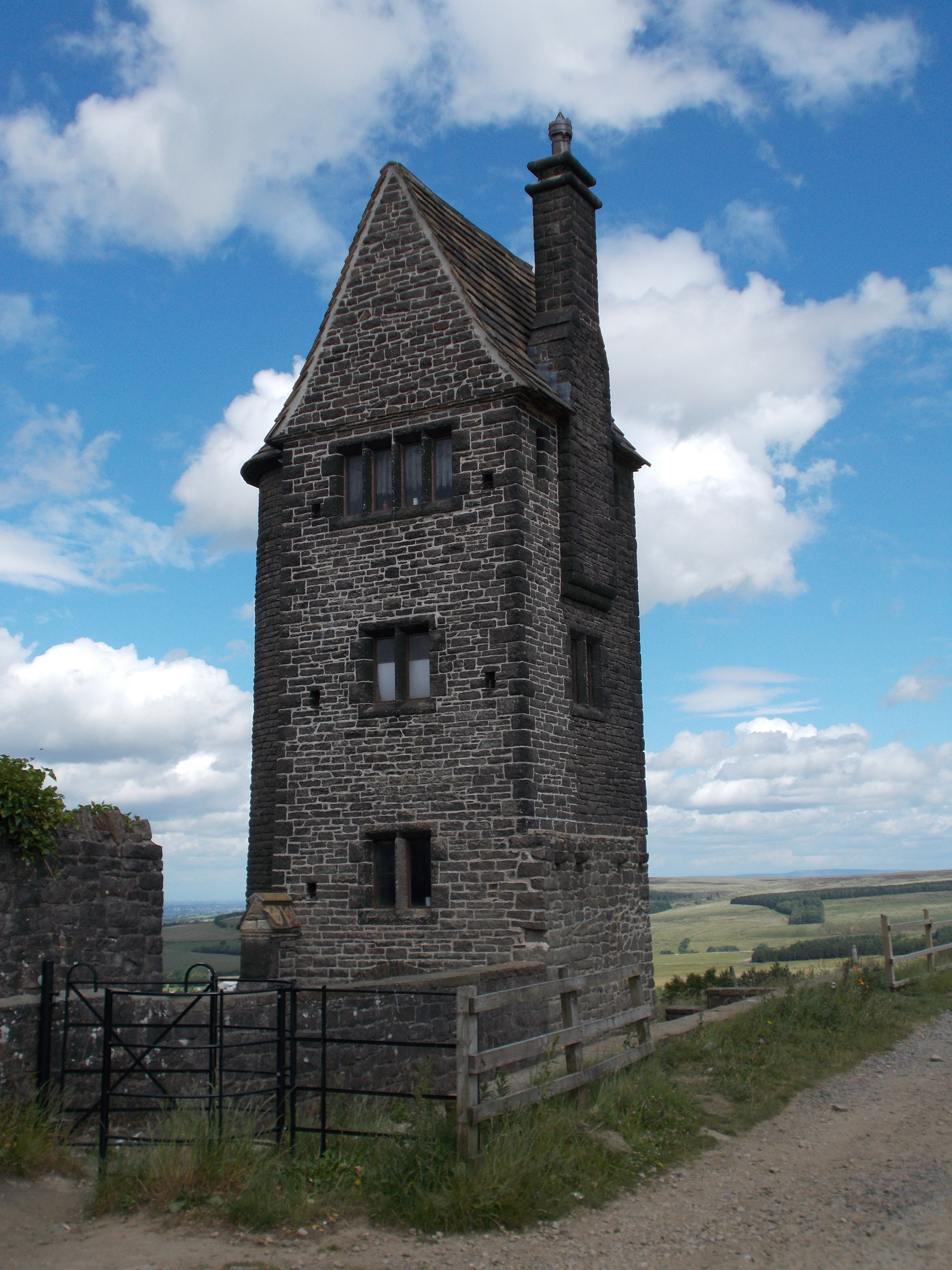
The Gothic-style tower took four years to build. It was finished in 1909 and was given by Lever to his wife Ellen as a birthday present. It has been known by various names over the decades. At first, it was called the Look Out Tower. Interestingly, the windows of the tower face outwards to the north, south and east but not to the grand view west over the gardens and onwards to the sea. However, there is a viewing platform that takes in this vista on the roof of the loggia (a kind of summer house) just below the tower.
Subsequently, it became known as the Dove Tower because of its associated long screen wall that stands alongside it. This ran to the now demolished Belmont Lodge. The wall housed white doves in wooden roosting boxes, contained within stone holes set into the wall. Finally, it became known as the Pigeon Tower, which is the name now familiar to generations that have visited the park and gardens.

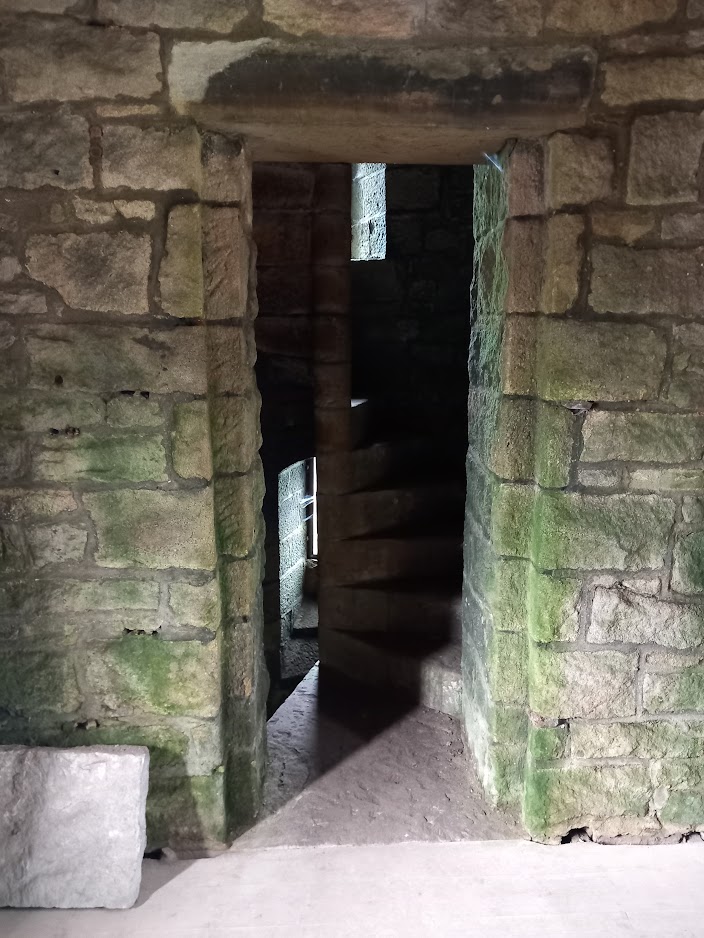
The design of the tower saw Mawson take inspiration from Italian styles, and his Italian Lake lies just below. It has four floors (including the ground one) and a stone circular staircase connecting them. Stone staircases in defensible towers and castles would always be built clockwise, purportedly so that defenders could fight with their right sword arm those coming up from below. Unusually, the tower has an anticlockwise staircase, not that Ellen was in any need to offer armed resistance to intruders.
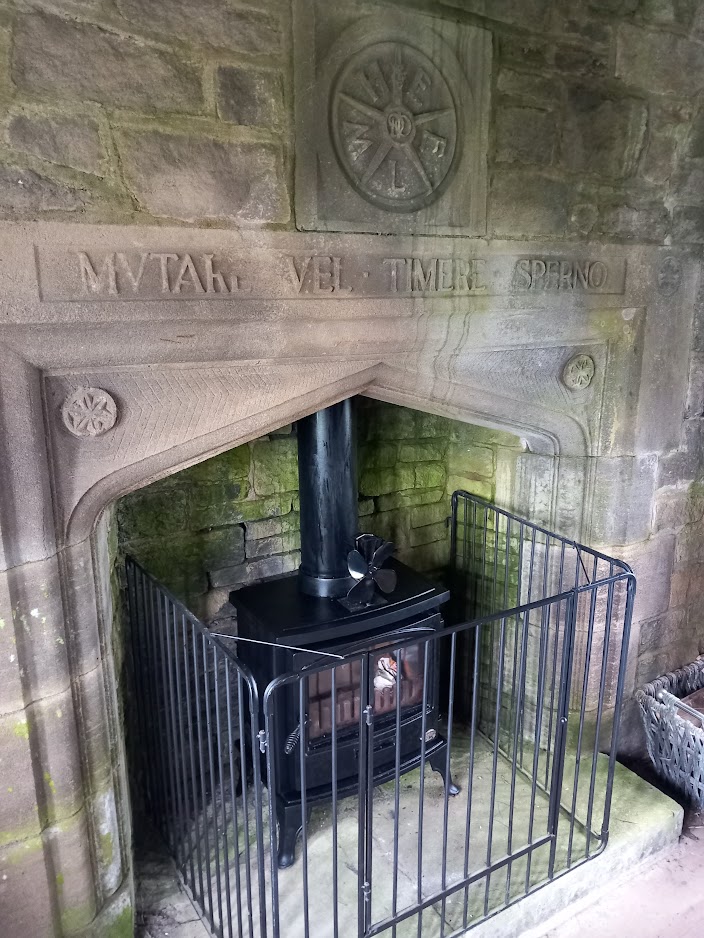
A large entrance door opened onto the ground floor. Above this were two rooms which housed ornamental doves and pigeons. The top floor was used by Ellen as a sitting room. Here she would work on her sewing, or play her musical instruments. To keep her warm, a fireplace was installed that can still be seen today. Above it is a circular wheel, with the initials ‘WHEEL’. This stands for William Hesketh and Elizabeth Ellen Lever. The Latin motto beneath reads MUTARE VEL TIMERE SPERNO which translates as “I spurn the fear to change”.
After Lever’s death, Rivington Gardens were sold to a wealthy local brewer and they entered what would be a slow, long decline. They eventually came under the ownership of North West Water, who did some work to maintain them and keep them open to the public. For the full story beginning with Lever’s grand vision for a private set of gardens created out of the moorland, to their neglect and subsequent resurgence, see our page here.
By 1975, the Pigeon Tower was described as a “ruined shell” and extensive renovations took place to save it. Subsequently, while it remained in fairly good condition the public were never allowed to venture inside. This remained the case for decades, until the recent large scale improvement to Rivington Terraced Gardens by the Rivington Heritage Trust. Restoration work has seen a new roof for the tower, a secure oak entrance door and polycarbonate windows installed. For the first time in decades, this Grade II building is now open to the public. The opening is restricted to the volunteer days and special events (for details see access section below), but the chance to get inside, something so many locals have longed to do over the years, is not to be missed.

Interestingly, there was once a second smaller pigeon tower which stood at the end of a pergola connected to Lever’s residence, Roynton Cottage, overlooking the Great Lawn. This was of a different design, having a four-sided gabled roof and fifteen pigeon boxes built on each of the four triangular gables. It was demolished following the arson attack by suffragette Edith Rigby in which Lever’s Rivington home was completely destroyed. For more on that story, see our page here.
Rivington Heritage Trust continue to do great work in Rivington Terraced Gardens and Lever Park. They rely on volunteers to maintain the sites and are always looking for new members. If you would like to join the friends group or become a volunteer, then for more details see the website here.
Site visited by A. and S. Bowden 2024
Access
The pigeon tower is open to go inside on the first Saturday of each month, usually between 10am – 3pm. On our visit there was a short talk on two of the floors by volunteers, giving a history of the tower and Lever’s creation of the his magnificent gardens. The volunteers request as a voluntary donation on entering, and accept cash or card.
At all other times the outside of the tower can be viewed, along with excellent views over landscape beneath from the viewing platform below.
Nearby
Lever Park and Rivington Terraced Gardens
The Suffragette Arson Attack at Rivington
Noon Hill Bronze Age Burial Cairn
References
Leverhulme’s Rivington, M.D. Smith (1998) Wyre Publishing. This excellent book is still available second hand online and would enhance anyone’s knowledge on Rivington Terraced Gardens and Lever Park.
historicengland.org.uk/listing/the-list/list-entry/1317613?section=official-list-entry
rivingtonterracedgardens.org.uk/what-to-see-and-do/the-pigeon-tower/
On site interpretation board at the Pigeon Tower
 Lancashire Past
Comments are closed.