A railway station opened in Waterfoot in 1848, at the end of a line that connected it to Rawtenstall. It was always the intention that the line would not terminate at Waterfoot, but would travel on to Bacup. This presented a major problem for the engineers. The only route from Waterfoot to Bacup is through a short but narrow ice age gorge. Through this squeezed the main road on one side and the River Irwell on the other, leaving no room for the railway line. The only solution would be to bore through the hill known as ‘Thrutch’ on the far bank of the river. (Thrutch is an alternative name for a gorge, and locally the area is known as The Glen. The world ‘glen’ has the same meaning as the previous two terms).
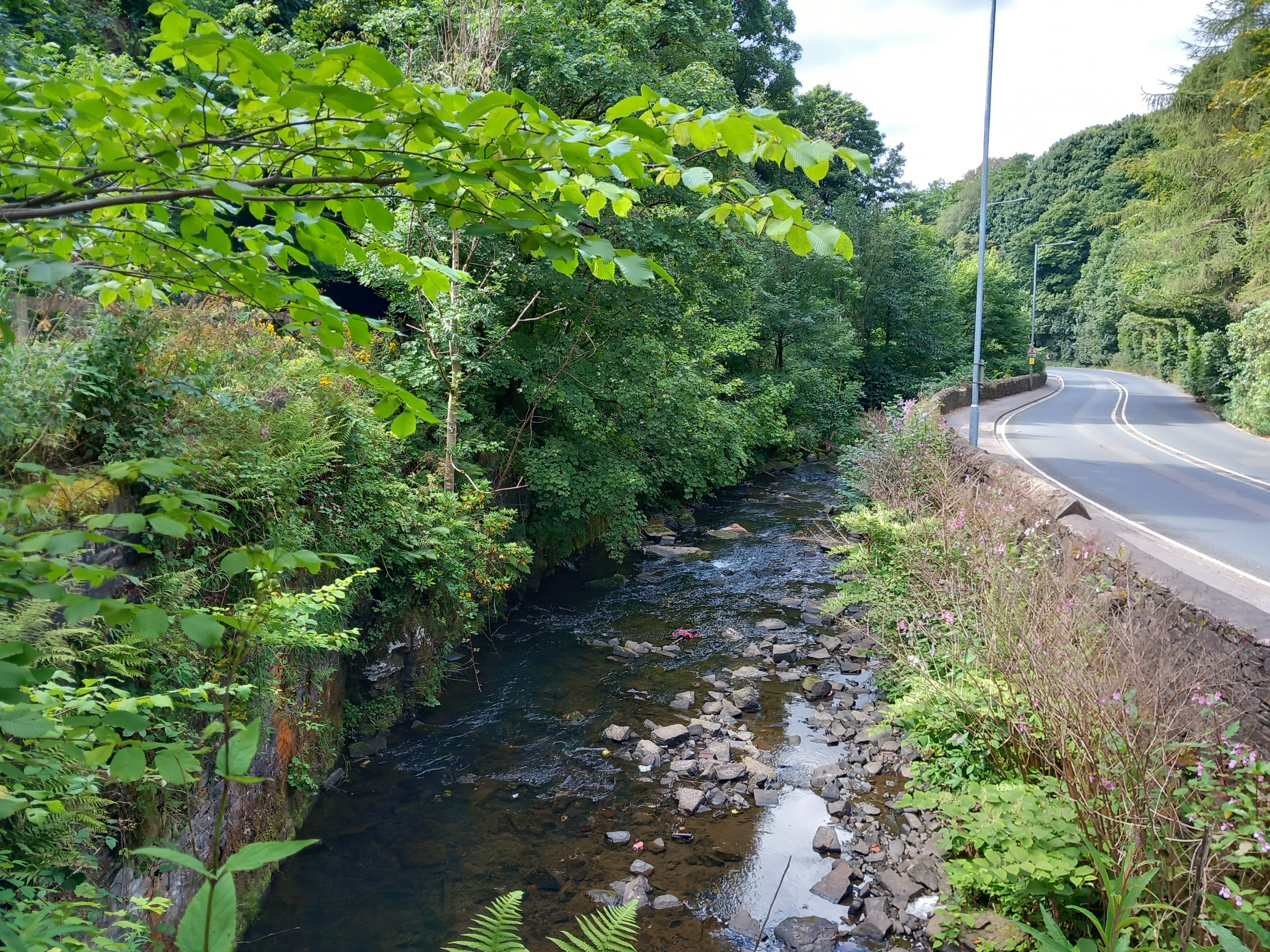
Two long railway tunnels were planned, one after the other, through which a single track would pass. Dickson & Mackenzie were awarded the contract to construct the tunnels and to lay the railway line. Work began on Newchurch Tunnel 1 in September 1851. After emerging into daylight along a rock cut shelf just above the River Irwell, the line then entered Newchurch Tunnel 2. All the work was completed by October 1852.
Seventeen years later, the amount of rail on the line between Rawtenstall and Bacup meant that a further parallel track was needed. Accordingly, in 1876, a new line was authorised, but again the narrowness of the Thrutch Gorge would pose a problem. The only solution was to create a third, much longer, tunnel parallel with the first two, burrowing deeper into the hill. This was named Newchurch Tunnel 3, but was often also referred to as Thrutch Tunnel. It was was opened in 1881.
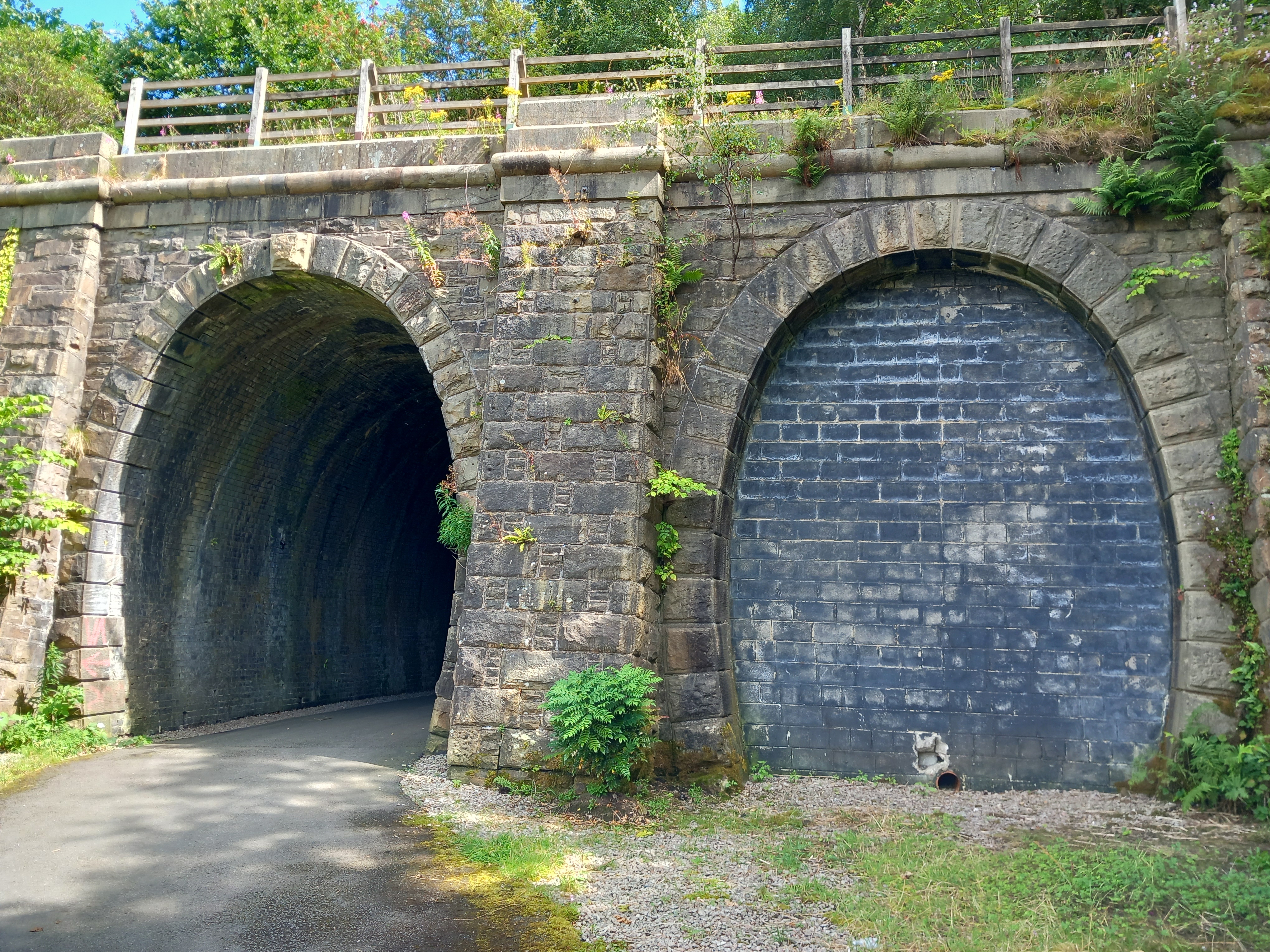
Over the ensuing decades, these railway lines became incredibly busy, reaching their peak in the 1950s when 35 trains would pass daily in each direction. The route connected Bacup to Rawtenstall, and then on to Bury with stations in between. From there it proceeded ultimately to Manchester Victoria Station. However, Dr Beeching’s nationally devastating report to the government on the future of the rail industry deemed much of the route surplus to requirements. The section from Bacup to Rawtenstall was closed to passengers in 1966. Freight continued for a further two years before full closure and removal of the rails in 1969. The tunnels fell into disuse, and were eventually blocked for obvious safety reasons.
Closure, Restoration, Re-Use?
The railway line that carried trains from Bacup to Rawtenstall via Waterfoot is long gone, never to return. Dr Beeching’s report recommended that the section of the track from Bury to Manchester also be closed, but such was the outcry at the time that this very busy line was saved. It has subsequently run continuously since the 1960s to the present day. It is now part of the extremely well-used Metrolink tram service that runs along the original train route.
The Rawtenstall to Bury service was not so fortunate. This was closed to passengers in 1972 and only used for freight until 1982, after which the line was taken out of service. However, this was not the end of the story as a group of volunteers managed to reopen the track as a heritage railway just five years later. Relaunched as the East Lancashire Railway, it ran initially only between Bury and Ramsbottom, and was subsequently extended to Rawtenstall. In more recent years, the line was reopened to Heywood, and in 2016, a new station was built at the popular Burrs Country Park near Bury. The heritage railway is open every weekend of the year.
In 2022, plans were proposed by Lancashire County Council and Rawtenstall Council that would bring the Rawtenstall to Bury line back into service for commuters during the weekdays as well. This would involve opening new stations at Stubbins and Ewood Bridge, both of which were closed in the 1970s. However, the future of this project is now under review as central government funding has recently been withdrawn for some ventures that came under the ‘Restore Your Railway’ scheme. The route would have taken passengers from Rawtenstall to Manchester in just under 45 minutes. If it is a good idea, and those who have sat in interminable traffic on the M66 from Rawtenstall to Manchester during rush hour might think that it is, then perhaps it is an idea whose time has come and funding will be found in the future.
Visiting the Tunnels Today
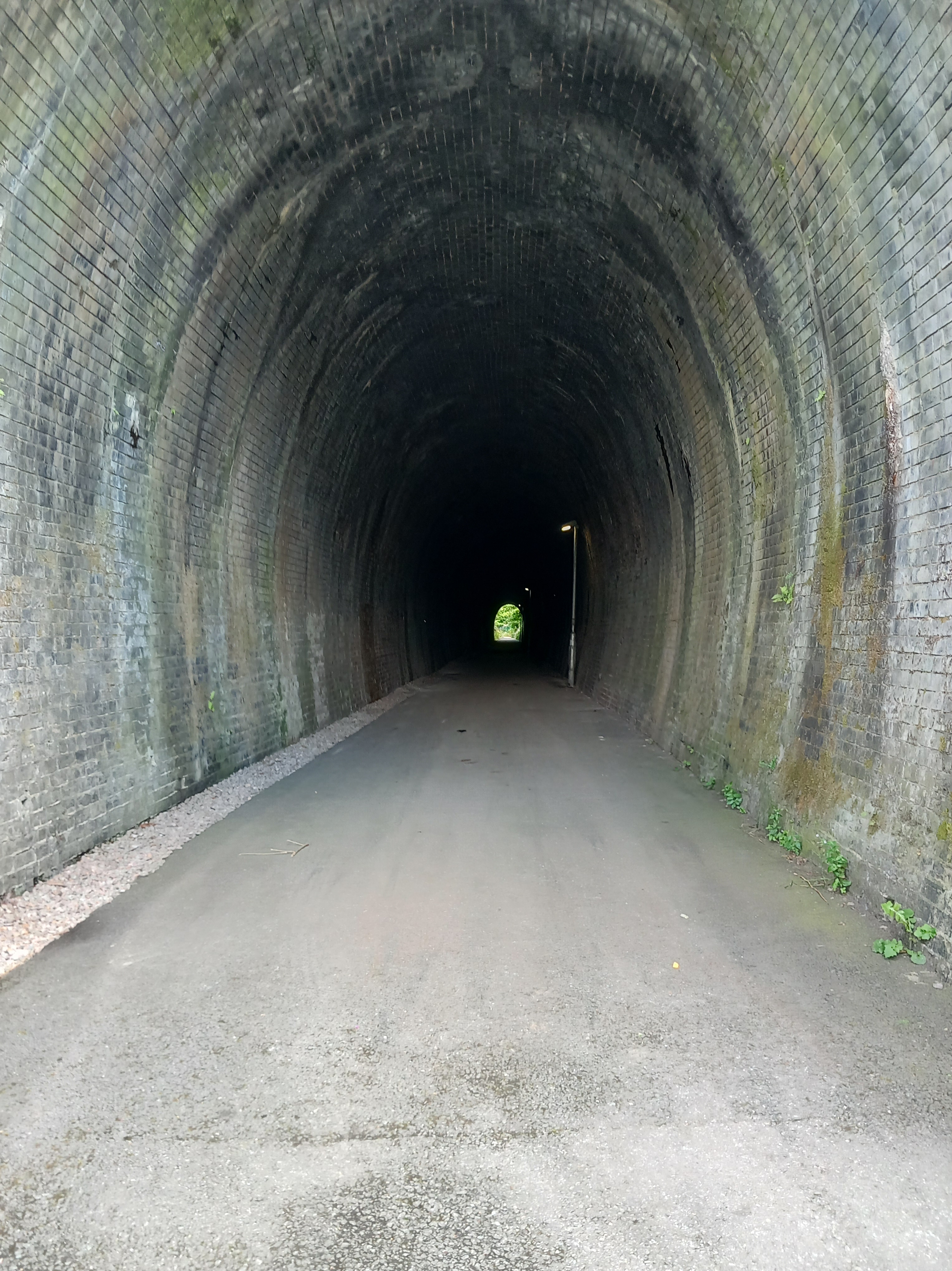
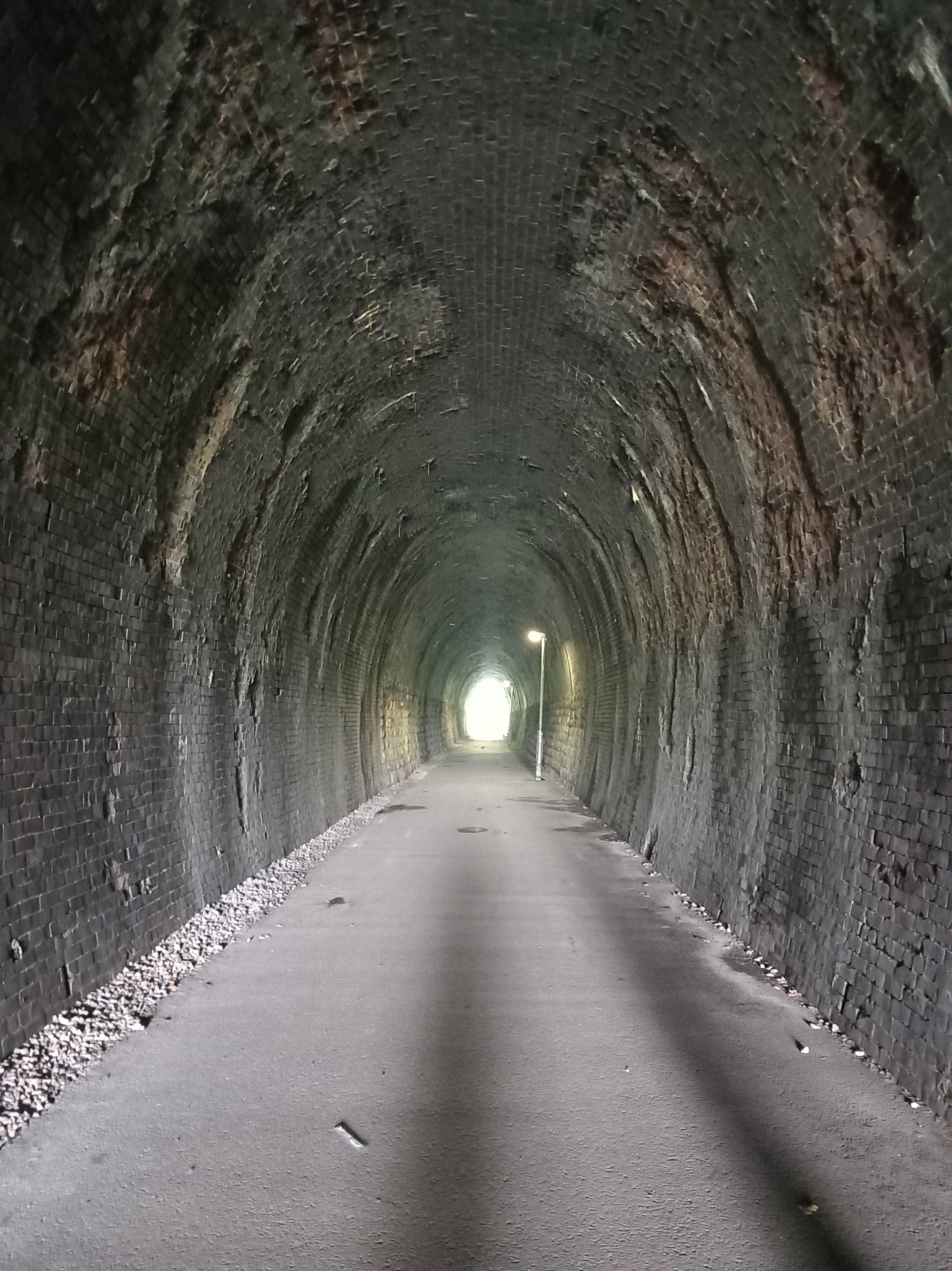
In 2019, Newchurch Tunnels 1 and 2 were reopened to the public as a footpath and cycleway. Now people can visit and appreciate the original achievement of the engineers and builders. A considerable amount of recent work must have gone into checking the thousands of bricks that made the tunnels, making sure they would remain structurally sound. The route through the tunnels is part of the Valley of Stone Greenway which, when complete, will link Rochdale to Rawtenstall by cycle path.
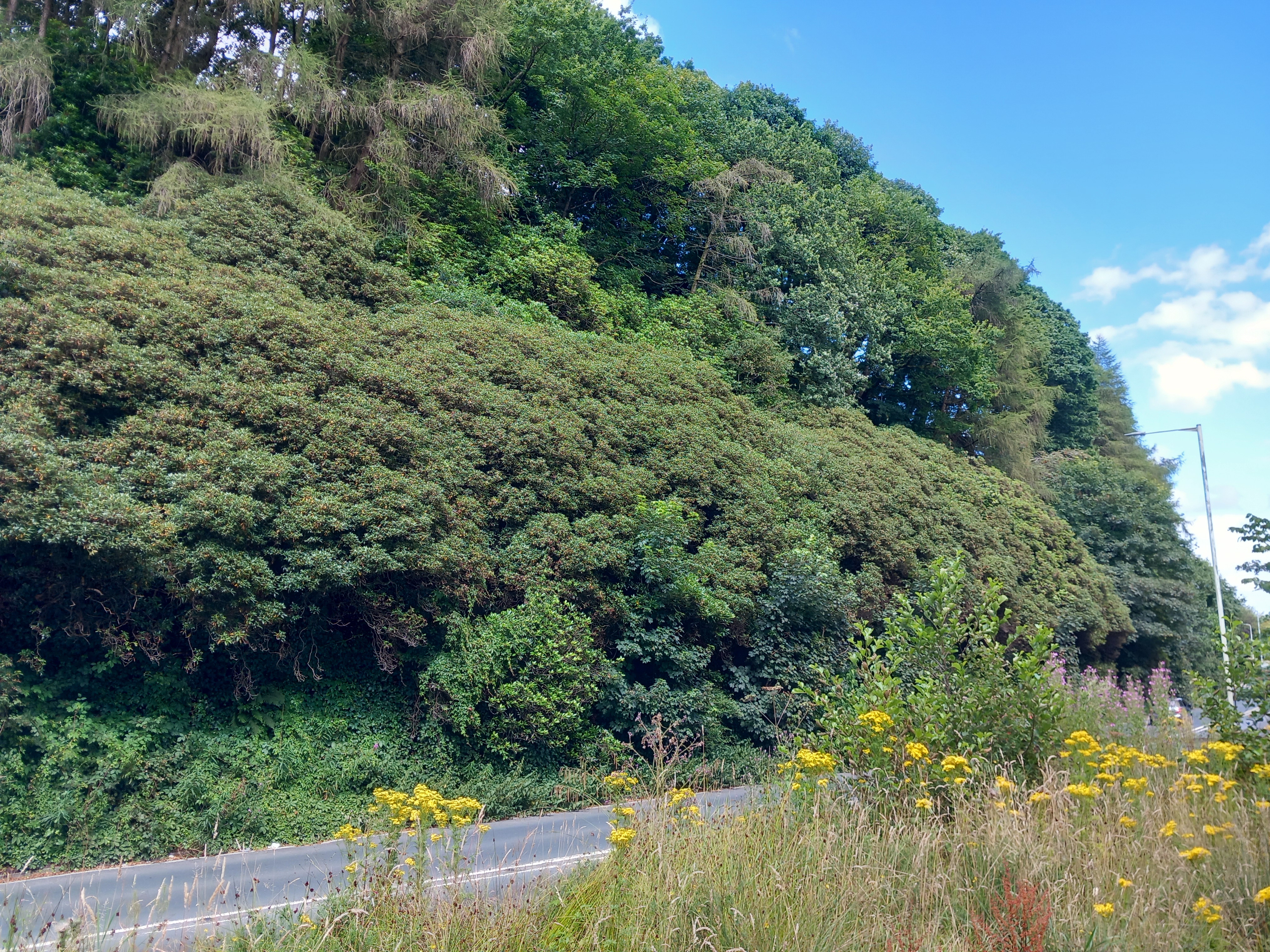
Thrutch Gorge itself is only a quarter of a mile long but, at 120 feet deep, it is worth seeing. The greenway route through the tunnels gives good views of the surrounding landscape. The geological evidence is that the gorge was formed during an ice age before the last one, by water draining from an ice-dammed lake in Rawtenstall. It was then deepened in the last ice age by the action of water beneath a glacial ice sheet. Today the River Irwell continues the slow erosion of the valley sides.
At the time of writing, new plans are being drawn up for Waterfoot. A large grant has been agreed, as part of the Long Term Plan for Towns Deal, which will be rolled out over the next decade. With this money, it is proposed that Waterfoot could be developed as an arts town and a base for the exploration of the surrounding countryside. In the short term, money would be spent on restoring the Grade II listed Trickett’s Arcade, on creating art murals and a riverside path through the town. Longer term could see the development of venues such as a spa, cinema or events centre. The funding for this scheme looks to be secure, at the moment.
Site visited by A. and S. Bowden 2024
Access
There is parking in Cowpe Road car park. Other car parks are available close by.
Cross over Cowpe Road and follow the path keeping the River Irwell on your right. A short walk leads to Newchurch Tunnel 1. On emerging from this tunnel there are good views of the gorge. The path and cycleway then lead into Newchurch Tunnel 2. The tunnels are lit at all times.
Nearby
The Whitaker Gallery and Museum
References
forgottenrelics.org/tunnels/newchurch-thrutch-tunnels/
lancashiretelegraph.co.uk/news/17900076.waterfoot-tunnel-reopening-creates-new-route-east-lancashire-cyclists/
wikipedia.org/wiki/Waterfoot_railway_station
disused-stations.org.uk/w/waterfoot/
en.wikipedia.org/wiki/Rawtenstall_to_Bacup_Line
Map: Lancashire LXXII, SW, Revised, 1908 Published 1913 National Library of Scotland Creative Commons Attribution (CC-BY) licence
en.wikipedia.org/wiki/East_Lancashire_Railway
newcivilengineer.com/latest/80m-plans-submitted-to-restore-lancashire-manchester-rail-link
lancs.live/news/lancashire-news/new-rossendale-pendle-town-boards-29652389
rossendale.gov.uk/regeneration-3/waterfoot-projects
Hotel, spa and shopping arcade plan for ‘arts town’, BBC News bbc.co.uk/news/articles/c1l546e9l75o
Evidence for Paleolake Rawtenstall around Stacksteads, Upper Irwell Valley, Rossendale UK, Catherine Delaney, North West Geography, Volume 16, 2016
 Lancashire Past
Comments are closed.