Haighton Manor is a Stuart Age manor house that began its existence as a family home for landed gentry. Much later it became part of a local psychiatric hospital, with both staff and patients residing there. Today, it is a popular pub and restaurant.
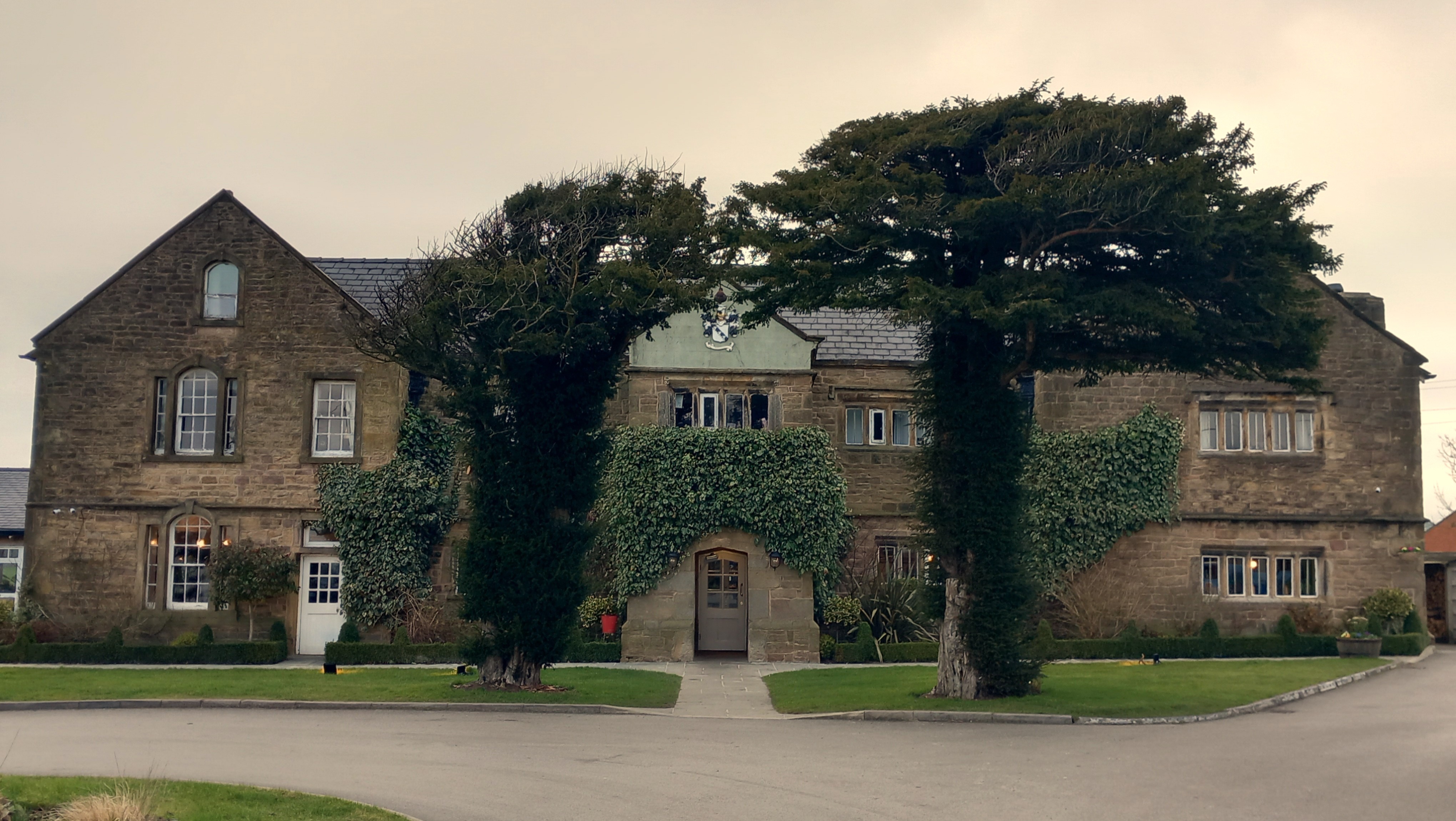
The building was constructed sometime around 1650 and was originally called Houghton House. It was owned by the Hoghton family of Park Hall, near Chorley. Today, the Hoghtons still reside locally at their family seat of Hoghton Tower. (The two spellings, Hoghton and Houghton were historically interchangeable, with Hoghton being the preferred one over time. Spelling of place names and even personal names was not deemed as important in Tudor and Stuart times as it is now). By the late 1600s, the house had been sold to the Cardwell family, who farmed much of the surrounding area. After Richard Cardwell’s death in 1690, it was bought by the Loxam family of Longton.
The Haighton Family
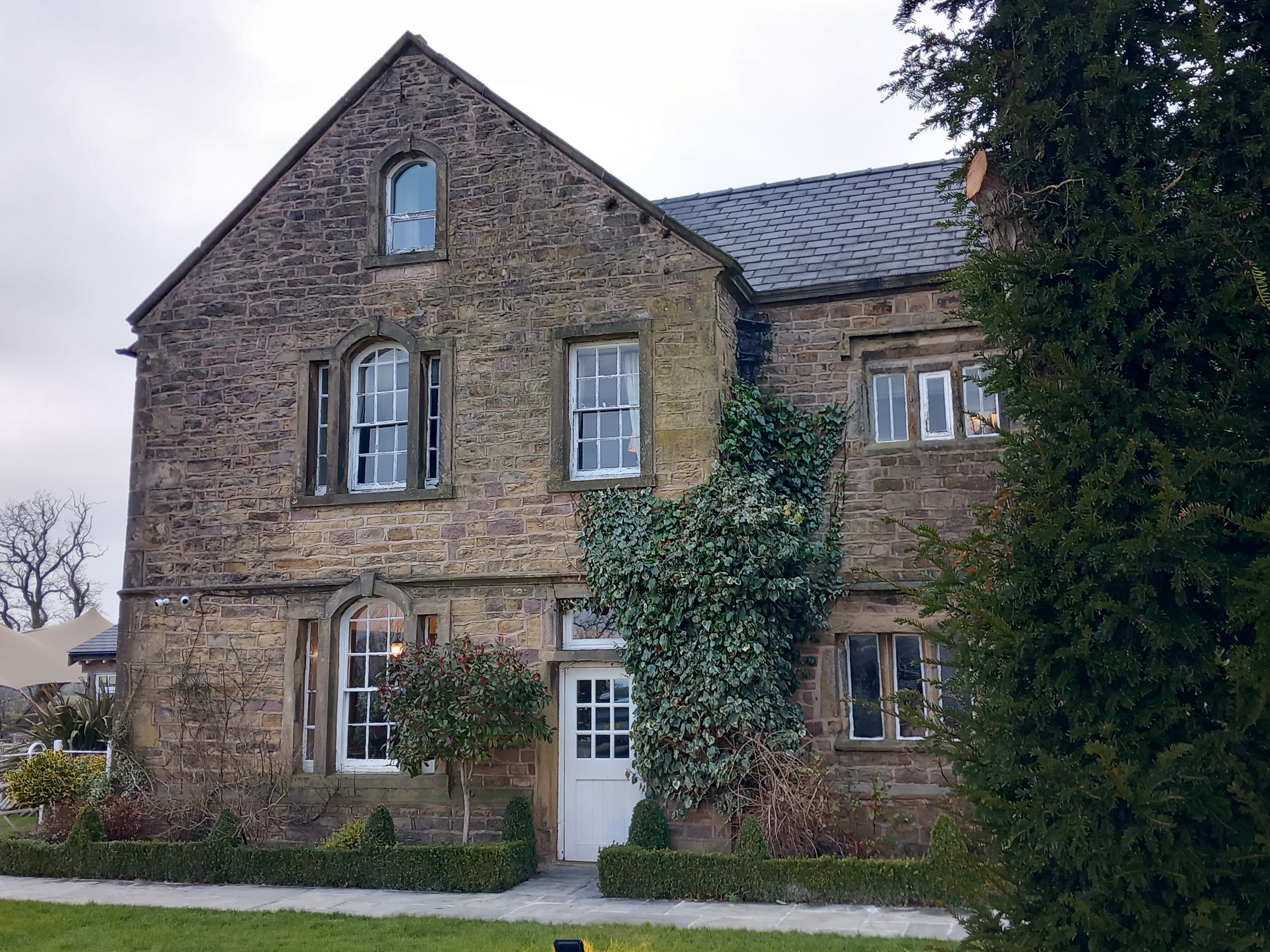
In 1744, William Loxam sold the hall along with 65 acres of land to Henry Haighton of Lees in Bowland. Henry turned the manor house into the grander building that we see today. His refurbishments included repurposing the west wing and installing Georgian windows. The large rainwater hoppers on the drainpipes at the front of the building are dated to record his and his wife Mary’s improvements to the property.
Tragedy struck the family when two of the daughters died in the same year. Alice passed away in March and Elizabeth shortly after in May 1771. Henry made his will in August the year after, and he too died just two months after doing so. All three were buried at All Hallows Church in Mitton, near Hurst Green (a beautiful historic church that is open to the public).
Henry’s will stated that all his estate properties were to be sold to pay off his debts, and to provide income for his remaining daughters. This included land at Whittingham, Dilworth, Thornley and Roathmell in Yorkshire. The Haighton estate was to be kept, but was rented out to provide his wife with income, some £40 a year. His son John was only to get an annual sum of five shillings. It would seem that his father believed John had already been given his inheritance, as the will stated “he had already taken a considerable sum of money from me”. Henry’s widow Mary died thirteen years later, but Haighton Manor and its land remained in family ownership, with records showing that it was occupied by tenant John Dickinson in 1798.
Richard Newsham
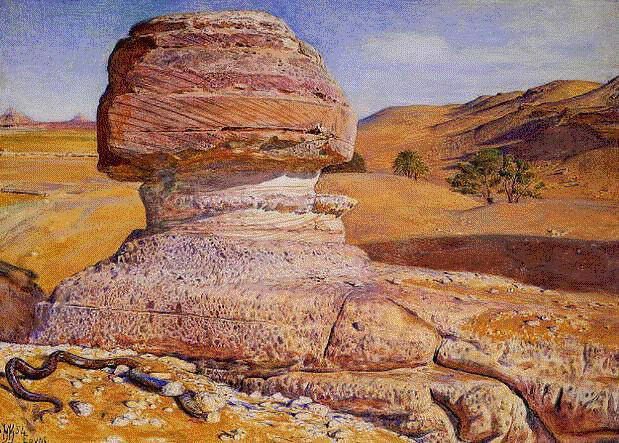
Subsequently, the manor was purchased by local landowner Evan Gerrard, who after 30 years sold it on to wealthy Preston lawyer Richard Newsham. An avid collector of works by contemporary artists, in 1820 he began visiting the Royal Academy in London, annually attending over fifty times. Many of his purchases would come from the academy, but he would steer clear of those artists whose work was thought to be ‘difficult’ or ‘experimental’. One of the jewels in his collection was The Sphinx, Gizeh by Holman Hunt of the Pre-Raphaelite Brotherhood. Visitors to Lancashire art galleries are able to view many pieces by this group, a particular favourite amongst the collectors of wealthy industrialists and professional classes. Newman would also commission work too, including paintings by William Powell Frith (see here) and David Roberts (see here).
In 1883, he donated his collection of Victorian art to the town of Preston. The artworks consisted of 62 oil paintings and 45 watercolours. At first, there was not space in the town to display all of the pictures, but with the opening of the Harris Museum and Gallery ten years later, the collection found a permanent home. Newsham’s approach of buying art from the Royal Academy annual exhibitions and also commissioning contemporary artists set the tone of the collecting policy of the Harris, and it has continued in this vein ever since.
Haighton Manor remained in Newsham’s ownership for many years, but for much of that time it was rented out a local farmer. It later passed to Newsham’s relative William James Farington, who leased it to Whittingham Asylum, beginning a long association with the psychiatric institution.
Whittingham Asylum
In 1910, the asylum’s governing board was able to buy Haighton Manor outright, along with 104 surrounding acres. At first, it was used as office space for administration work. Subsequently, part of it was converted into living accommodation for staff and patients. The patients would work on the surrounding land, producing most of the food that the hospital needed.
In 1950, Charles and Mary Williams, both nurses, moved into Haighton Manor with their children Val and Brandon. The family lived there for seven years. Val recalled that the building had been separated into two parts, one for patients and the other for staff. Charles would tell the children that the infilled cellars once had tunnels running off them. This is a common folklore motif for large houses, and is true for vanishingly few. Even less likely is his story of a ghostly nun that would ring a bell at midnight to “show her displeasure”. Val recalls that both the Co-op van and the mobile library would visit every two weeks. Haighton Manor remained as part of the Whittingham Asylum ownership until the late 1960s.
In 1966, Haighton Manor was given Listed Building status, and the following year JS Taylor & Co applied for planning permission to convert the building into a restaurant. This was granted, and extensive reconstruction work then took place. It opened as a restaurant in the early 1970s, and later became a popular wedding venue.
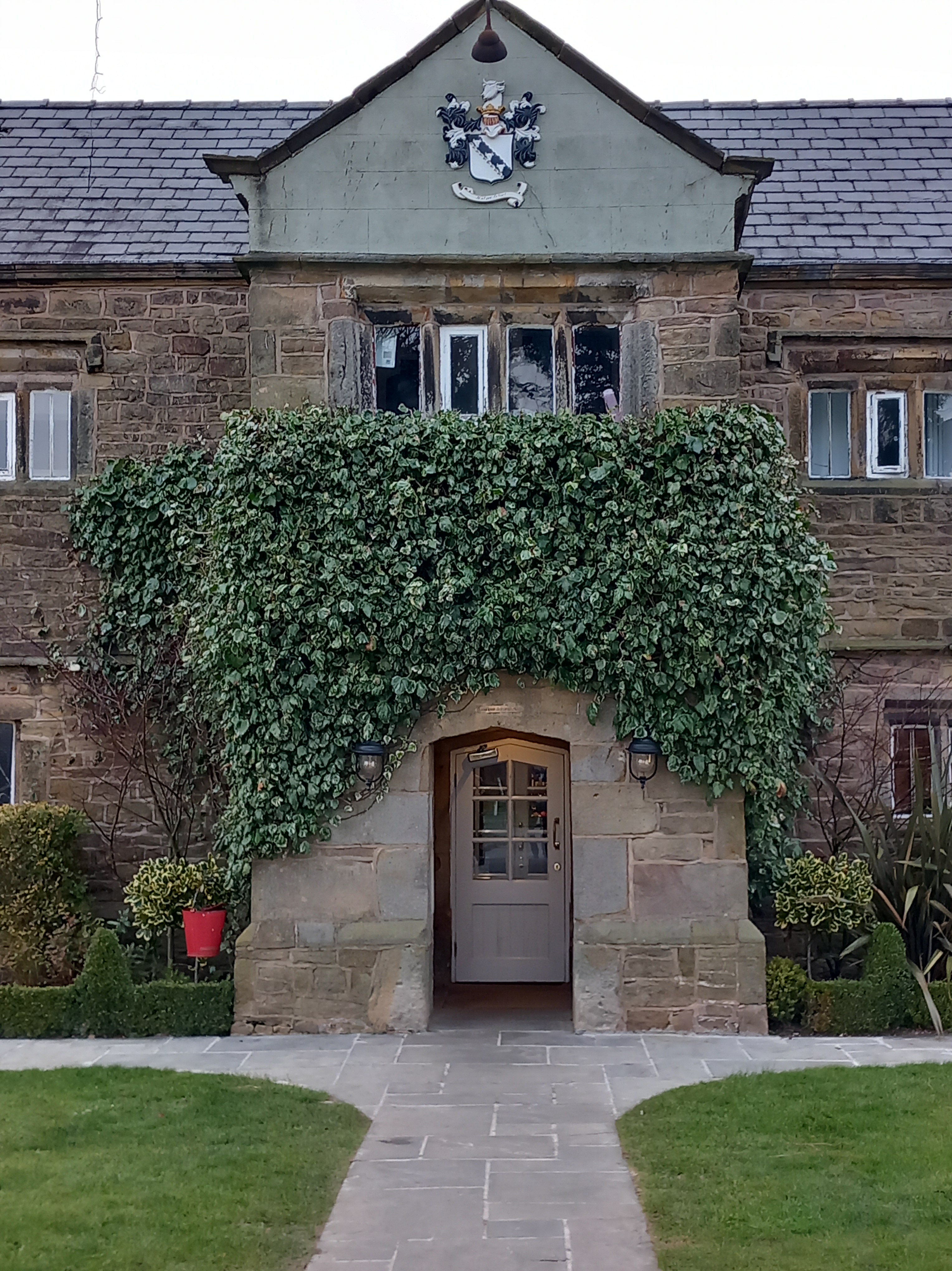
In 2016, it was bought by the Brunning and Price pub and restaurant chain. The building was sensitively restored and many of the original features were uncovered. Its stone floors were cleaned and the original fireplaces brought back into use. The mock cornicing and fake gargoyles, put in place by the previous proprietors, were removed. At the top of the entrance porch, on the pediment, the Haighton coat of arms was installed.
Visiting Today
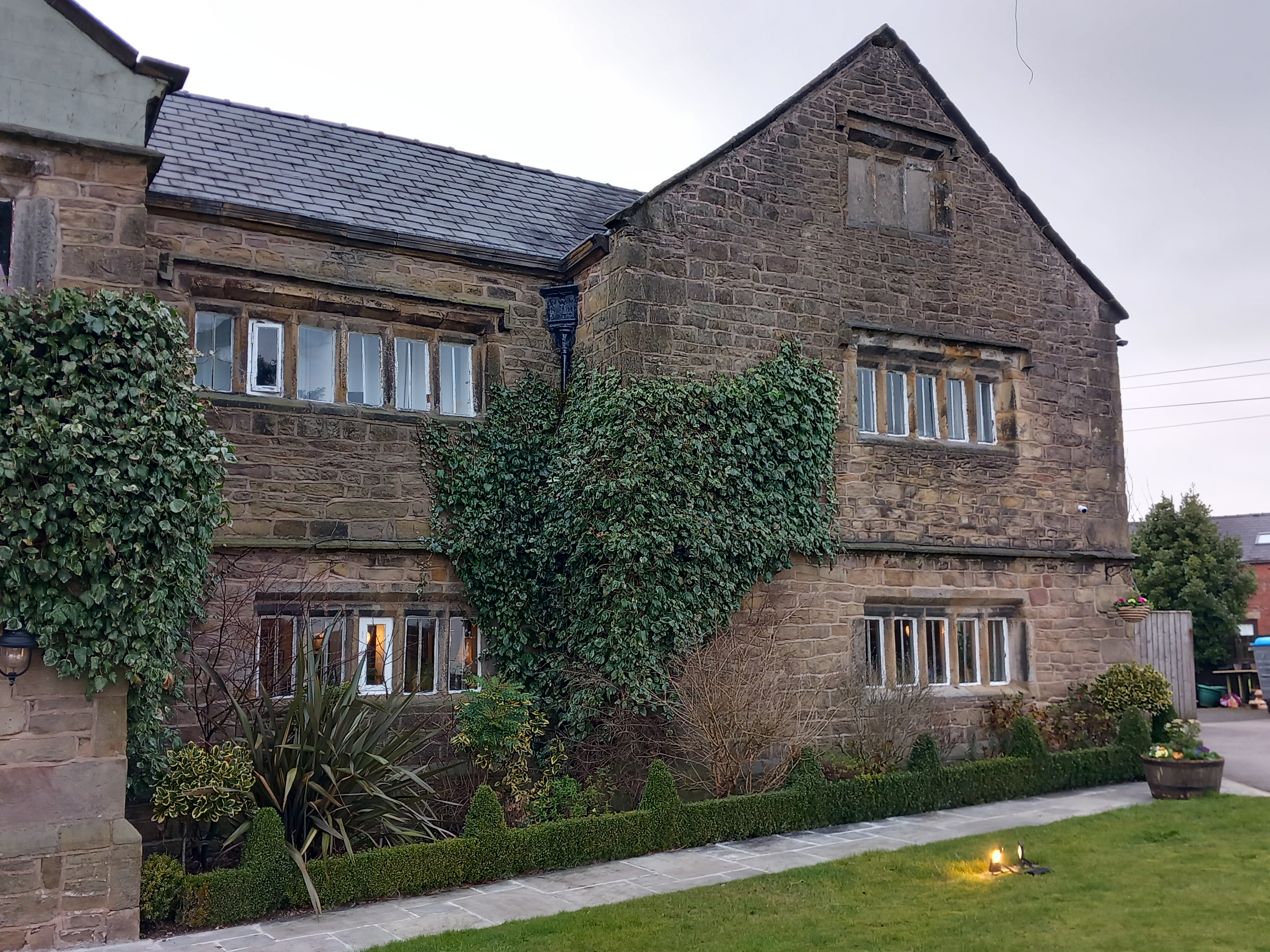
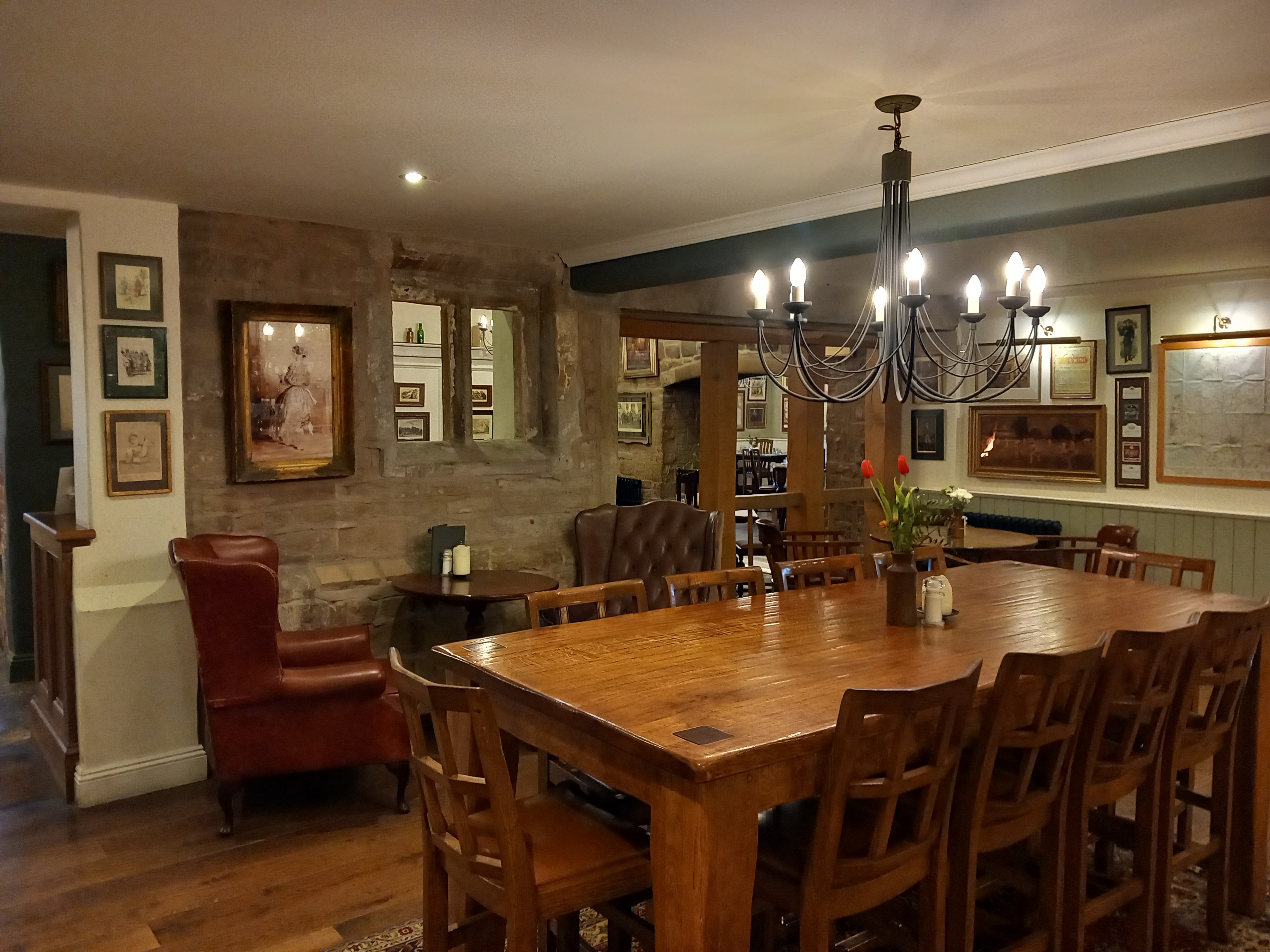
The front of the building gives the clearest indication of the time periods in which it was constructed and modified. On the far right are the long, narrow mullioned windows, probably dating back to the Stuart era. A very large chimney stack can be seen on the far right side. The grand, central porch, three storeys high, denotes a building of high status. On the left-hand side of the porch can be seen the influence of the Georgian era, with two Venetian windows and a sash window. (A Venetian window consists of a central arched window flanked by two rectangular windows). The impressive bucket downspouts can be seen on both sides of the front of the building, and show the date of their construction and of the Georgian renewal of the hall. On the left side of the building are small mullioned windows, but beyond them the appearance is of a much more modern-looking structure. Inside is a large bar area and numerous rooms to sit in for a meal. The walls are decorated with a mixture of posters from Lancashire theatres, maps and pictures of local scenes.
Site visited by A. and S. Bowden 2025
Access
Haighton Manor is open every day. It serves a good range of drinks in the pub bar, and there are a large amount of tables in the restaurant area.
There is ample parking at the pub.
References
‘Townships: Haighton’, in A History of the County of Lancaster: Volume 7, ed. William Farrer, J Brownbill (London, 1912), British History Online https://www.british-history.ac.uk/vch/lancs/vol7/pp124-127 [accessed 22 March 2025]
charnockrichardparishcouncil.com/about-our-village/village-history/
brunningandprice.co.uk/haightonmanor/history/
Haighton Manor Information Sheet available from the pub
prestonhistory.com/2022/12/29/on-this-day-29-december-1883/
theharris.org.uk/wp-content/uploads/2019/12/Fine-Art-Blurb.pdf
artuk.org/discover/artworks/at-the-opera-152104
artuk.org/discover/artworks/antwerp-cathedral-152372
wikiart.org/en/william-holman-hunt/the-sphinx-at-gizeh-1854
 Lancashire Past