Heaton Hall is famed for the finest Georgian interior of any historic home in Lancashire. Now owned by Manchester Council, it is being painstakingly researched and preserved by the Friends of Heaton Hall. Once the home of the Earls of Wilton, its present form is in most part due to the vision of two men – one-time owner Thomas Egerton and the architect James Wyatt.
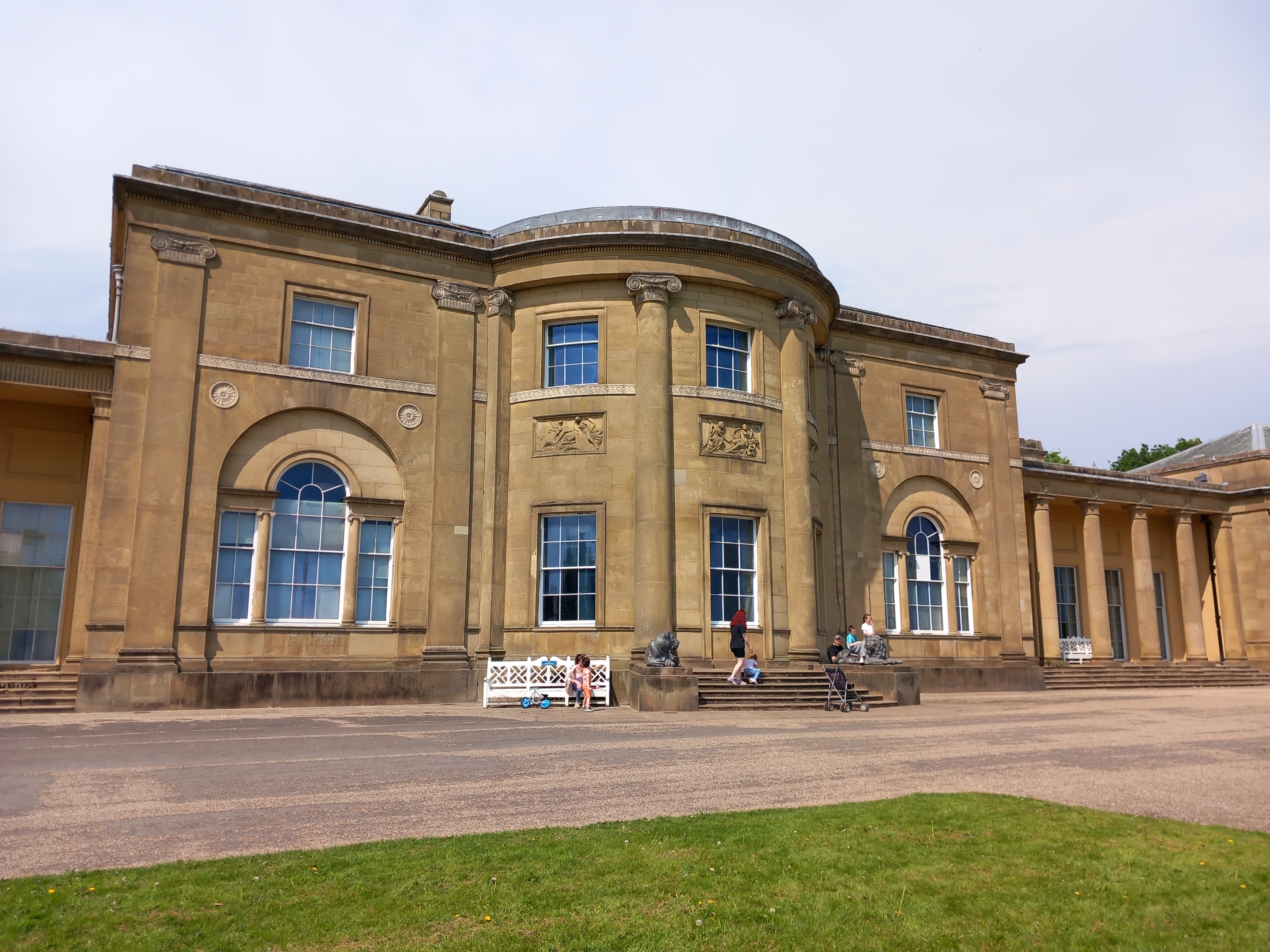
Thomas Egerton was educated at Manchester Grammar School and Oxford University. After graduation, he returned to take up his inheritance of Heaton Hall and estate. In 1772, aged 23, Thomas was elected as Member of Parliament for Lancashire, which at that time only had two MPs. A Tory, he strongly advocated for the cotton industry of the region. He married Eleanor Assheton of Middleton, and they had six children, but only a daughter would survive until adulthood.
Thomas commissioned James Wyatt to undertake a major rebuild of the hall. Wyatt was an up-and-coming architect who would go on to achieve national fame. The brief was to completely redesign Heaton Hall in a neo-classical style. Wyatt took inspiration for this from classical architecture he had seen on his travels around Europe.
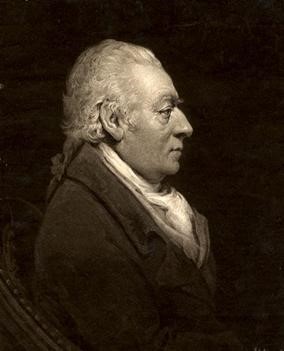
The north front of the hall had its brickwork resurfaced with painted plaster. A new south front was constructed from yellow sandstone, giving views out onto the estate. Three new downstairs living spaces were the constructed: the Saloon, Billiard and Dining Rooms. Upstairs, the Cupola Room, a grand circular space with a domed roof, became Thomas’s mother’s drawing room.
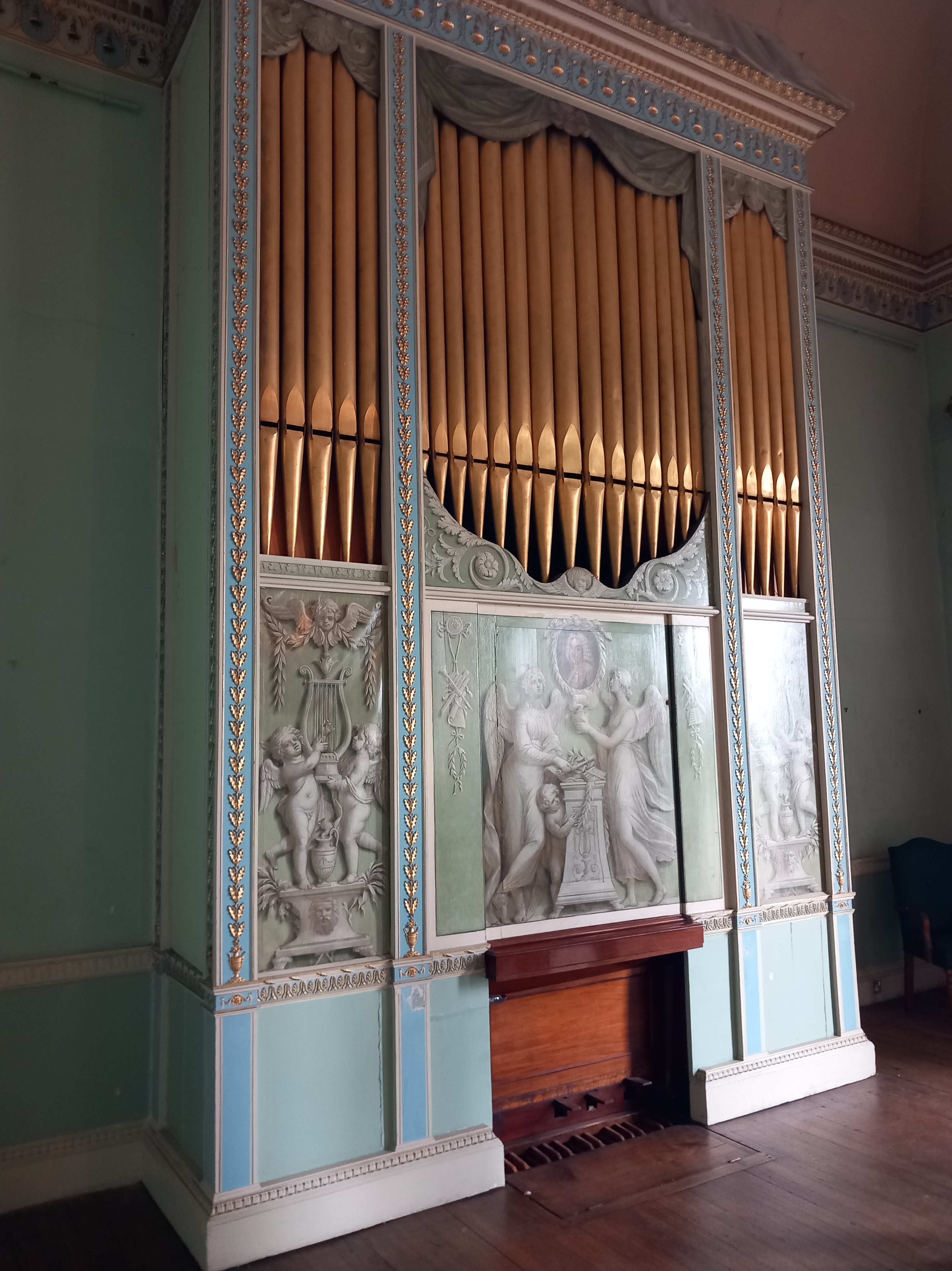
Around a decade after the rebuild, a new Music Room was constructed, reflecting Thomas’s love of music. This included the installation of an organ designed by Samuel Green, organ maker to King George III, which is still in place today. The room enabled Thomas to present concerts, in which he played the cello. The programme was ambitious, with whole operas being performed on occasion.
The original gardens were removed and William Eames, a follower of Capability Brown, created the new fashionable style of ‘naturalistic landscape design’. This would solely be for the preserve of the family though, with a wall erected around the perimeter of the parkland. A large stable block and an ice house (for storing pieces of ice to keep food cold in the warmer months) were constructed. A new driveway led from the hall through the grounds to St Mary’s church, where Thomas and his family could enter through a private door into their own chapel. A keen astronomer, Thomas had an observatory made in the grounds, and it is believed that this survives as ‘The Temple’ today.
(Image in Public Domain)
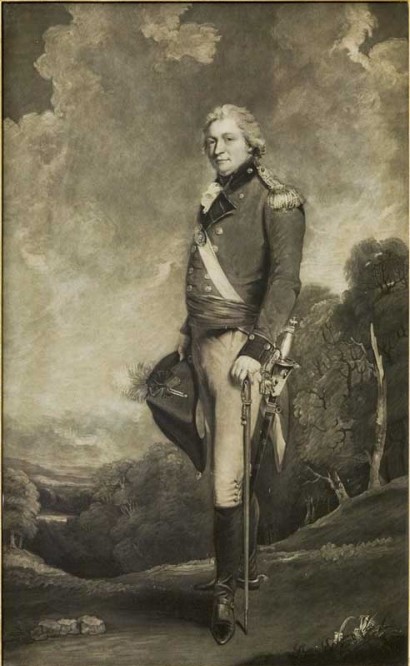
In 1779, Thomas set up the Royal Lancashire Volunteers, prompted by a severe shortage of men in the army. They protected the Royal Family at Windsor during the Gordon Riots in 1780 (where an anti-Catholic mob protested against Catholics gaining civil rights). They were also deployed at Dublin Castle in 1801, when the Irish Parliament was abolished.
That same year, Thomas received the title of the first Earl of Wilton, in recognition for his political work for the government. On his death in 1824, Thomas had no immediate male heir, but his title of earl, the hall and estates were able to be passed through his daughter Eleanor to his second eldest grandson, Thomas Grosvenor.
The Second Earl: Thomas (II)
On receiving his inheritance, Thomas Grosvenor changed his last name to Egerton to continue the family line. In 1821, he married Lady Mary Margaret Stanley, daughter of the Earl of Derby. They had eleven children, but only five survived to adulthood. Mary had interests in both needlework and botany. She authored the Book of Costume by a Lady of Rank, and edited a volume entitled Stone’s Art of Needlework. Lewis Wyatt (the nephew of the hall’s architect James) was commissioned to design an Orangery where she could grow and display her plants.
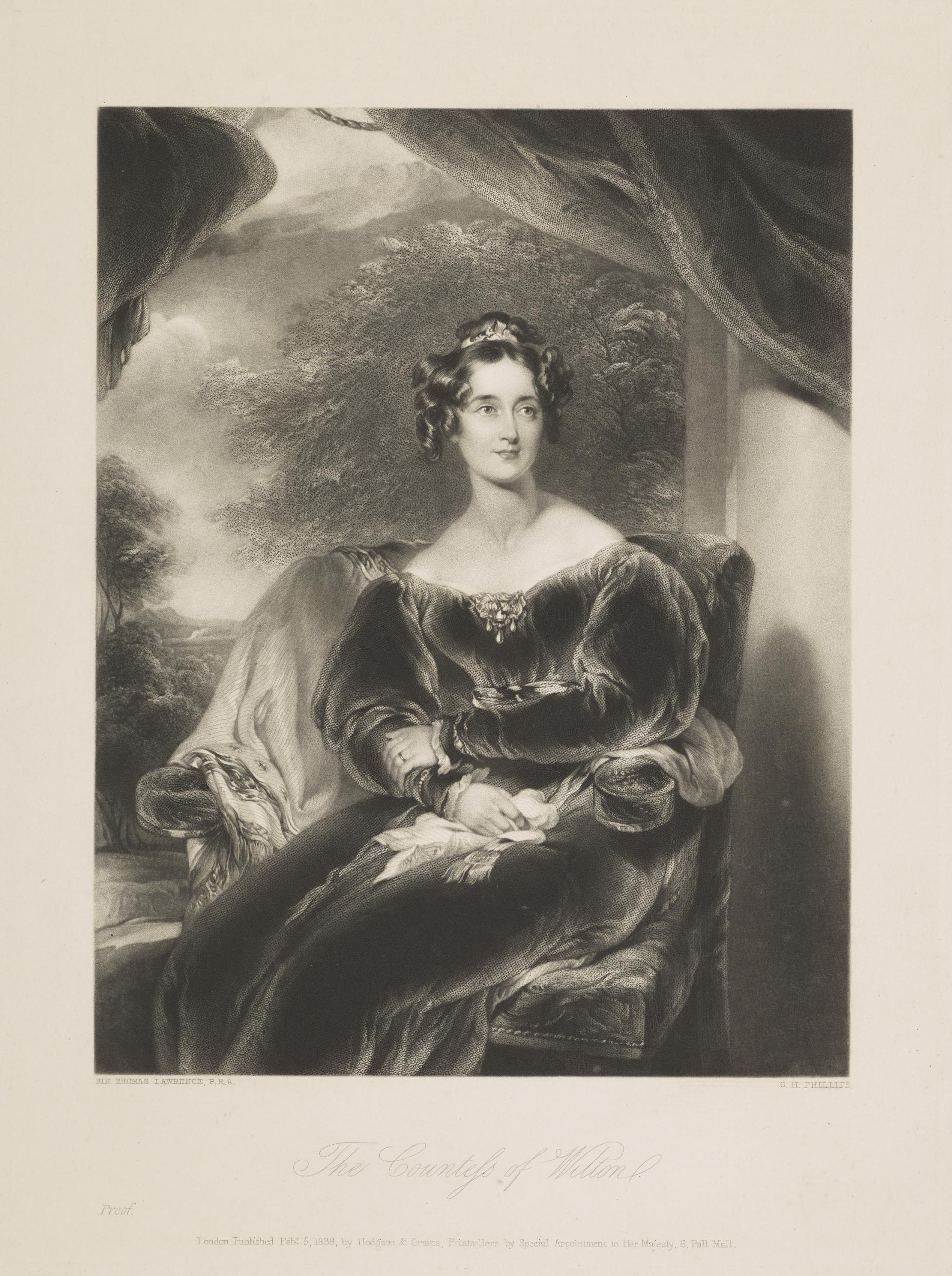
(Source: National Galleries of Scotland. Reproduced here under a personal licence agreement)
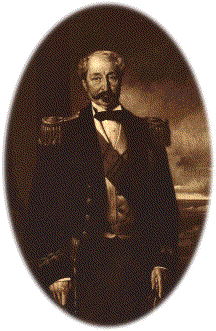
Thomas (II) introduced horse races within the grounds of the parkland, taking place where the lake is today. He was himself an accomplished amateur jockey, riding under the pseudonym of Mr Clarke. He won two Royal Hunting Cups at Ascot, the Steward’s Cup at Goodwood and the Doncaster St Leger. The horse racing at Heaton was not without controversy though. The judges were seen as biased, the crowds often rowdy, and on one occasion a duel was fought by two racehorse owners over a disputed winning prize.
(Image in Public Domain)
Thomas (II)’s enthusiasm for horse riding led him to take part in hunting at Melton Mowbray in Leicestershire, joining both the Quorn and Belvoir hunts. This, and his other interest of sailing, saw him spend more and more time away from Heaton Hall. He set up the Royal Mersey Yacht Club in 1844, piloting his own yacht in events. Sometime later, he became Commodore of the Royal Yacht Squadron at Cowes. There, he was part of the committee that set up the All Nations race around the Isle of Wight, which would later become the America’s Cup. On his death in 1882, his son Arthur became the third earl.
The Third Earl: Arthur
Arthur was born at Heaton Hall. By now the family connections reflected the increasingly high society they moved in: his godfather was the Duke of Wellington and he had the same tutor as the Prince of Wales. At the age of 21, Arthur had a grand birthday weekend celebration at Heaton. A huge marquee was erected to enable the local gentry, clergy and tenants to sit down to a formal meal. This was followed by a ball attended by a thousand people. Barrels of ale were served that had been brewed in the year of Arthur’s birth. The following Tuesday, the family servants who had waited on the guests during the weekend had their own ball inside Heaton Hall.
In keeping with family tradition, Arthur served as a Lieutenant in the army, including a stint in the Duke of Lancaster’s Yeomanry Hussars. He was also a Tory politician, sitting in both the House of Commons and the House of Lords, and was a close friend of Benjamin Disraeli. Arthur and his wife no longer spent much time at Heaton, preferring to live at Egerton Lodge in Melton Mowbray. He became earl aged 48, but died just three years later, and his younger brother Seymour succeeded him to the earldom.
The Fourth Earl: Sim
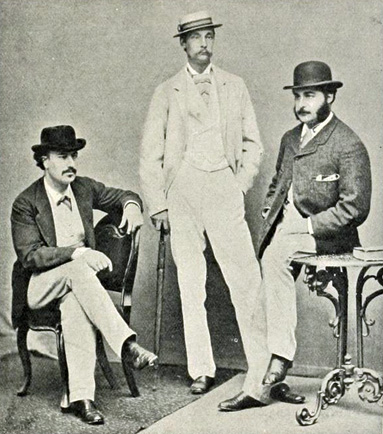
The fourth Earl, Seymour, was known as Sim. At the age of 17, he was already an excellent player of the violin, and would take the lead at concerts staged at Heaton Hall. Sim was also proficient on viola, French horn, cornet and piano.
(Image in Public Domain)
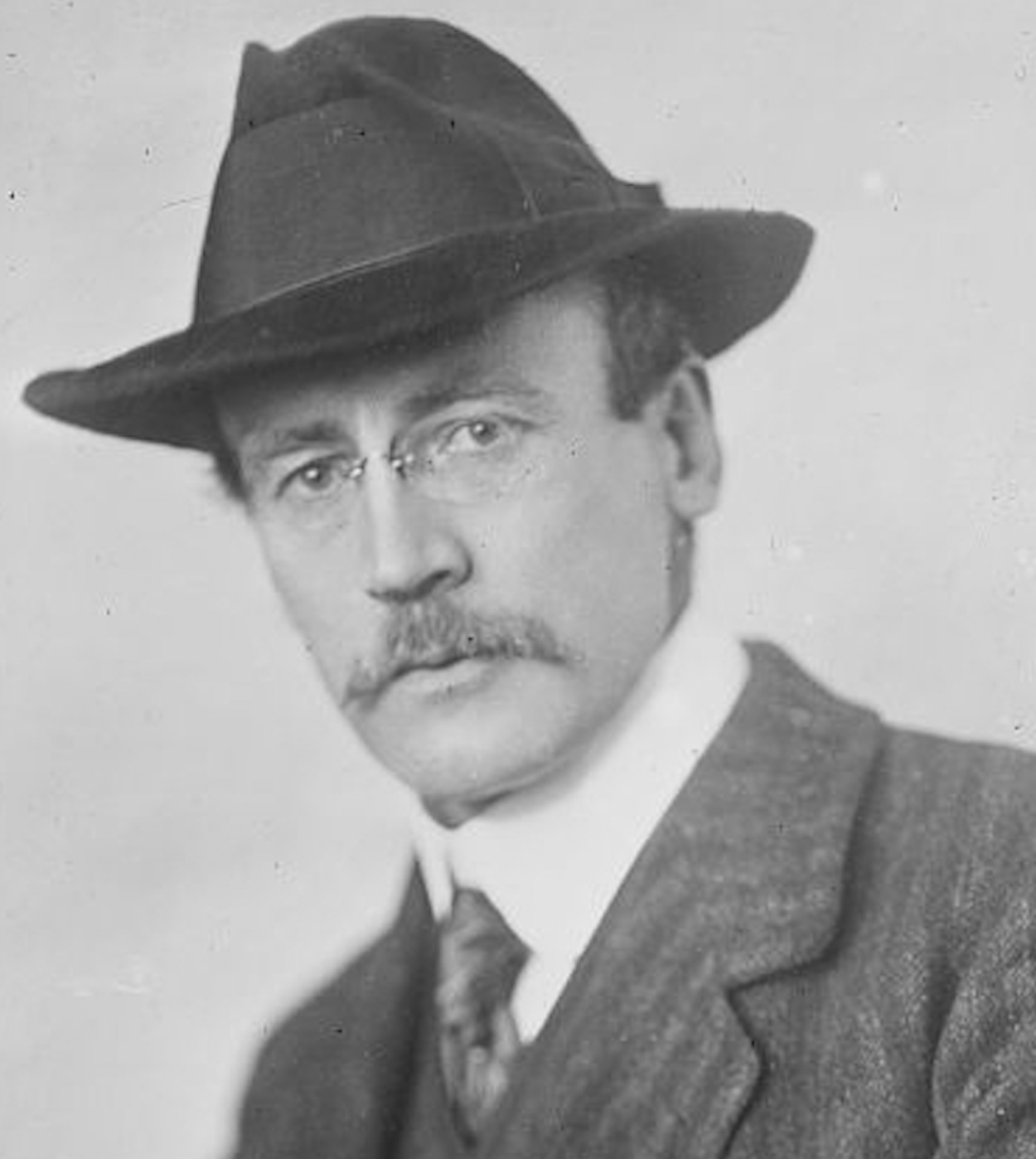
In 1860, aged 21, he founded an amateur orchestra known as the Wandering Minstrels, comprising of forty musicians. The members were either gentry or high-ranking military types. Sim took the role as composer and lead conductor, and would not hesitate to correct a musician on their playing, despite any age gap or seniority. The orchestral concerts were used to raise money for charities and good causes, including the Lancashire Cotton Famine that devastated so many lives.
A huge coup for the Wandering Minstrels was to play the opening concert for seven thousand people at the newly built Albert Hall in 1871. This was staged for the workforce that had constructed it, along with their families and members of the public. Unfortunately, the design of the roof meant that there was a lot of echo during the performance. Modification of the roof meant that the fault could be remedied before the official opening.
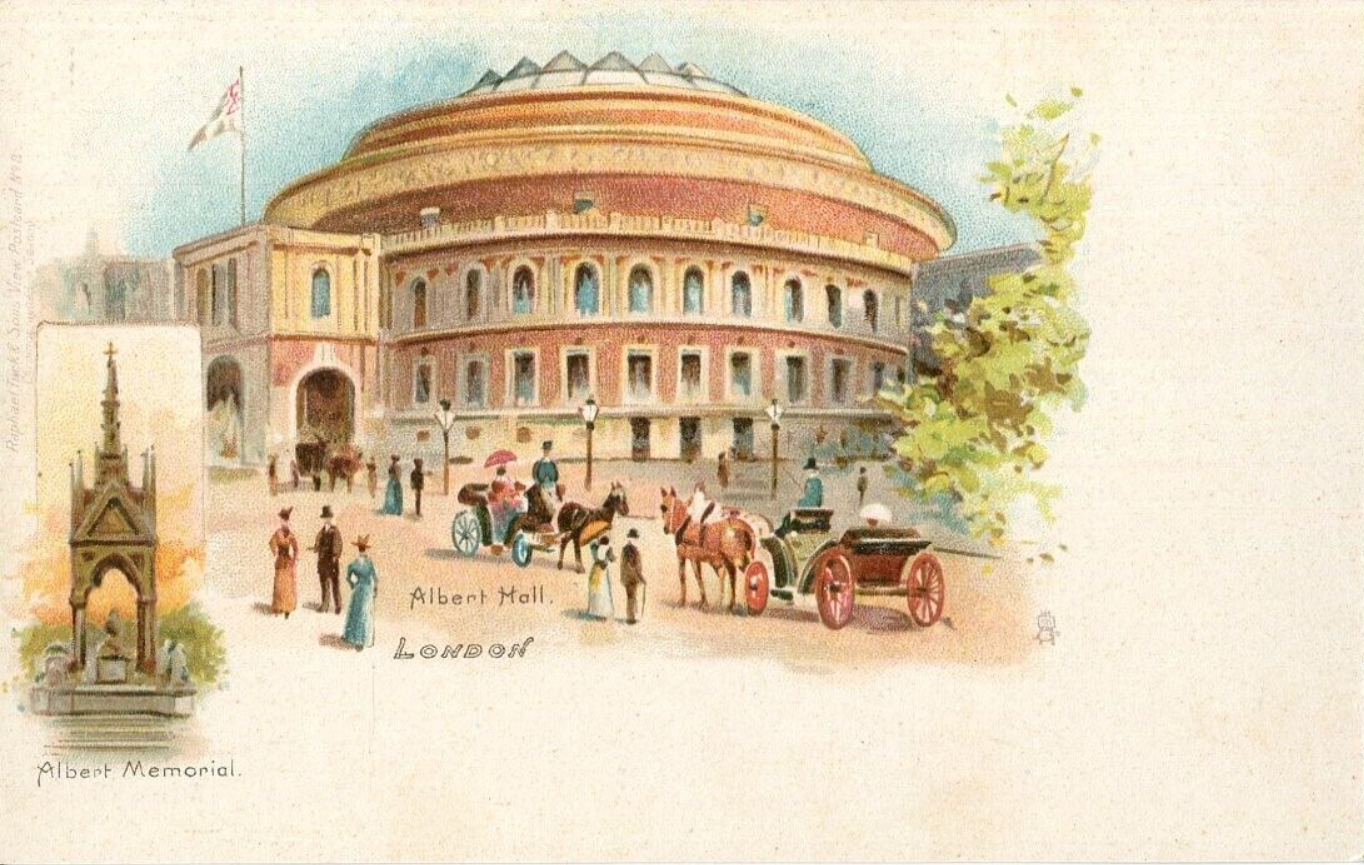
Sim retired from conducting the orchestra three years later, probably due to personal bankruptcy. From then on, he spent much of his time abroad. The orchestra continued without him, lasting 38 years in total. He returned to Heaton to spend his final years at the hall, dying there in January 1898. He was buried at St Margaret’s Church, Prestwich, in the newly constructed family vault. His son Arthur succeeded him.
The Fifth Earl: Arthur
Arthur was serving as a colonel in 2nd Manchester Regiment in South Africa when his father’s death meant he had inherited the title of earl. Family debts were mounting, and it was Arthur that decided to sell Heaton Hall and its grounds to the Manchester Corporation in 1902. This was a very common move at the time, with many estates of the gentry being purchased and converted into public parks. This marked the end of the long association between the Earls of Wilton and Heaton Hall. However, although they no longer lived locally, the 5th, 6th and 7th Earls were all buried at St Margaret’s Church in Prestwich.
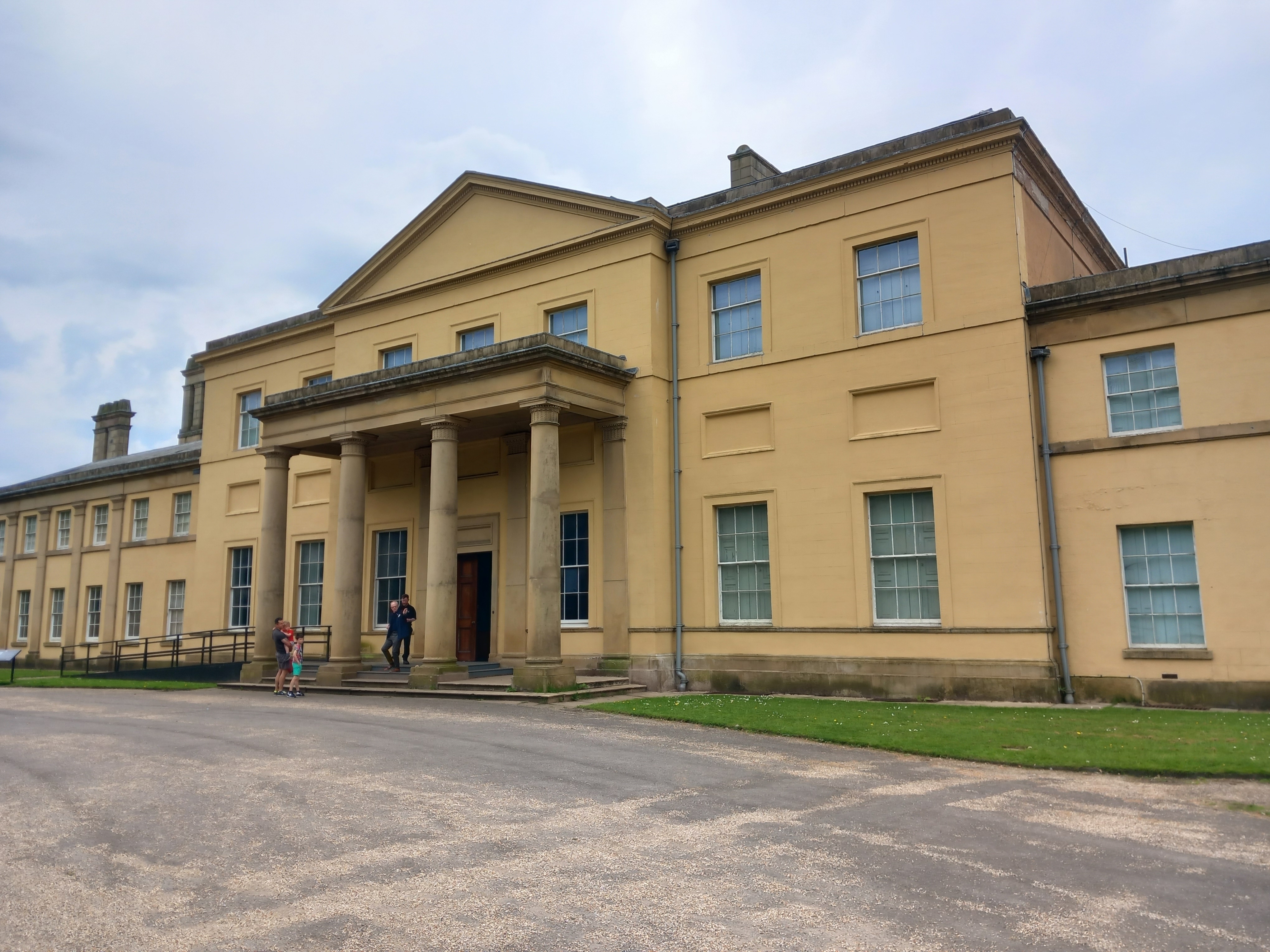
In June of that year, over four days, the entire contents of the house were auctioned off. Notable items included Chippendale furniture, Sheraton fine inlaid furnishings, the billiard table, and the library content of over four thousand books. Six hundred of these were volumes of music, reflecting the family’s long-standing love of the art form.
In the September, an official handover ceremony took place at Heaton’s Grand Lodge. Alderman Birbeck, Chairman of the Parks and Cemeteries Committee, presented a ceremonial key to Alderman Hoy, Lord Mayor of Manchester. In the early years of use, Manchester City Art Gallery opened a branch gallery for the public within the hall, and the Saloon was used as a café.
The World Wars
At the outbreak of the First World War, four battalions of the Manchester Pals used Heaton Park for their initial training. The following year, Heaton Park Command Depot, a ground-breaking rehabilitation centre, was set up. It was the largest treatment facility for wounded servicemen in Britain. Overseeing it was Canadian surgeon Major Roger Tait McKenzie. His pioneering new ideas on how to treat injured men were put into practice at Heaton. Hydrotherapy, electrotherapy, heat treatment, remedial massage and physical exercises were all part of the regime. The hall itself was used for some of these therapies, and photographs exist showing the Music Room being used for weight lifting.
The range of injuries was large and varied, including amputations, frost bite, trench foot and scars that had failed to properly heal. Some of the patients also suffered from shell shock, which today would be diagnosed as Post Traumatic Stress Disorder (PTSD). With regards to PTSD, Major McKenzie was much more sympathetic than most of the doctors of his day, stating it was “a very real condition beyond the patient’s control in most cases”. Following the treatments, around half the men returned to some kind of active service.
The Depot also employed the Almeric Paget Military Massage Corps. This consisted of forty female massage therapists who would work on the servicemen’s injuries. They were supplemented by male masseurs who had been blinded during the war, and then retrained to do this work
During the Second World War, the hall and park were once again taken over by the military. This time, the Royal Air Force used it as the Aircrew Dispatchment Centre, where over 130,000 cadets took their initial training.
Heaton Hall was fortunate to have come through both military occupations largely unscathed. So many stately homes used during the wars were badly damaged and some were even deemed beyond repair after their use in the wars.
Decline and Restoration
Over the ensuing decades, the fortunes of the hall have waxed and waned. To further safeguard the building, in 1952 it was given Grade I listed status. It was regularly open to the public, and a souvenir tourist guide was produced.
In 1982, a devastating fire broke out in the west wing. This gutted a huge amount of the building, including the kitchen, butler’s pantry, housekeeper’s room and silver safe. Following this, the west wing was boarded up and remained unused for the next 40 years.
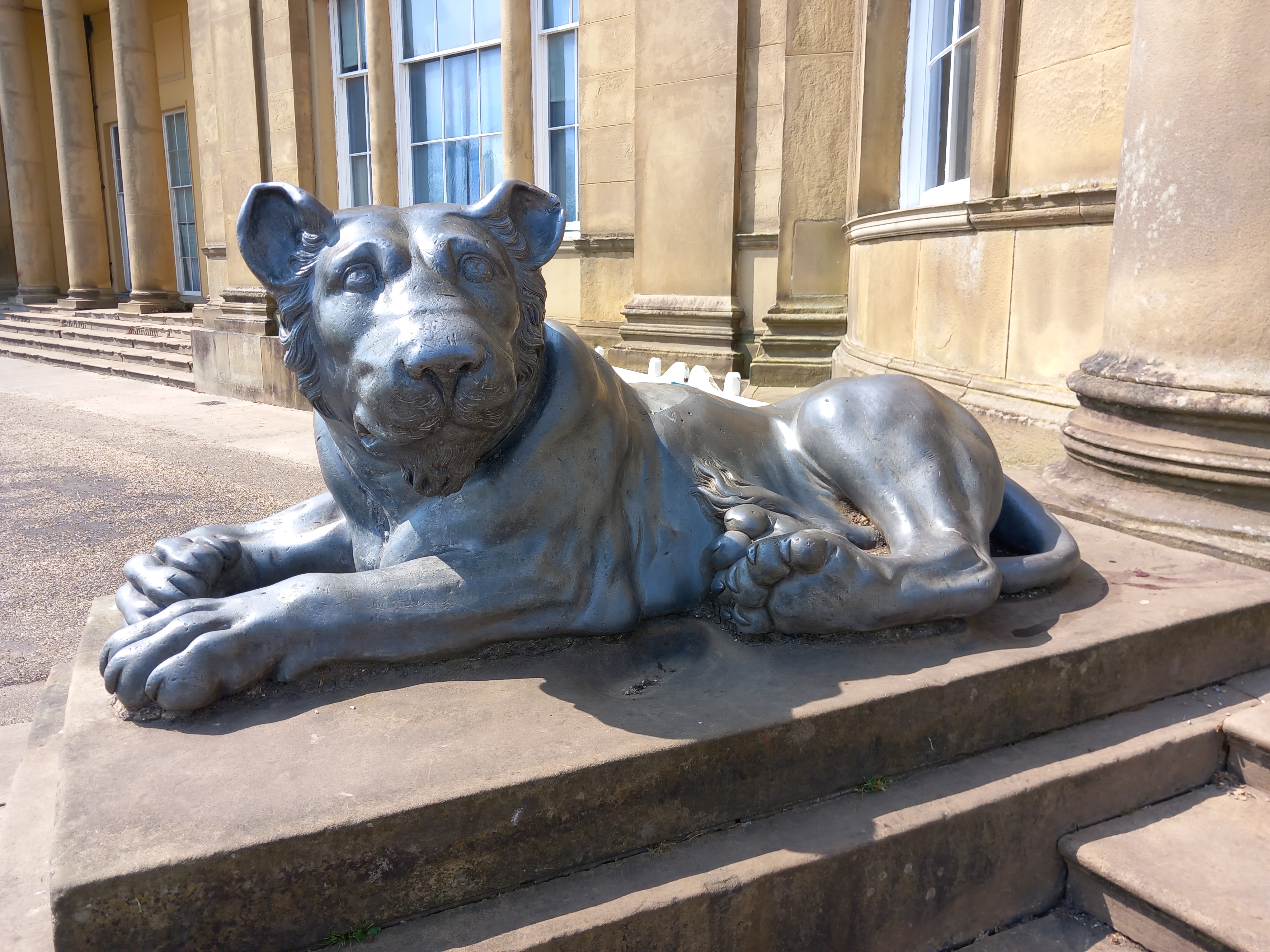
In the following decade, Manchester City Galleries took on an extensive restoration of internal plaster and paintwork. The two lions on the steps outside the Saloon were suffering from the effects of weather and vandalism. They had been made from lead and were hollow, so were strengthened with a steel coating and filled with concrete and flint.
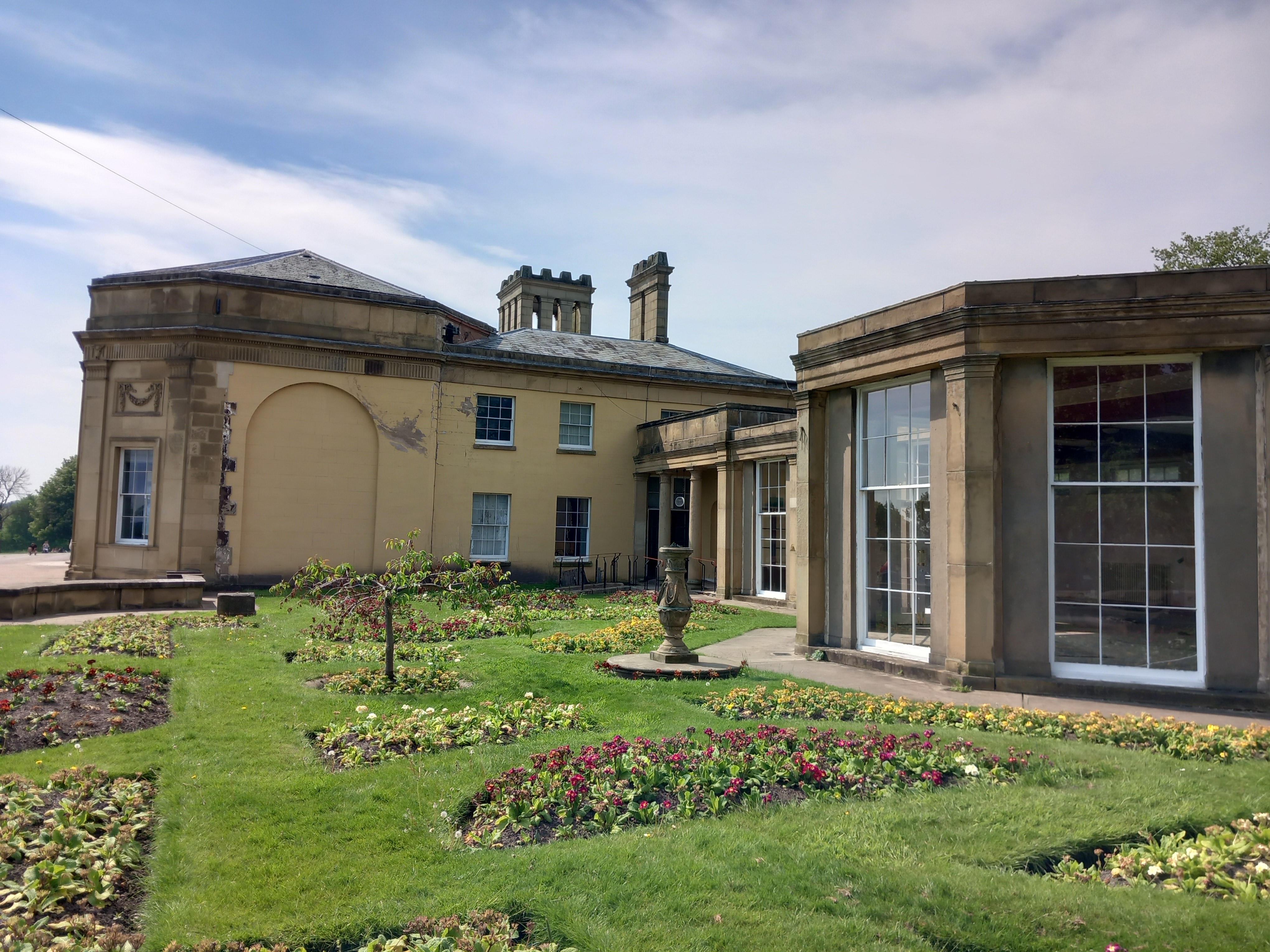
As the new Millenium dawned, a concerted effort began to restore the grounds around the hall. During a five-year programme, trees and shrubs that obscured the hall views were removed and Eames’s historic landscape vision was restored. His pupil John Webb had later designed the Western Pleasure Grounds for the family, and these were restocked with plants that would have been common in the early 1800s.
2010 saw attention being turned to the hall itself. For the next fifteen years there would be a number of large-scale efforts to repair the building. Substantial roofing work was done in 2012. Four years later, the windows and shutters of the burnt west wing were brought out of storage and reinstalled. Further work was carried out on the outside plaster render, broken windows were replaced and the first floor had a number of internal repairs.
At the time of writing, the most recent plan is to refurbish the Orangery. This has been closed to the public for over ten years. The plan includes putting in a new floor, doors, electrical and heating system and toilets. It is hoped that this could be hired out as an event space.
Visiting Today
The Entrance Hall on the north side of the house was used as a reception area for guests, and as a waiting area for those visiting on estate business. The room is dominated by large, imposing mahogany doors. Niches containing statues of Tragedy and Comedy and two vestal virgins were designed to impress. While those on estate business would be shown into the Estate Office adjoining the room, guests would go through to the Stairhall.
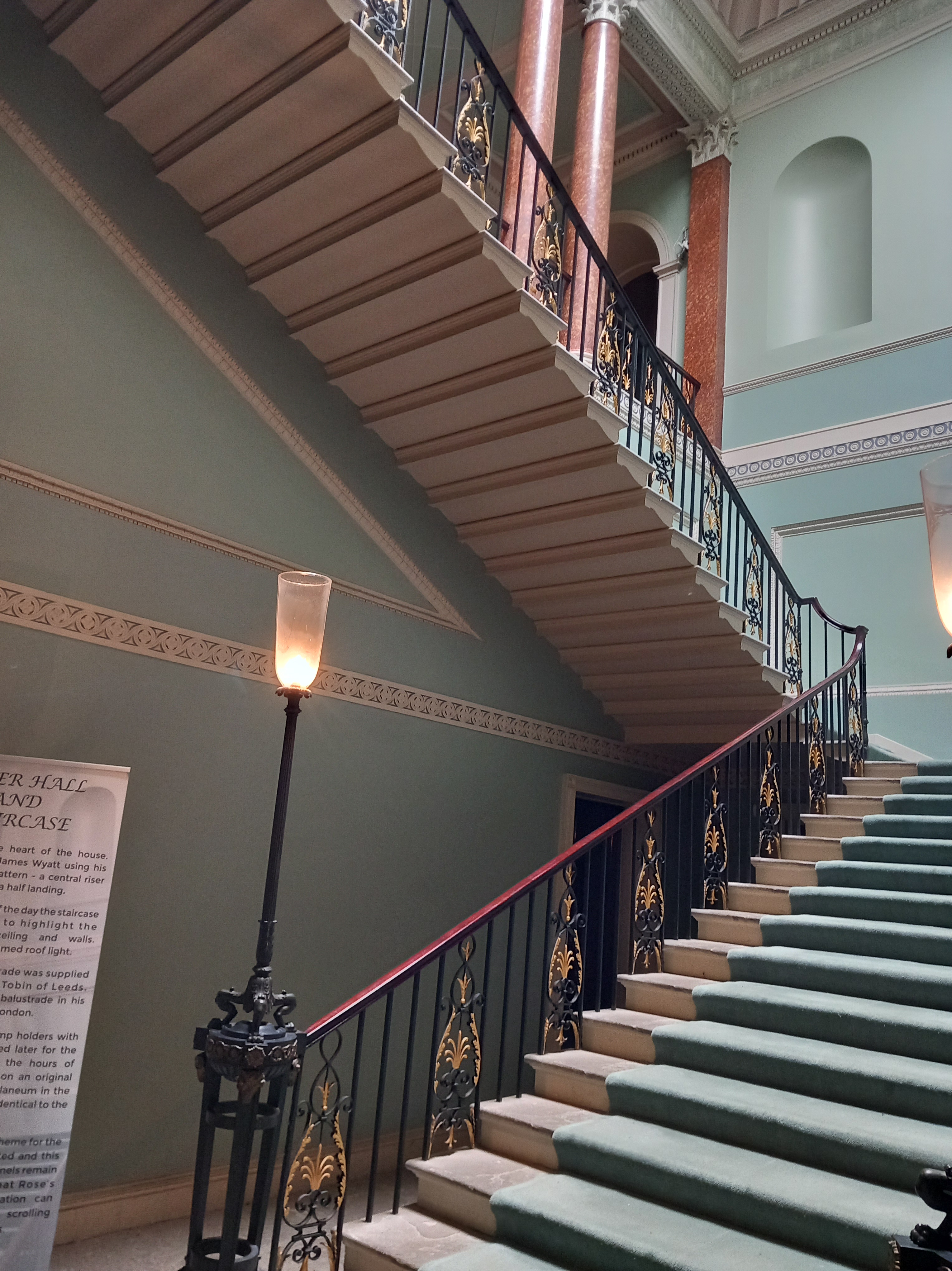
The Stairhall features James Wyatt’s elaborately designed wrought-iron staircase, illuminated from above by a domed roof light. This room lead through to the suite of three south-facing reception rooms: the Saloon, Billiard and Dining Room. All three of these have decorated plasterwork by Joseph Rose the younger of York, featuring fluted fans, ears of wheat and honeysuckle flowers.
The Saloon was used for the entertainment of guests. The gilded lyres in the frieze above the fireplace give a clue that this was used as a music room before the later one was built. The crest of the Egerton family, three crossed arrows, can be seen on oval plaster medallions. A garden door leads down to the steps of the garden, flanked by the two huge lions, designed by John Cheere.
The feminine theme of the Billiard Room gives rise to the impression that this could have been a Drawing Room. The large framed paintings are rare surviving examples of the work of Michael Novosielski, a Polish born designer of theatre scenery. They show mythological scenes: The Hunt of the Calydonian Bear, The Family of Darius before Alexander (the Great), and The Myth of Belisa. Other examples of his work, such as that done with James Wyatt at the Pantheon in London, have all been lost. Thomas Egerton bought a billiard table from Gillows of Lancaster in 1771, making historians think that the room was purpose-built for the table. Originally, billiards was enjoyed by both women and men, but the game later became the preserve of men in Victorian times.
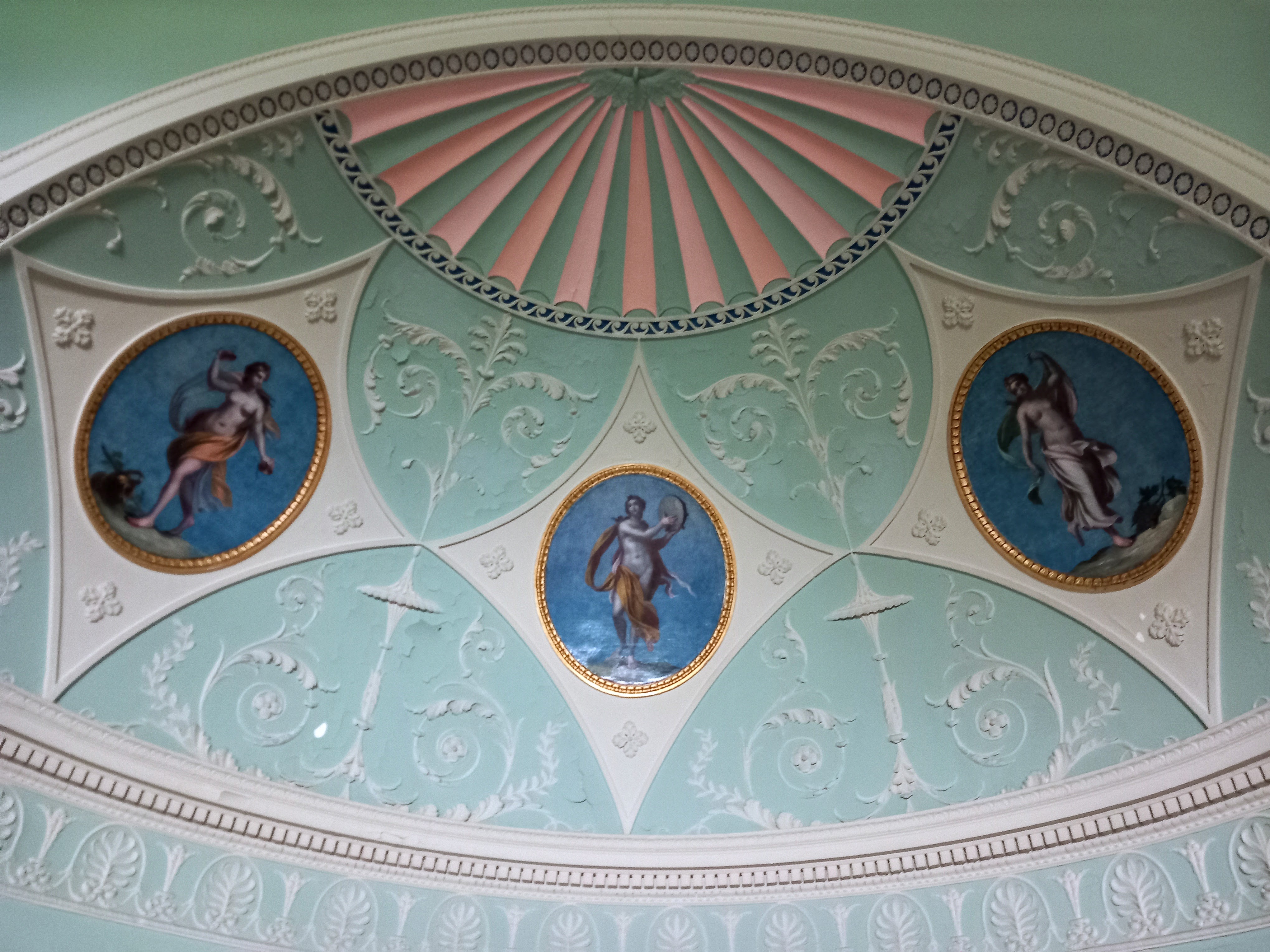
The Dining Room ceiling and alcove were decorated by the Italian artist Biagio Rebecca. The ceiling displays the Four Seasons, while the alcove depicts three dancing priestesses of Bacchus, the Roman god of revelry.
The octagonal domed Library was remodelled by Lewis Wyatt, nephew of James Wyatt. It held a huge range of books, mostly music, travel and architectural titles. It also housed portfolios of engravings, featuring classical architecture, sculpture and travel abroad. All of these were sold at the auction when the family moved out.
The Music Room was completed by Samuel Wyatt, the older brother of James. When it was finished in 1789, a celebratory concert was held, featuring pieces by Handel and Corelli. The next year, the organ was installed. It is an imposing piece, with gilded pipes, and stretches the full height of the far wall. Biagio Rebecca painted the organ, creating a portrait of Handel, Thomas Egerton’s favourite composer. The organ is currently awaiting restoration.
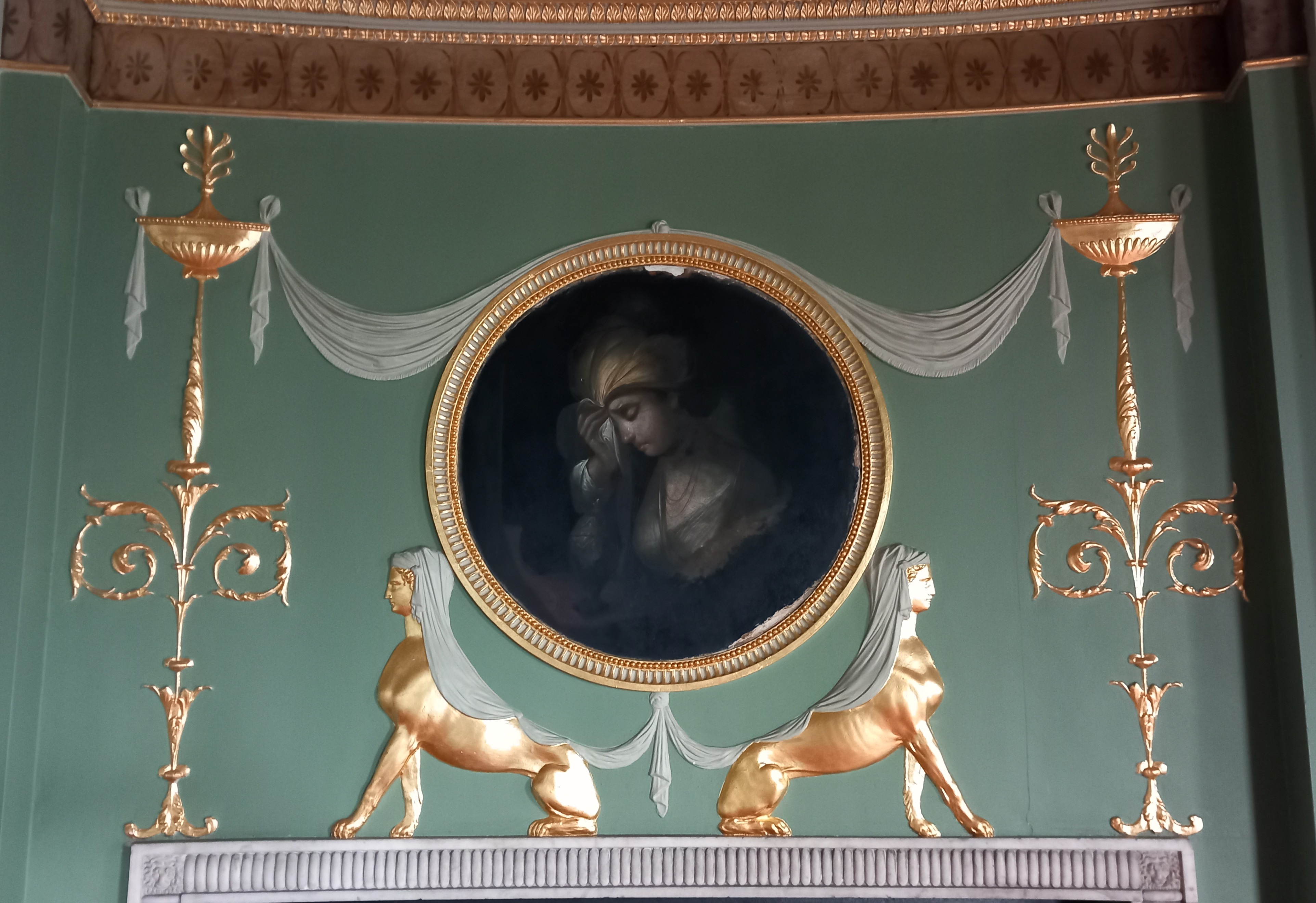
Upstairs is the circular Cupola Room, topped by a dome. It served as a drawing room for Thomas Egerton’s mother. The decoration of the room was again created by Biagio Rebecca. He painted designs in oil onto strips of paper, measuring just 10 inches by 5 inches, and then pasted them up onto the pilasters. On the dome the outer area shows ‘The Virtues’ and the inner area ‘The Elements’. The painting over the fireplace is meant to symbolise the virtuous widow, and is Sigismunda Weeping over the Ashes of Tancred.
The stunning architecture of the hall has made it an ideal place for location filming on a number of occasions. In the early 1980s, Brideshead Revisited, while mostly filmed at Castle Howard, used the Stairhall landing for party scenes. The building has more recently been used in the police procedural drama series Ridley showing on television in 2022, and the film A Gentleman in Moscow which was released in 2024.
Heaton Hall deserves our support. Despite all its furniture being removed for the time being, it still has an abundance of elaborate plasterwork, superb paintings and fine sculpture adorning its main rooms. The volunteers have erected detailed interpretation displays about the history of the hall and grounds. The goal is to fully reopen the building in the future, complete with historic furniture. The Friends of Heaton Hall are to be applauded for their tireless work over so many years to bring the hall back to life. They are in charge of the limited monthly openings during the spring, summer and autumn (see below for opening times). There is still much repair work to be done, and more funding needs to be found by Manchester City Council and its heritage partners.
Author’s Note. A range of booklets from Tony Dunlop’s The Little Book Club Series proved invaluable for the writing of this piece. For more on the huge range of these fascinating writings, search on Facebook.
The Friends of Heaton Hall website can be found at heatonhall.wordpress.com.
Site visited by A. and S. Bowden 2024. This piece written 2025.
Access
During 2025, Heaton Hall will be closed to the public as new electrical wiring is fitted throughout the whole building, clearly a major task. The Orangery is also being renovated. Hopefully, this article has whetted the appetite to visit the hall when it next reopens, if not by the end of the year, then in 2026. See the Facebook page of the Friend of Heaton Hall for any updates here.
For appreciators of architecture, the exterior of the hall can be viewed at any time, as can the stunningly restored parkland of Heaton Park.
There are a number of Pay and Display car parks at Heaton Park.
References
The Egerton Blood Line and the Earl of Wilton Peerage, Michael Denham and Tony Dunlop (2021) The Little Book Club Series
1st Earl Sir Thomas Grey Egerton, Michael Denham and Tony Dunlop (2021) The Little Book Club Series
2nd Earl Thomas Grosvenor Egerton, Michael Denham and Tony Dunlop (2021) The Little Book Club Series
3rd Earl Arthur Edward Holland Grey Grosvenor Egerton, Michael Denham and Tony Dunlop (2021) The Little Book Club Series
The Wandering Minstrels, Tony Dunlop (2022) Little Book Club Series
Country Houses of Lancashire and Their Builders, John Champness (2012) University of Lancashire, Centre for North-West Regional Studies
Heaton Hall: An Illustrated Survey of the Lancashire Home of the Wilton Family, S.D. Cleveland (undated booklet). Available online as a pdf file.
On site interpretation prepared by the Friends of Heaton Hall
The Friends of Heaton Hall website can be found at heatonhall.wordpress.com.
Further Sources
nationalgalleries.org/art-and-artists/41517/mary-margaret-stanley-countess-wilton-1801-1858-1st-wife-thomas-egerton-2nd-earl-wilton
Heaton Park welcomes back its keepers 23rd October 1997 Lancashire Telegraph
New phase of restoration of Grade I-listed hall complete thebusinessdesk.com 22nd June 2016
Heaton Hall £5 million repair works completed and tours to begin in April Manchester City Council 8th March 2022
The history behind Heaton Hall and Manchester’s first NIMBY politician talkingaboutmygeneration.co.uk 29th April 2024
Council applies for Heaton Hall funding 19th march 2009 cladglobal.com
Plan to reopen ‘lost jewel’ in Heaton Park to the Public BBC News 7th March 2024
Heaton Hall in Heaton Park inundated with curious visitors Bury Times 15th April 2025
 Lancashire Past