Standing on Railway Road in Clitheroe is a larger-than-life sculpture of a black dog. Created by Marjan Wouda, it was inspired by her love of Lancashire history and folklore. The sculpture depicts Dandy, a supernatural creature said to be in league with James Device, one of the so-called ‘Pendle Witches’. James was a young man in his early twenties at the time. The Pendle Witch Trials of 1612 saw James, along with his sister Alizon, mother Elizabeth, and grandmother Elizabeth Southerns (nicknamed Demdike) accused of witchcraft.
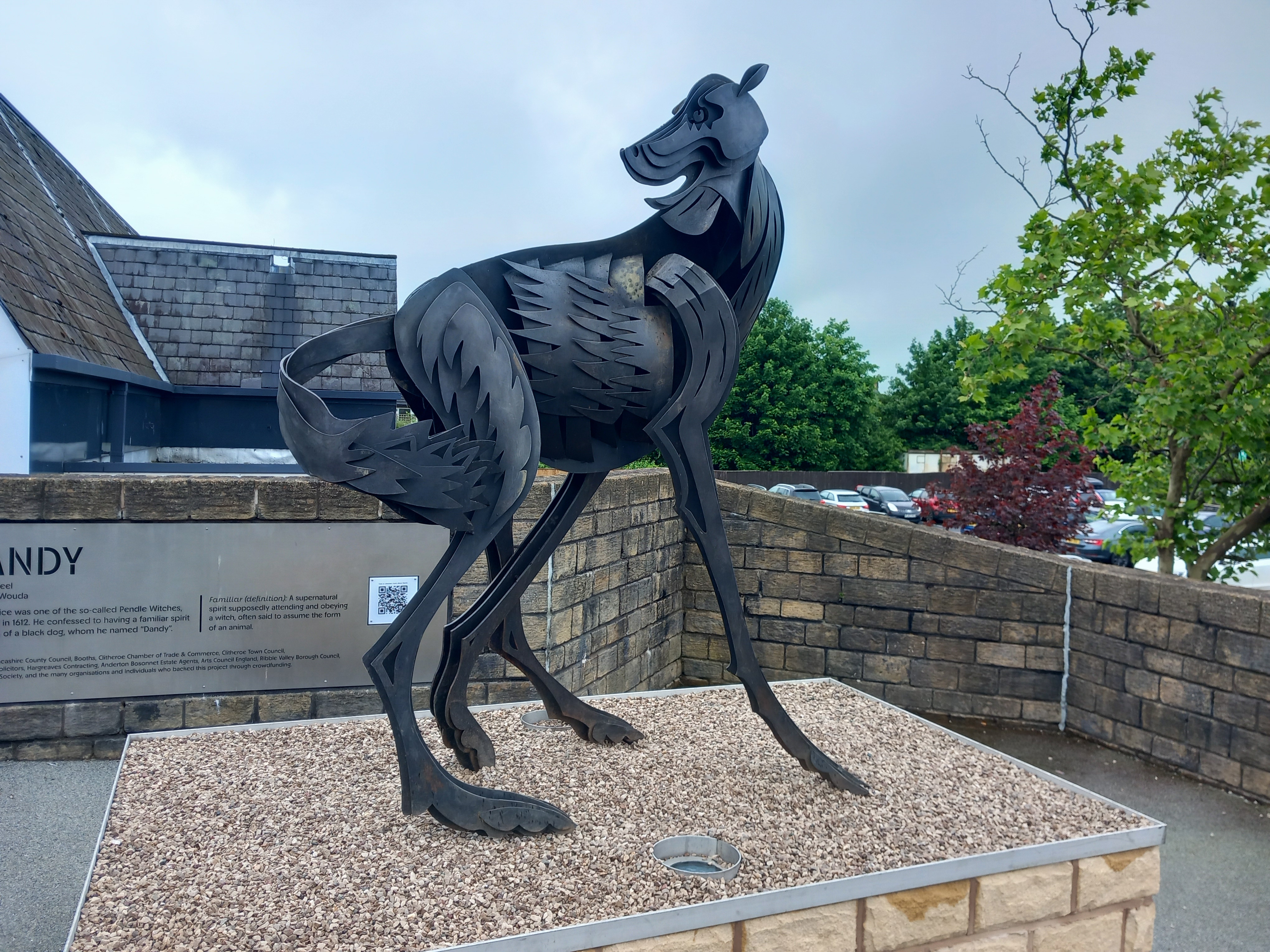
Before their trial at Lancaster Castle, the suspects were first interrogated by Roger Nowell. Nowell was a local magistrate, and was intent on gathering evidence against what he believed to be a community of witches. Under questioning, James admitted to having a ‘familiar’ in the form of a dog, which enacted revenge on people who had wronged him. A familiar was believed to be an animal that aided a witch with their magical spells. This was no pet dog, but a supernatural creature, that spoke with James, and told him to call it Dandy.
James claimed to have had a couple of paranormal experiences prior to his dealings with Dandy. He stated that the first occurred after his grandmother had told him to smuggle communion bread out of the church at Newchurch. The bread from a church service was seen as something that was imbued with power, and so could be used to produce magical effects. On his way home James claimed he was approached by a hare, which spoke to him and demanded the bread. When he said he did not have any, the hare threatened to “pull him to pieces”. It disappeared after James “marked himself to God” (gave the sign of the cross). Four days later a brown dog approached him, again at Newchurch, and asked him for his soul. In return, it promised him revenge on anyone he desired. James replied (rather confusingly) that his soul was not his to give, as it belonged to Jesus Christ, but as much of a portion that he could give, then he would.
Three days later, James was at Mistress Towneley’s house of Carre-Hall. She accused James and his mother of stealing peat turfs (used for heating and cooking) from her. As James turned to leave, she struck him between the shoulders. Two days later, a black dog appeared and told James that its name was Dandy. The dog suggested James make a clay picture of Mistress Towneley, and through this Dandy would help kill her. The next morning, James made the image and in the evening dried it by the fire. The following day, he began to crumble the picture, a little more each day, for a week. Two days after it was completely destroyed, Mistress Towneley died.
James then went on to make a further confession to the magistrate Nowell. He said that during the previous Lent, he was promised an old shirt from John Duckworth. When he went to collect it, Duckworth would not give it to him. As he left Duckworth’s house, Dandy appeared and accused James of touching Duckworth. James denied he did, but Dandy contradicted him, saying he had done and therefore Dandy had power over Duckworth. James said he wished Dandy to kill him, and within a week, the man was dead.
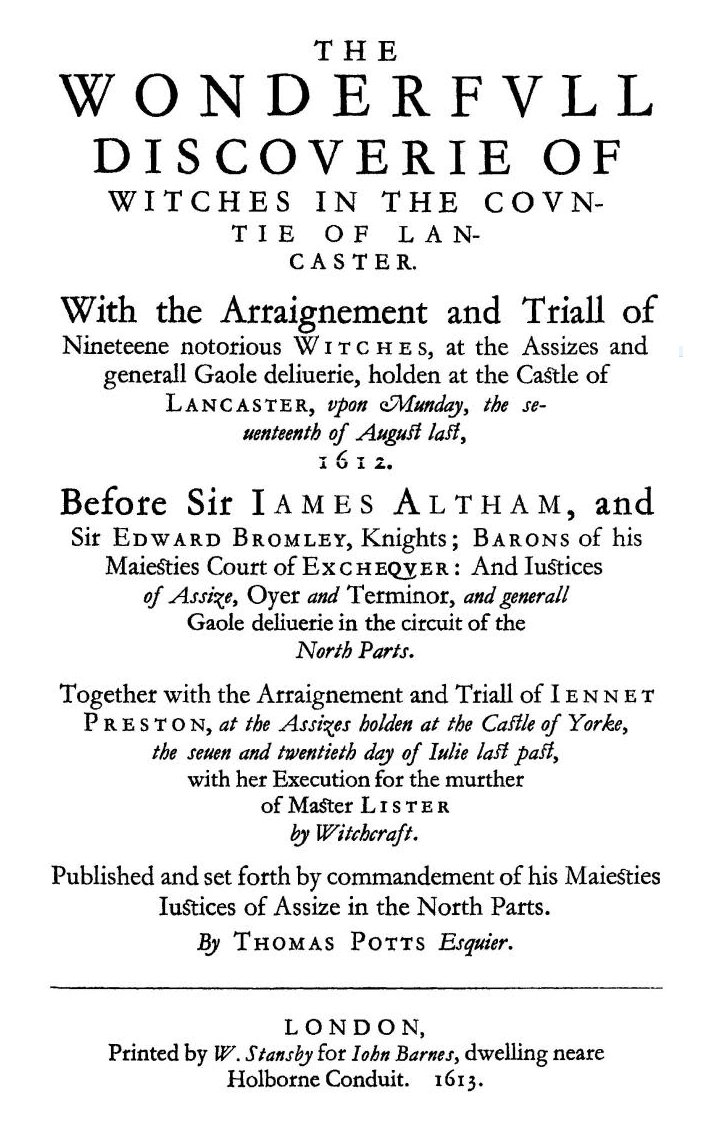
In these two instances, James appeared to confess freely to Roger Nowell at his interrogation, but more was to come. During his trial at Lancaster Castle, his youngest sister Jennet, just nine years old, stated that James, with the aid of Dandy, had killed two more people. These were John Hargreaves of Goldshaw Booth and Blaze Hargreaves of Higham.
James was not the only one to be accused of having a familiar. Testimony was taken that his mother Elizabeth Device had one in the form of a brown dog called Ball, and his grandmother Elizabeth Southerns had Tibb, a supernatural creature that appeared in various forms.
It’s not clear why James would give the testimony he did, before his trial. Why would he say he had a familiar, that had helped him kill two people (or possibly four if Jennet’s account was to be believed)? Supernatural dogs do not suddenly appear, nor offer to murder people. Was the interrogation process so relentless that he was forced into giving a false confession, browbeaten by the magistrate? There have been cases, even in recent years, when detainees have been ground down by their interrogators, and would say almost anything in order for the relentless questioning to stop. Alternatively, did he try to pass on the blame to a supernatural being, and so hope that he himself would be spared?
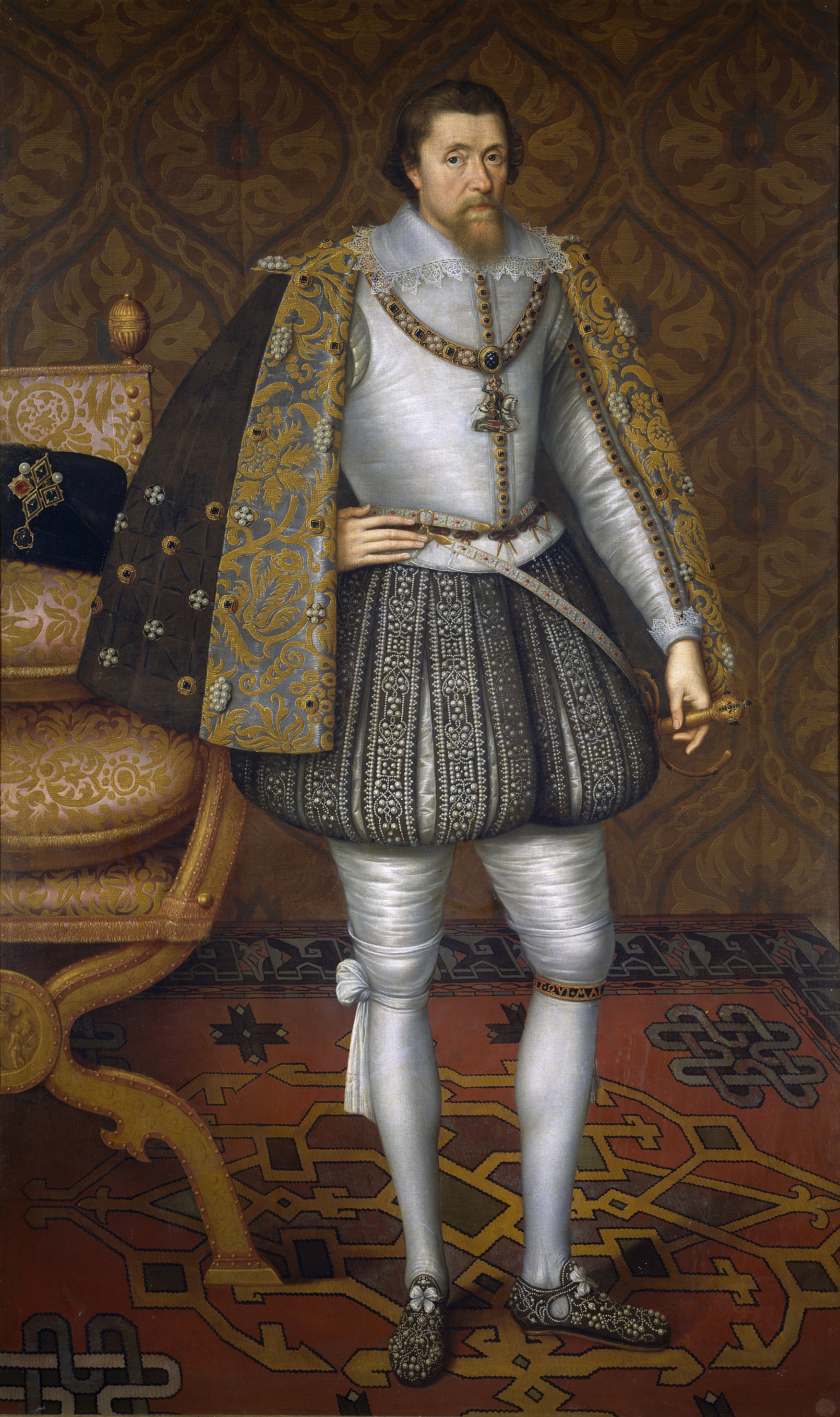
At that time in Stuart society, the belief in witches was strong. King James I had written his own book on the subject in 1597 entitled Daemonologie. A law passed by his Parliament just eight years before the Pendle Witch Trial stated:
“That if any person or persons… shall use, practise, or exercise any invocation or conjuration of any evil and wicked spirit: or shall consult, covenant with, entertaine, imploy, feed, or reward any evil and wicked spirit…or shall use, practise, or exercise, any Witchcraft, Incantment, Charme or Sorcery, whereby any person shall be Killed, Destroyed, Wasted, Consumed, Pined, or Lamed, in His or Her body, or any part therof; that then every such Offender…shall suffer paines of death as a Felon or Felons, and shall lose the priviledge and benefit of Clergy and Sanctuary”.
James’s grandmother, Elizabeth Southerns, died while imprisoned at Lancaster Castle. James Device, along with and his mother Elizabeth, and sister Alizon, was sentenced to death. They were hung along with eight other individuals, who had been caught up in this outbreak of fanatical religious madness.
Commemorating the Pendle Witch Trials
In Lancashire, despite the fame of the Pendle Witches, there was until recently very little to commemorate them. This is probably because they were the poorest people, in a poor society, and not the kind of persons memorials or statues are traditionally erected for. This situation was rectified somewhat when in 2012 the Lancashire Witches Walk was set up, a 51 mile walking route. It features ten marker posts, each inscribed with a name of one of the ten people executed following the trial, and a verse from a specially commissioned poem by then poet laureate Carol Ann Duffy.
The origin of Dandy Dog came when Marjan Wouda was commissioned to make a sculpture for Clitheroe. In an interview, Marjan stated that she found the Pendle Witches the most compelling story in the history of Lancashire. She desired to tell a part of it, and so created the sculpture of Dandy as a “familiar spirit; imagining what this dog, that could speak to us and magically come to our aid when we needed it, might look like. It had to be larger than life; a potentially dangerous friend – as indeed it turned out to be for our James.”
The Creation of Dandy
Marjan grew up in the North East of the Netherlands on her family’s small dairy farm, moving to Lancashire in the year 2000, setting up a studio in Darwen. She found the landscape here a source of inspiration, being intrigued by stories of Boggarts, the Dun Cow of Parlick Fell and the Milk White Doe of Burnley. Her work includes depictions of hares, owls, geese, foxes and the Dun Cow itself (see the end of this piece for websites showing these). But it was a creature from the Pendle Witch Trials that she chose to create for Clitheroe, portraying Dandy as a large wolf-like dog. He is based on the folklore concept of a Shriker, a monstrous black creature, whose appearance can herald death.
Marjan began the process of creating the statue by making drawings of what she imagined Dandy could look like. She then constructed a paper sculpture of the dog. Taking the paper shapes she had used, she was able then to put them into a digital format and scale them up, making them much larger. The same designs were then cut out from stainless steel. Working with Castle Fine Arts Foundry in Liverpool, the steel was bent into shape by running it through rollers. Marjan then worked with expert welder Stephano to assemble the sculpture, welding the pieces together and placing spacers between each plate. To give the dog its black appearance, she treated the steel with chemicals, mostly using potassium.
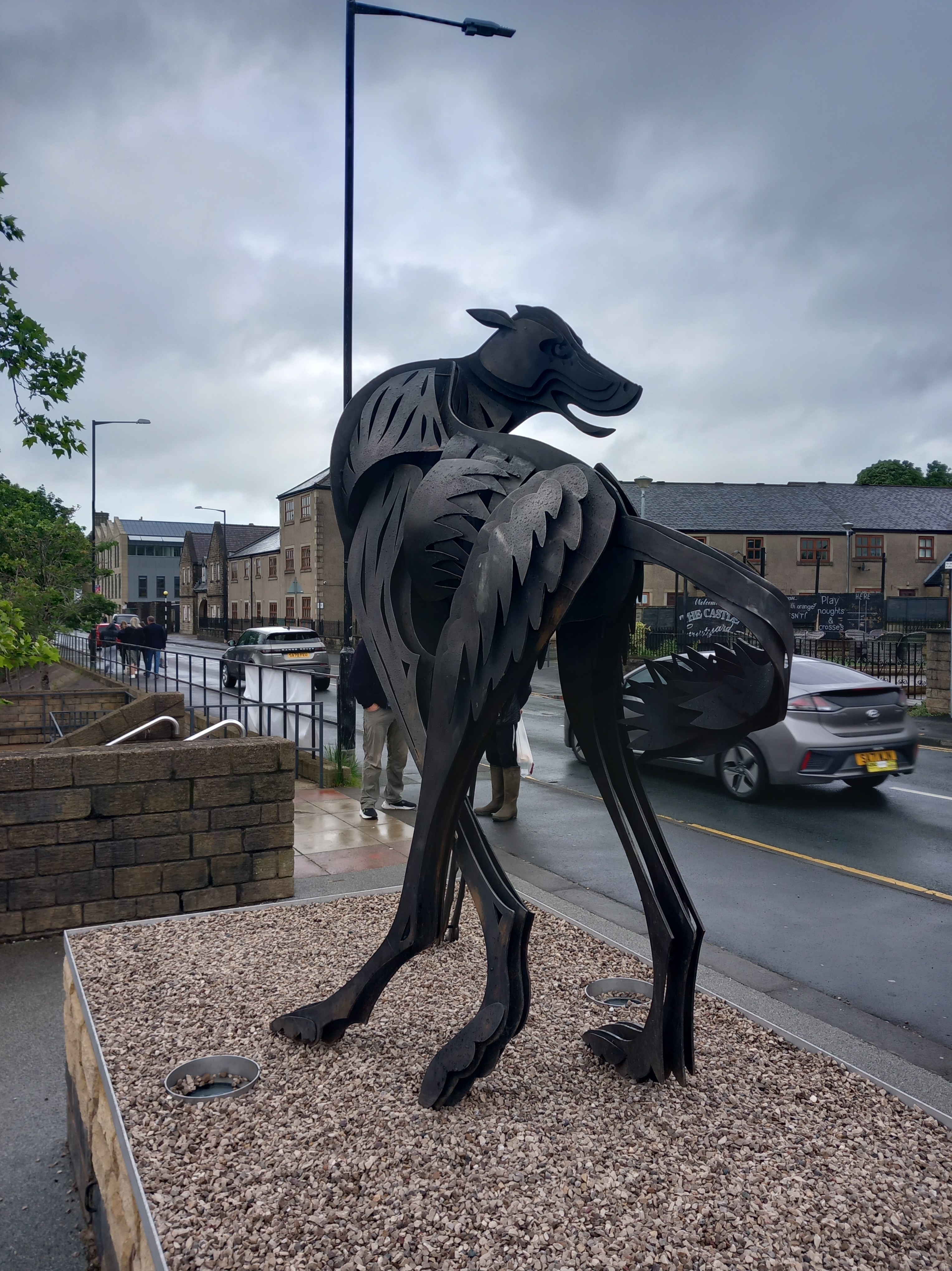
Funding for Dandy has come from diverse sources including Clitheroe Chamber of Commerce, Clitheroe Council, the Arts Council, Lancashire Culture and Sport Fund, and some local businesses. Further money was raised through crowdfunding amongst Clitheroe and Ribble Valley residents.
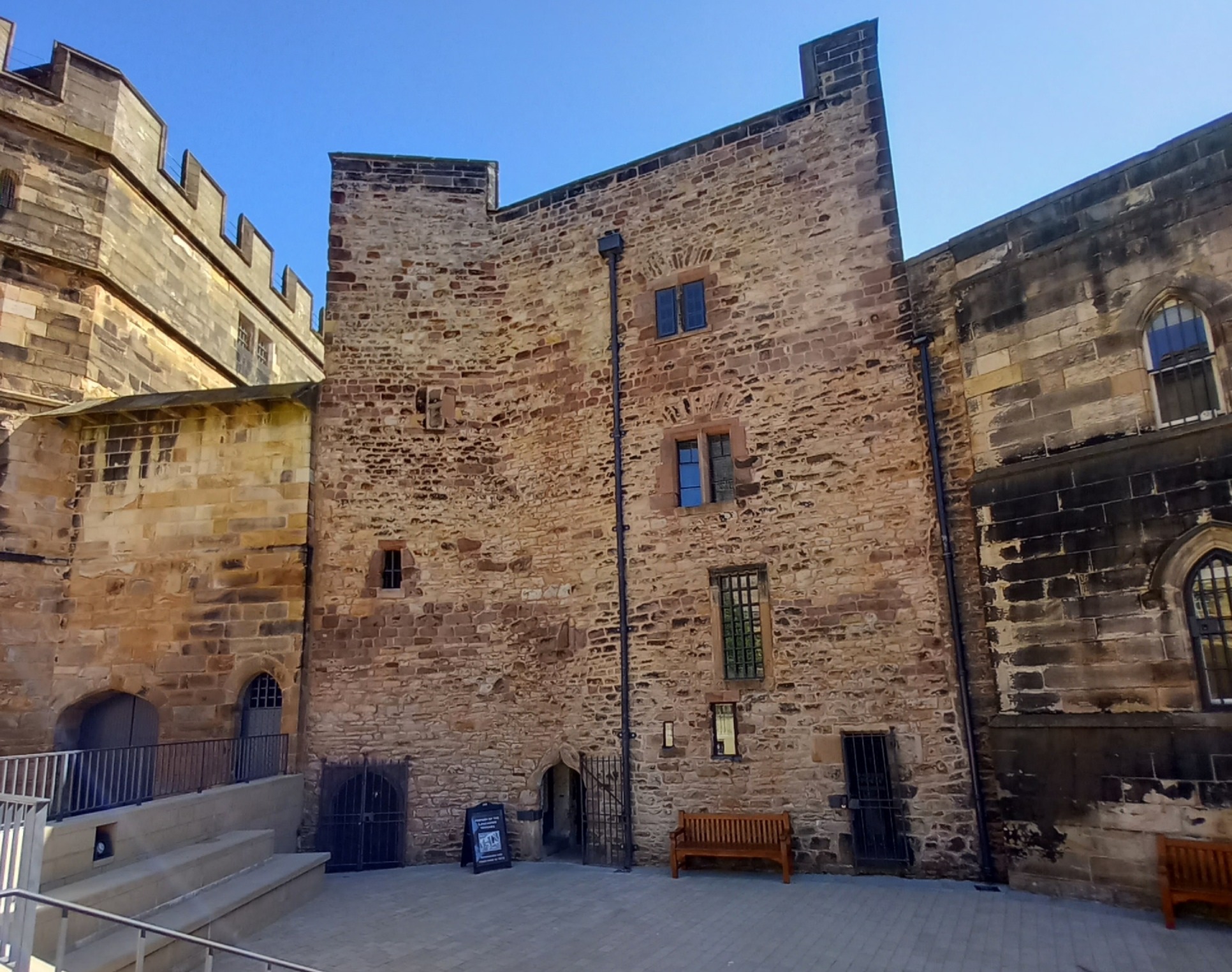
Local historians have tried to reconstruct the route from Pendle to Lancaster Castle that the prisoners took, and this is now part of the Lancashire Witches Walk. It is probable that they passed through Clitheroe on their way to Lancaster, and could have been held in Clitheroe Castle. One of their co-accused, Margaret Pearson, the so-called Padiham Witch, escaped the death sentence but was put in the pillory for four days, in four different towns, one of which was Clitheroe. She was then imprisoned for a year.
In 2024, an online petition to Parliament to pardon all those who had been historically convicted of being a witch reached over 13,000 signatures. This was enough for Parliament to have to make an official response. The Conservative Government issued a statement noting that witchcraft was an “impossible crime”, but stated that it had no plans to pardon those convicted of it.
The commissioning of the Dandy Dog sculpture was done with the hope that it would be a tourist draw to Clitheroe, and encourage people to learn more about the local landscape and history. Further down Railway Road from where Dandy stands is the excellent Clitheroe Visitor Information Centre at the Platform Gallery next to the railway station, which holds a wealth of information for the curious.
To view more of Marjan’s work, see her own website here and visit the Gavagan Art website here.
Site visited by A. and S. Bowden 2025
Nearby
Just a short drive away
References
History of the Pendle Witches
The Wonderfull Discoverie of Witches in the Countie of Lancaster, Thomas Potts (1613). Original text on Internet Archive (archive.org)
The Wonderful Discovery of Witches in the County of Lancaster: Thomas Potts’s original account modernised, Robert Poole (2011) Palantine Books
Something Wicked: The lives, crimes and deaths of the Pendle Witches, Carol Ann Lee (2024) John Blake
North-Country Folklore, Jessica Lofthouse (1976) Hale
en.wikipedia.org/wiki/Daemonologie
nationalarchives.gov.uk/education/resources/early-modern-witch-trials/an-act-against-witchcraft/
petition.parliament.uk/archived/petitions/640686
greenclose.org/lancashire-witches-400/
Commissioning and Making Dandy
marjanwouda.com
gavaganart.com/artist/marjan-wouda/
rvarts.co.uk/dandy/
burnleyexpress.net/heritage-and-retro/heritage/pendle-witches-dog-dandy-unveiled-outside-booths-in-clitheroe-4634749
spacehive.com/clitheroestory
lancashiretelegraph.co.uk/news/24945440.story-behind-dog-sculpture-clitheroe/
lancashiretelegraph.co.uk/news/24341428.pendle-witches-dog-sculpture-unveiled-clitheroe/
 Lancashire Past
Comments are closed.