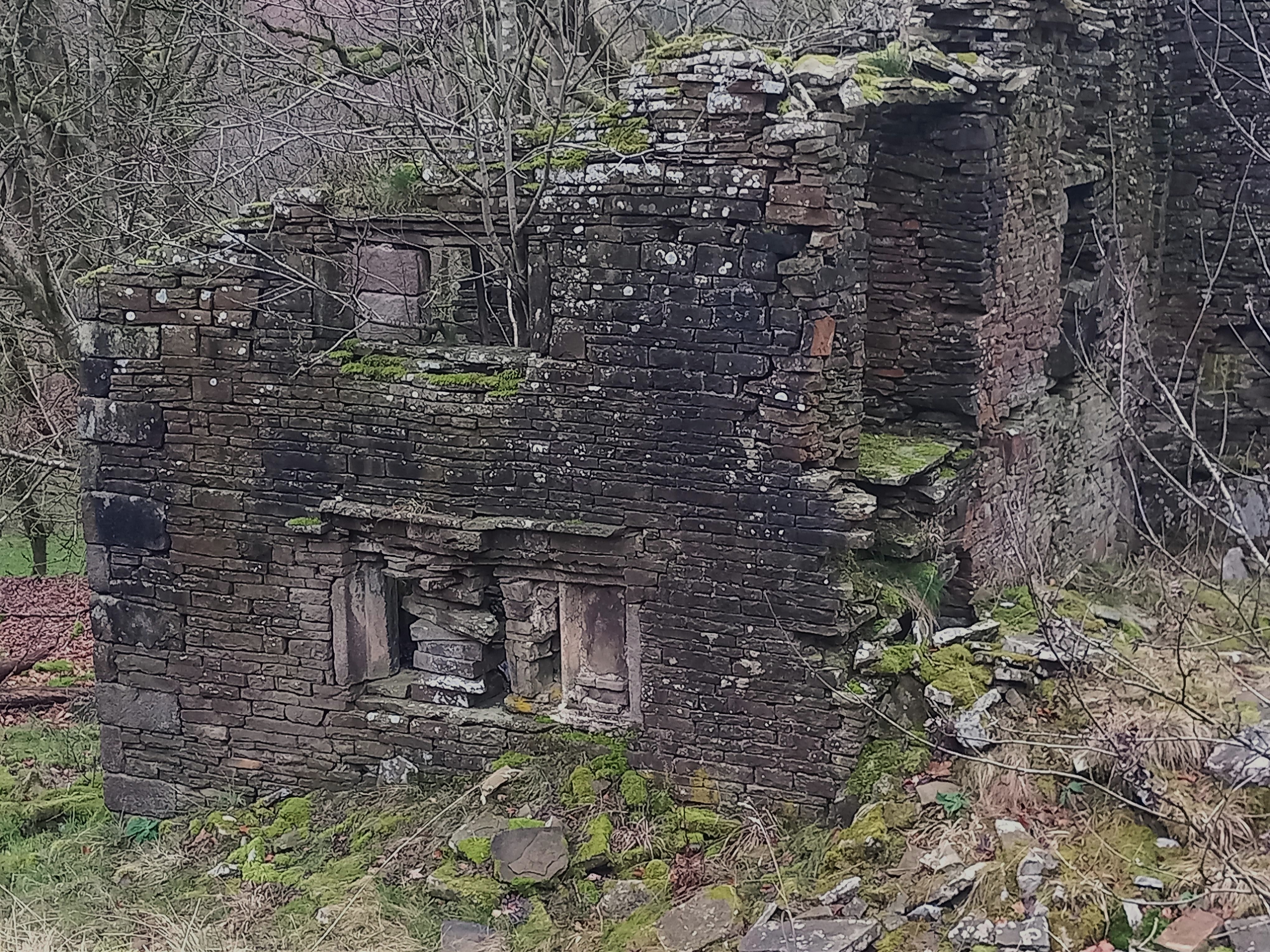
Hidden amongst the trees, just off the path by Calf Hey Reservoir, lies the well preserved ruin of Bentley House. Named for the family that originally had it built, it was clearly once a substantial structure. If it appears secluded now, it would have been far more so in the Victorian era long before the reservoir was constructed. In the 1850s it was home to Jonathan and Alice Haworth, who farmed the surrounding land. But Jonathan had a secret- he was a ‘whisky spinner’, distilling the spirit illegally.
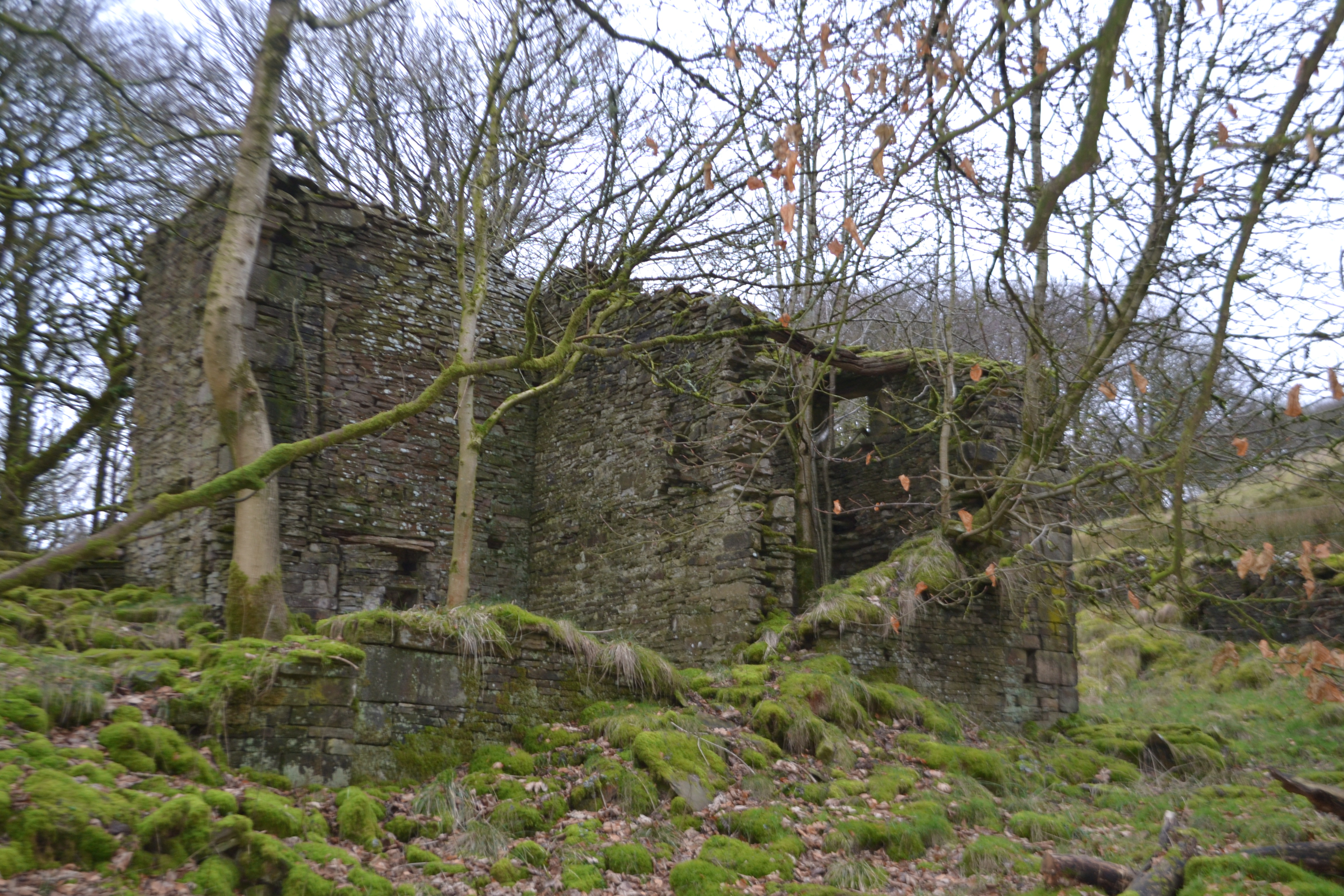
Those making whisky without a licence to do so were seen to be depriving the Inland Revenue of income, and the area of Haslingden Grane was deemed to be a hotbed of such activity. On Friday 3rd April 1857 at 11 o’clock at night, Jonathan and Alice heard an ominous knocking on their front door. It was Ellis Heath, Supervisor of the Inland Revenue in Blackburn, with his accompanying officers. Their purpose- to look for evidence of the illicit manufacturing of whisky.
The men first examined the Haworth’s ‘loom shop’, which had two handweaving looms in situ. Nothing untoward could be seen in this room. Then, they proceeded upstairs, and it was noted that the upper room seemed larger than the one below. They returned downstairs and asked Jonathan what lay on the other side of the wall of the ‘shortened’ room. He replied it was just the gable end of the house, but the Revenue men were suspicious. They tapped on the wall, and noted it had fresh mortar on it. They also observed that the flag floor beneath it looked newly laid.
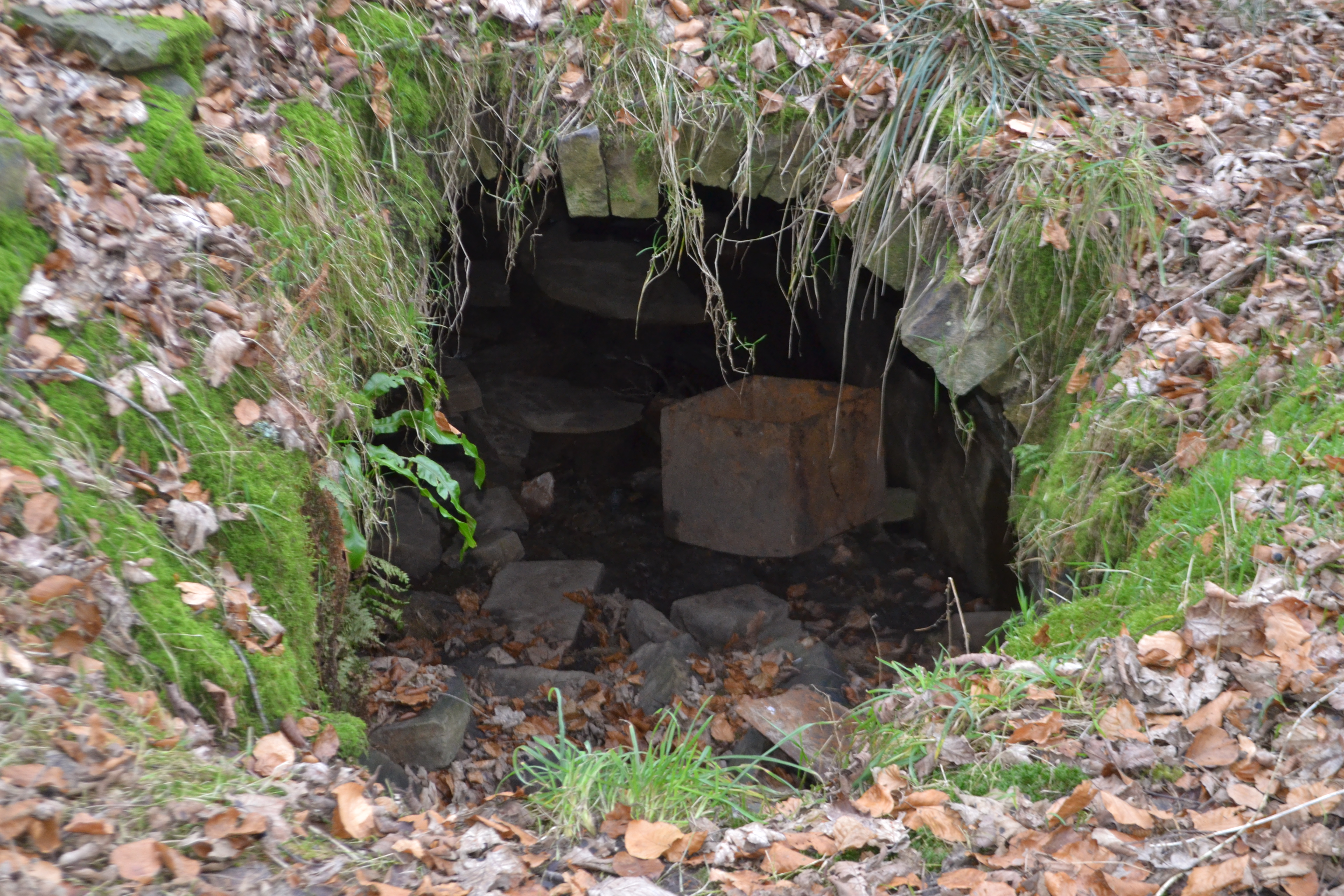
Removing some of the flags, they then began to dig through the soil beneath. Here they found a small arched opening, cut out of solid rock. It was just large enough for a person to crawl through, into a secreted underground room. This room contained a whisky still, fireplace, tubs, twenty pounds of treacle and two gallons of unfermented wort.
Jonathan had been very cunning. The fireplace for his whisky still needed a chimney outlet, but an additional smoking chimney in addition to the main one of the farmhouse would have aroused suspicion. Accordingly, he had fashioned a flue to carry the smoke from his underground room to his main chimney. He had re-used the stone he dug out of the ground to make the wall of the shortened room, behind which was hidden the distillery flue connection.
All the equipment was immediately confiscated, and James arrested. In court, a Mr Clough appeared for the Board of the Inland Revenue. He stated that this case featured “one of the most compact and connected private distilleries which have been brought to light”. Jonathan Haworth was fined heavily, and threatened with imprisonment if he did not pay. He sold ten of his cattle, but this was not sufficient to clear his all off his debt, and he was therefore sentenced to a term in prison.
By 1861 Jonathan Haworth was free and was living at Peak Farm, to the west of Calf Hey Reservoir. He died in 1895, and is buried with his wife Alice in St Stephen’s churchyard. She survived him by 15 years, and their gravestone lists the names of their children, all who died in childhood. The grave can still be seen in the field where once stood St Stephen’s Church before it was moved stone by stone to its present location. See our page on the abandoned churchyard and St Stephens Church, (now Holden Wood Antiques) here.
Site visited by A. and R. Bowden 2026
Access
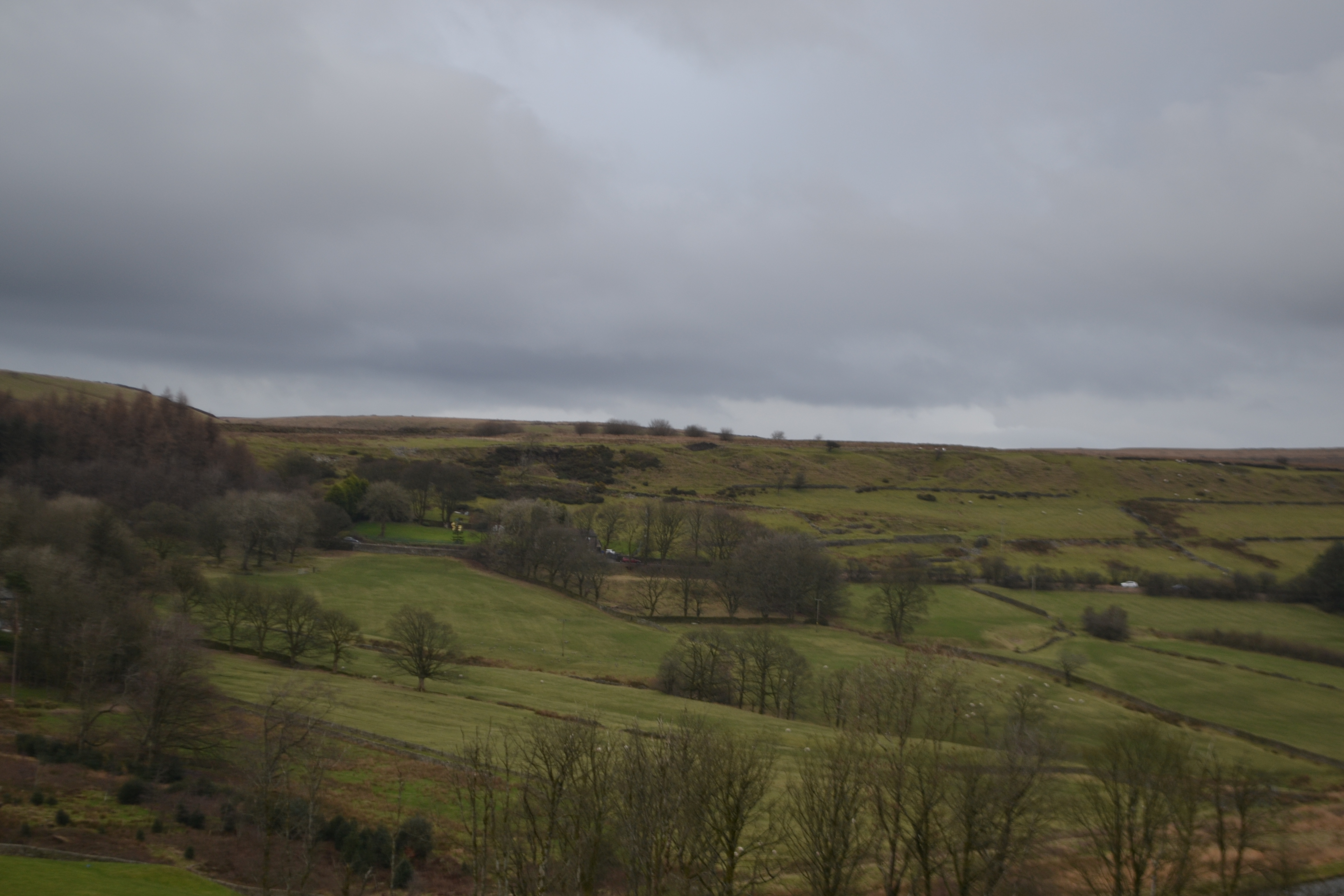
Bentley House ruins are to the south of Calf Hey Reservoir. They lie a little off the Rossendale Way footpath, hidden in the woodlands. The remains are unstable, but can be viewed safely from outside the surrounding fence. Grid Reference 755 228
Nearby
The Lost Village of Haslingden Grane
St Stephen’s, the church that moved
References
The Mystical Moors: A historical field guide to the Rossendale Valley, East Lancashire, Stephen Oldfield (2022) Carnegie Scotforth. This book is a superb guide to the region, and deserves to be on the shelf of every history lover.
Rossendale Rambles 2nd Edition, Ian Goldthorpe (1985) Pennine Heritage Network and Groundwork Trust
Blackburn Standard May 20th 1857
haslingdens.blogspot.com/2009/04/bentley-house-illicit-whisky-distilling_30.html
entwistlefamily.org.uk/wp/resources/twissle-times-articles/whisky-spinners/jonathan-haworth/
abandonedcommunities.co.uk/haslingdengrane3.html
commons.wikimedia.org/wiki/File:Whisky_spinners_of_Haslingden_Grane_-geograph.org.uk-_433281.jpg
 Lancashire Past
Comments are closed.