In the late 1800s, a group of business men hit on the idea of creating a new purpose-built seaside town. On seeing how popular Blackpool was becoming as a resort, they sought to create something similar nearby. They set up a building company and applied to the Cliftons of Lytham Hall for a lease on land that at that time was mostly sand dunes. A map of the new town, St Annes on Sea, was drawn up. Building plots were allocated, and the St Annes on Sea Land & Building Company decided that a town gardens would be needed, both for the townsfolk and to attract visitors. A more obviously commercial venture, a pier, was also to be constructed by the company.
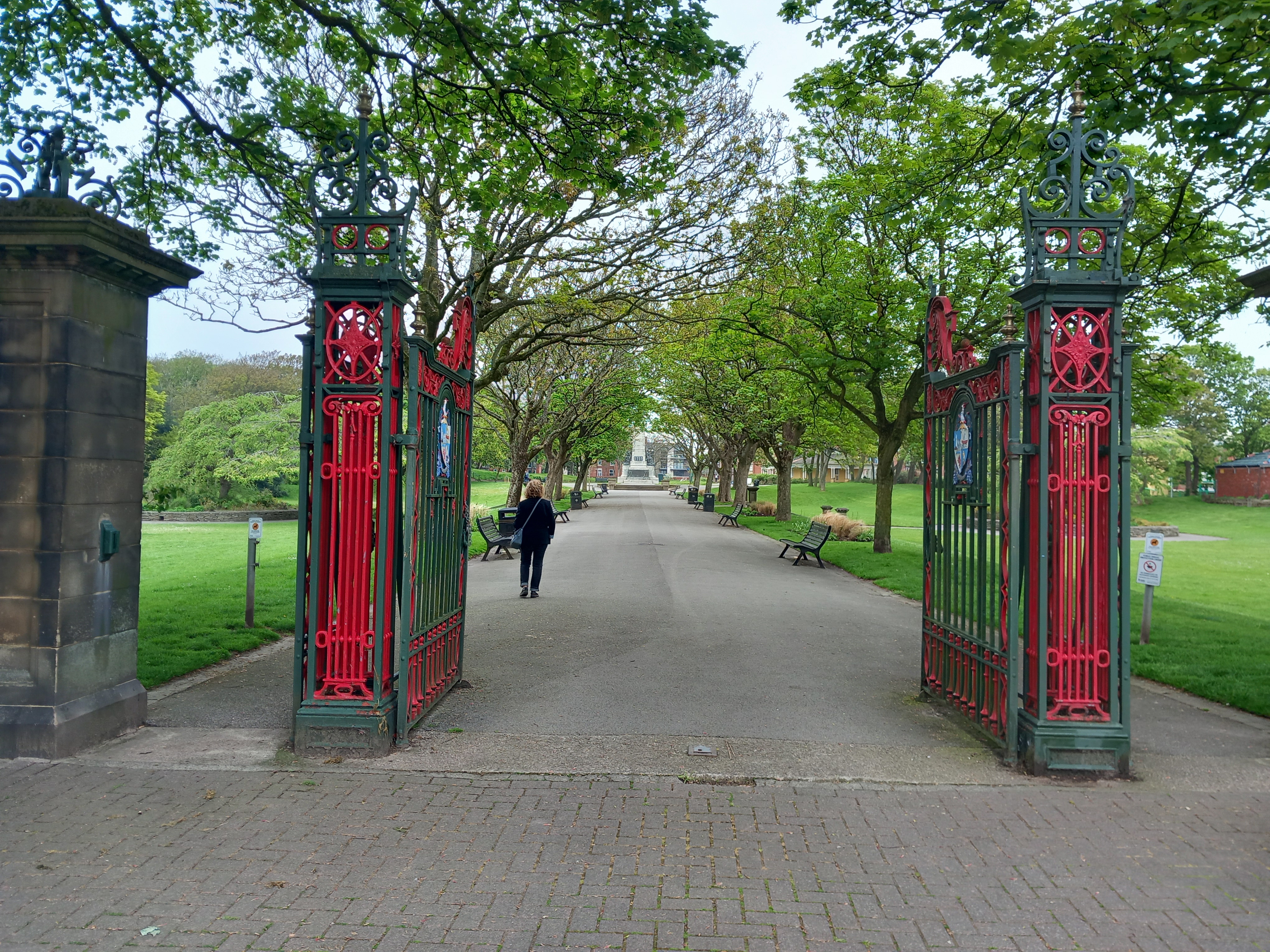
Edward Thomas, former Head Gardener at Southport Pavilion and Winter Gardens, was appointed to design and oversee the laying out of the plants. The gardens were given the name St George’s Gardens and initially consisted of traditional lawns, flowerbeds and avenues of trees. Vineries, greenhouses and ponds increased the variety of plants that could be grown. People were charged six pence to enter, but it rapidly became obvious that the company could not make a success of the space. In a bid to raise money, the gardens were leased to plant nurseries, but still not enough money was being made.
In desperation, the gardens were then offered to the council, with the threat by the Saint Annes on Sea Land & Building Company that if they did not accept, the company would build over the area with houses. Even this proposed solution seemed fraught with mistrust, as the company feared that the council would not spend sufficient money for their upkeep and could bring in amusements that would compete with their own ones on the pier.
When the council turned the offer down, the company leased the gardens to Oliver Porritt in 1896. He immediately ceased all maintenance of the park and instead started constructing houses in it. The built area became St George’s Square and was the first of four planned quadrants. If fully realised, the scheme would leave only a small amount of green space at the centre of the gardens. Fortunately, the full plan was not carried through.
By 1913, St George’s Gardens were in a poor state. A rustic bridge had collapsed, the vegetation was overgrown and the ponds had silted up. The Town Clerk Thomas Bradley and Councillor JH Taylor decided to take action. They got the council to agree to buy the gardens, and pay off Porritt and St Annes on Sea Land & Building Company. However, local residents of the town then began to agitate, worrying that their rates would be raised to pay for the purchase, as well as any subsequent improvement. A poll of the public was proposed, so that they could have their say.
Lord Ashton, a wealthy industrialist from Lancaster, was made aware of the problem. He had earned his fortune from his factories producing linoleum in Lancaster, and one of his residences was a bungalow in St Annes. On the eve of the poll, he offered to buy the gardens at a cost of £21,350 and donate them to the people of the town. When the deal was accepted, church bells rang out in celebration across St Annes. Lord Ashton sought to expand the gardens, buying the woodyard that lay between part of the gardens and Clifton Drive North, and also a strip of land to the east. (For more on Lord Ashton and his monument that still dominates the skyline of Lancaster, see our page here).
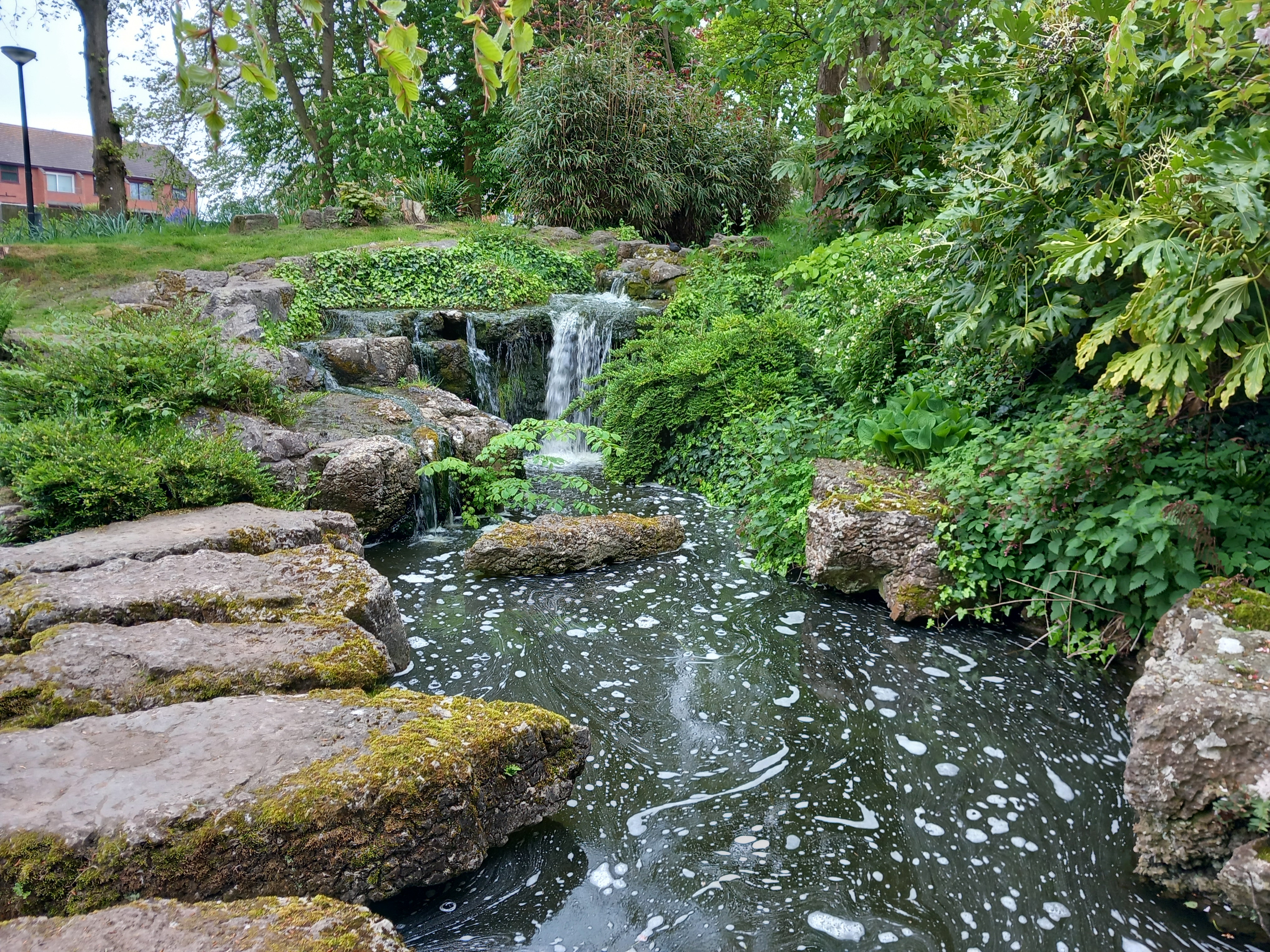
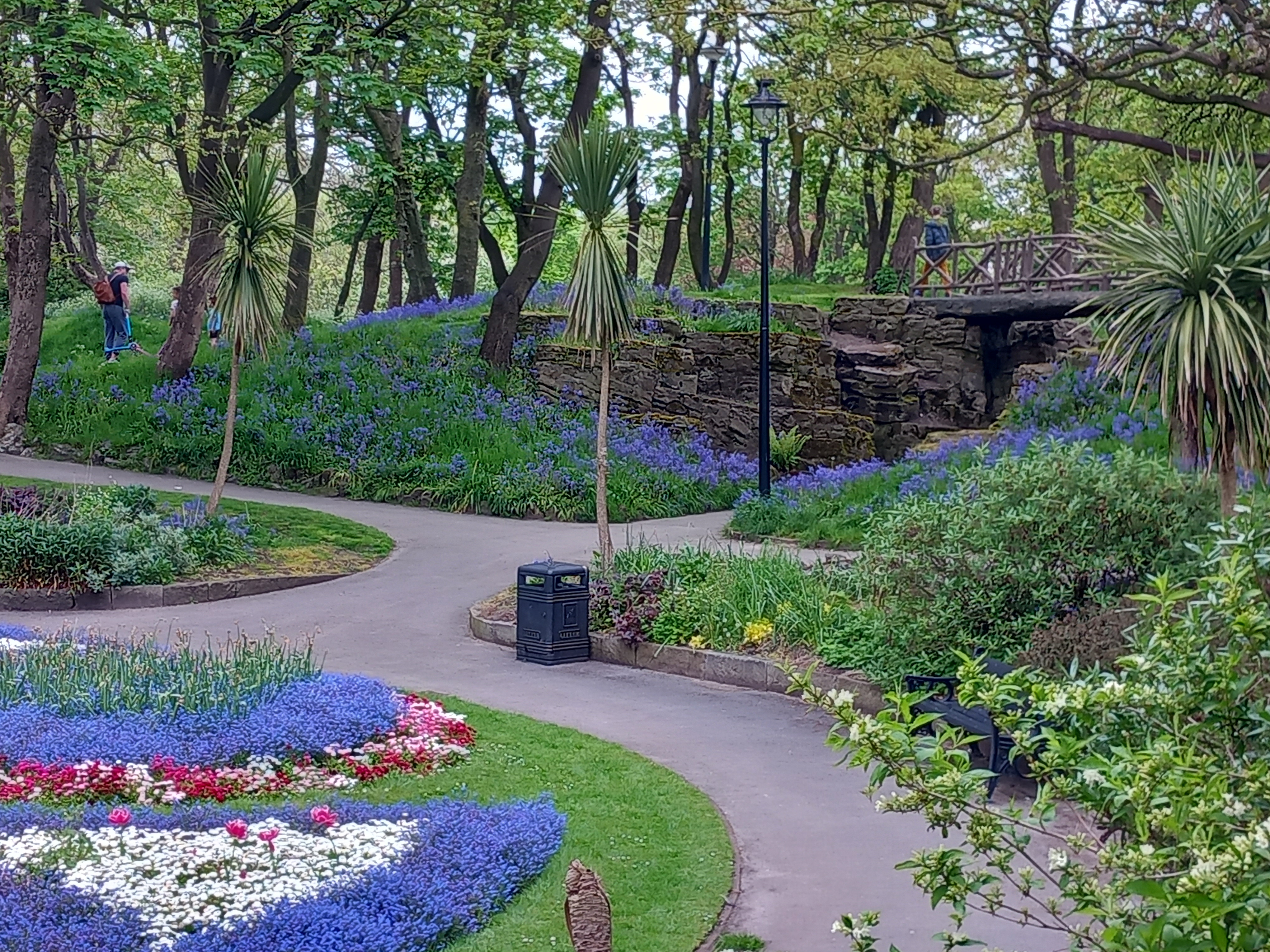
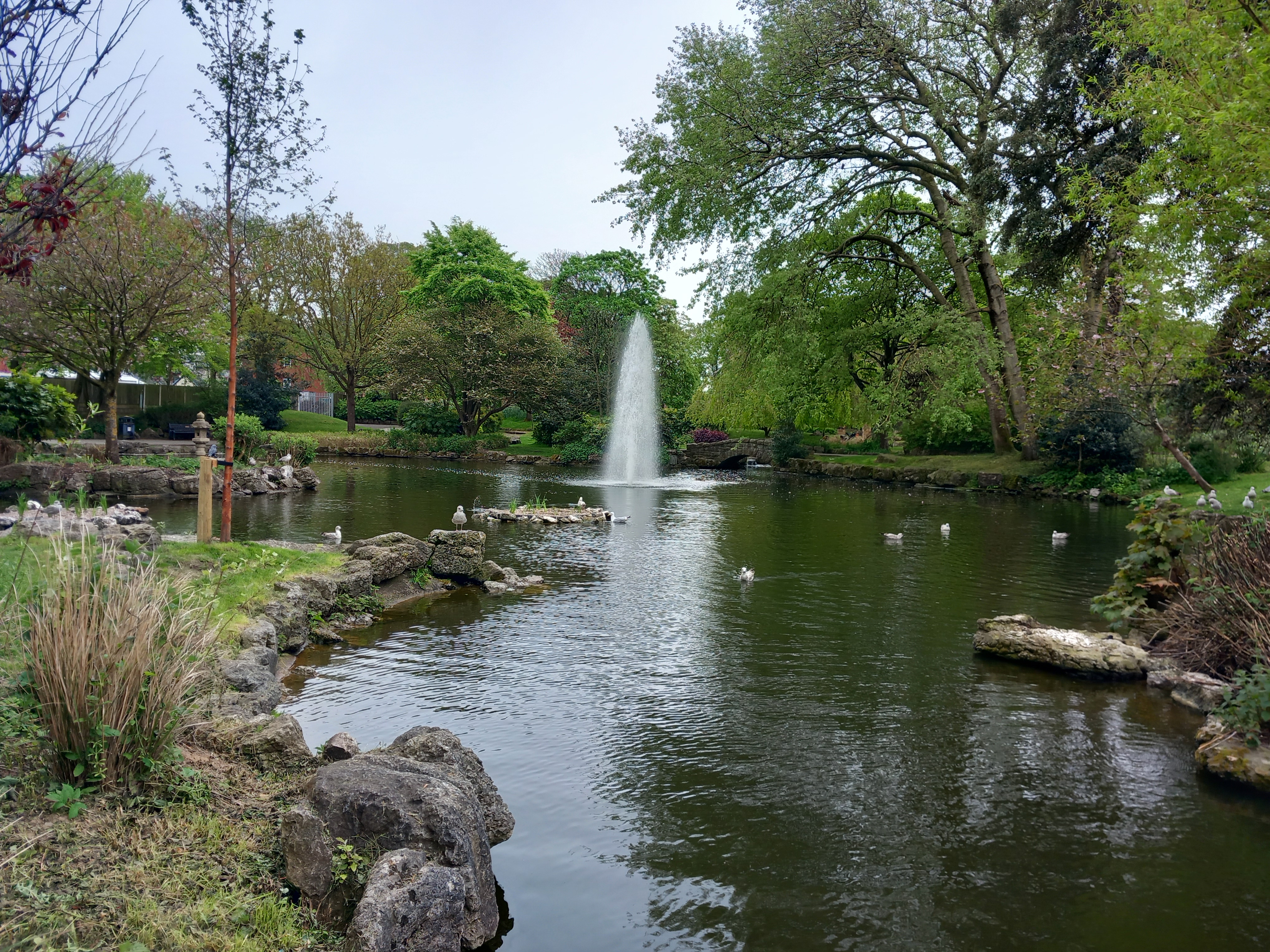
A further gift from him to the council of £10,000 meant that the gardens, now renamed Ashton Gardens in his honour, could be redesigned. The bid was put out to competitive tender. It was won by Fred Harrison, a resident of St Annes, whose firm was based in Manchester. Despite the outbreak of the First World War, work began in 1914 and concluded two years later. Pulham and Sons from London created a Rose Garden with some 6000 plants, and a Circular Garden. They remodelled the lake to produce a Rock and Water Garden which took more than 500 tons of limestone rock from Grange over Sands. A small waterfall and cascade was included in the design.
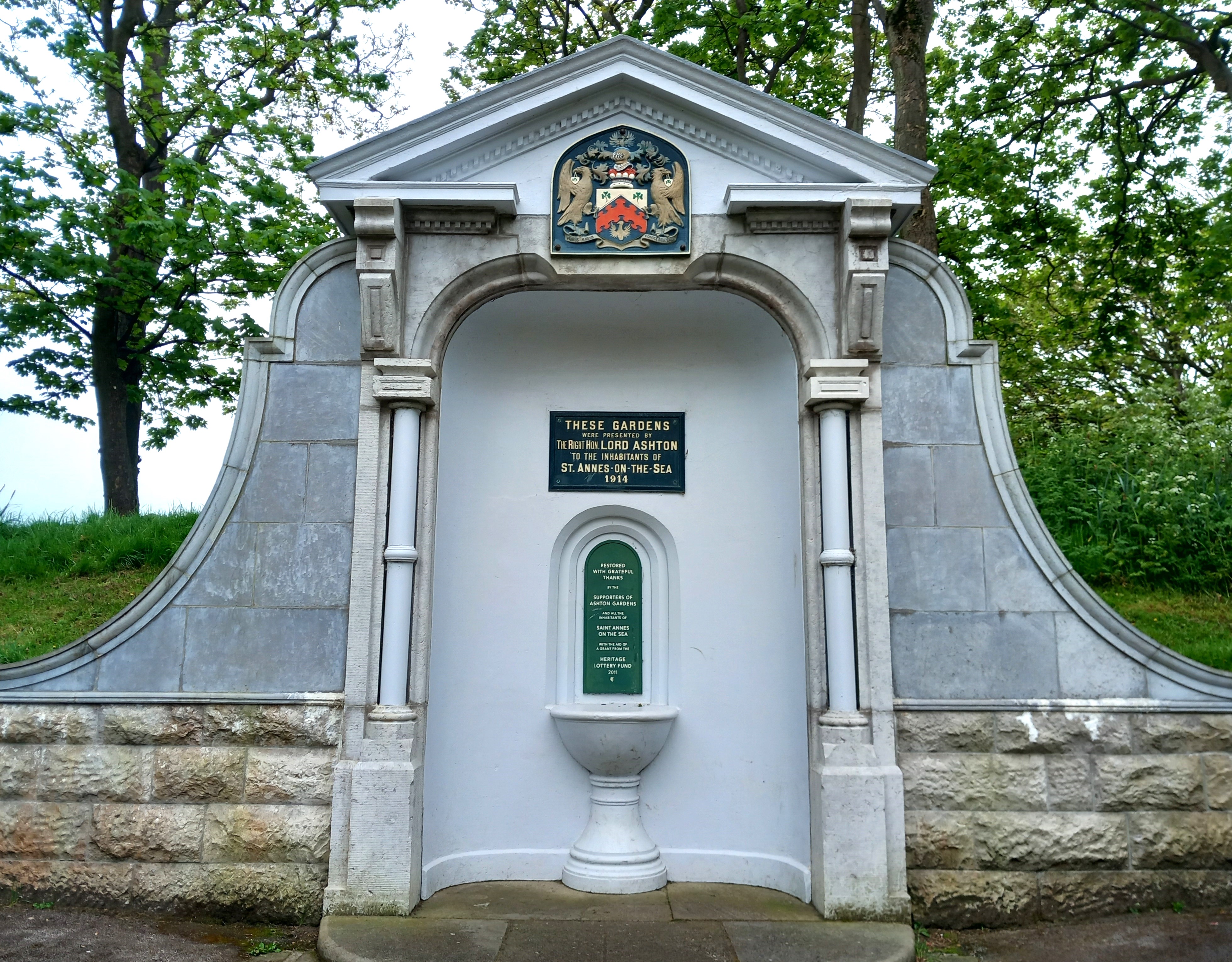
The Council Surveyor J Stanley Sawdon was engaged to do the building work. Under his plans the building known as the Ashton Institute was moved from its original position, had its roof extended and a veranda added. He also erected a small monument to Lord Ashton in the Rose Garden.
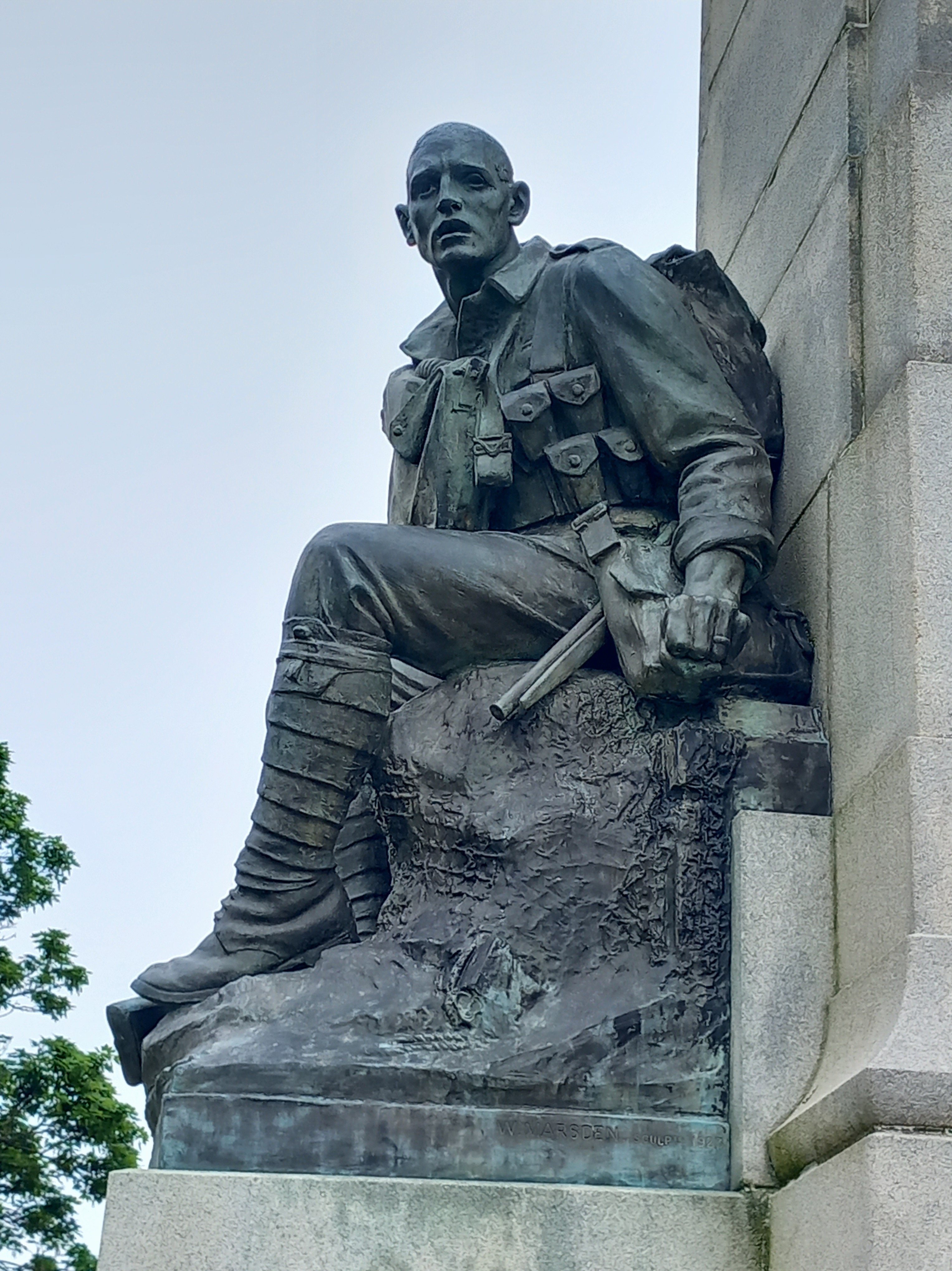
In 1924, a war memorial was added. This was designed by Scottish architect Thomas Smith Tait, a well known Art Deco architect. Walter Marsden, who had been awarded the Military Cross for his service in the First World War, designed and created the stunning bronze sculptures. These portrayed themes not normally seen on a memorial: a shell shocked soldier, a tableau of wounded and gassed men, a grieving widow, and women both on active service and at the home front. Its cost of £10,000 was once again met by Lord Ashton and a crowd of 150,000 was there for its unveiling.
Recent Threats
It would be thought that a Grade II listed historic park would be safe from development, but in 1998 it looked like a case of history repeating. Safeway supermarket put forward a plan that would turn a quarter of the park into a car park. In response, the Save Ashton Gardens campaign was set up. A petition gained 44,000 signatures, and a march was organised in which 1000 people took part. The council voted against the plan, but the vote was very tight. Safeway then put in another plan, smaller than the last, but this foundered when the supermarket was taken over by Morrisons.
A building company then applied to build a supermarket with apartments in the south east corner of the park. This was subsequently changed to a four storey apartment, for which planning permission was given. The campaigners brought in a specialist charity law barrister, and the argument was put forward that Lord Ashton’s donations had created a charitable trust and so gave the grounds protection. However, this would not prevent the council from selling sections of the gardens, provided they reinvested the profits in the remaining parts. In 2005, the building company was granted two separate planning permissions and the council sold the land under the Ashton Institute to the developer.
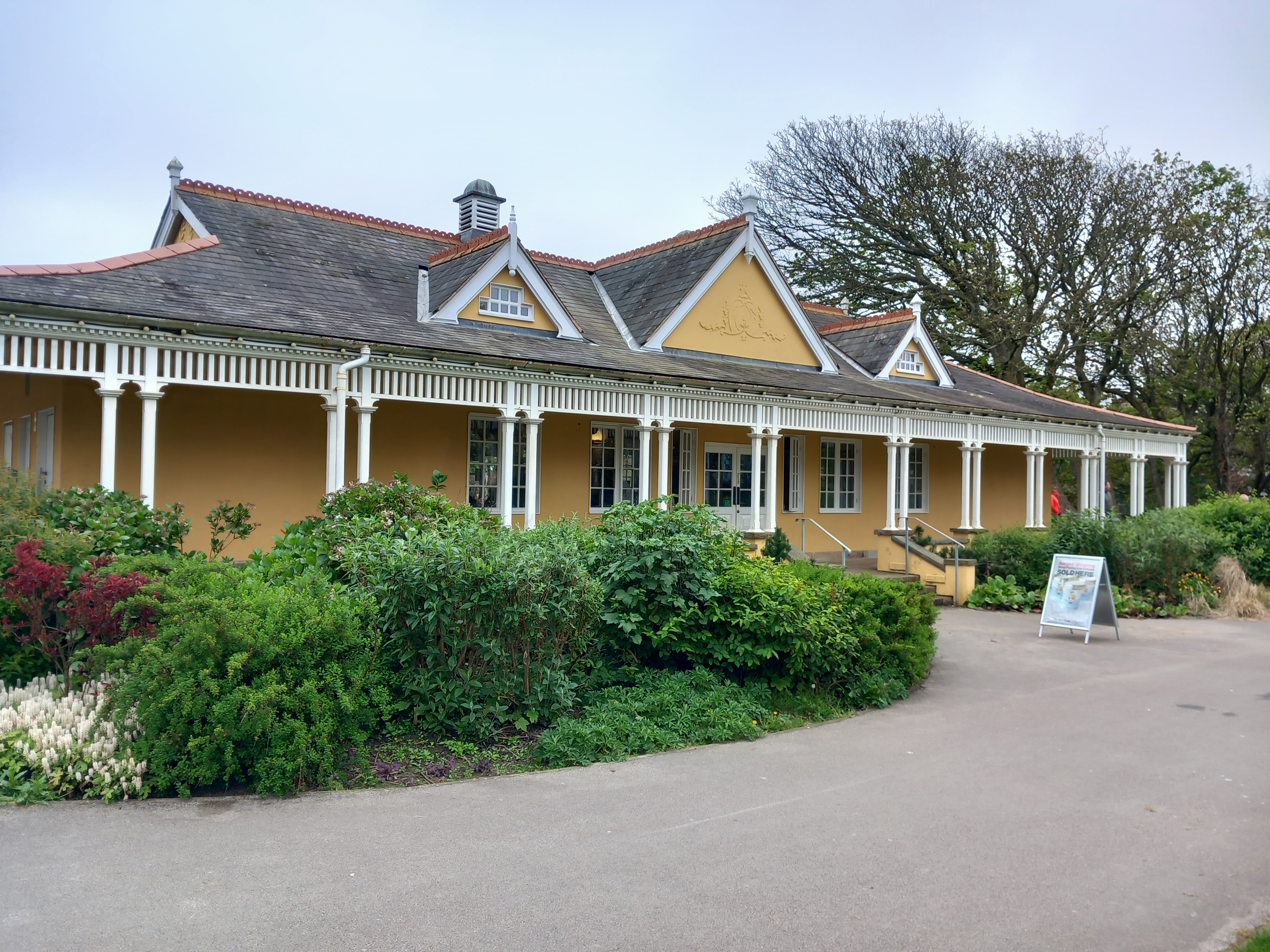
Donald Insall Associates were given the contract to restore the gardens as part of the Heritage Lottery Fund Parks for the People scheme. The Ashton Institute, which had been used most recently as a bowling club pavilion, had become dilapidated. It was demolished and a replica, known as The Pavilion, was built in a new location close to the entrance lodges on St George’s Road. It now serves as a cafe. The park’s original wrought iron gates were restored and railings were installed based on the original designs. The war memorial was also cleaned and repointed during this time.
In 2012, the Friends of Ashton Gardens received a grant from Heritage Lottery Fund to restore the Rose Garden’s Ashton Monument. This had been very badly damaged by weathering over the years. Frost damage on the brick work and water damage on the plaster work had taken their toll and the memorial was in poor condition.
Visiting Today
Many of the original features from Lord Ashton’s restoration are still in place. The Circular Garden and Rose Garden are both well tended. The painted metal rustic bridges still carry people over the lower paths. The lake has a working fountain fed by a cascade, the flow of which varies over the space of a few minutes. The war memorial is in excellent condition, and its intriguing sculptures can be inspected at close quarters. The Ashton Memorial remains well kept. In more recent years a Japanese style garden, complete with gravel and boulders, has been added. The replica Ashton Institute, known as the Pavilion, is open every day for food and continues to be very popular with visitors.
Site visited by A. and S. Bowden 2024
Access
Ashton Gardens are open every day during daylight hours.
The Pavilion serves food every day and is open for events on some evenings too.
Park at the North Promenade Car Park. There are entrances to Ashton Gardens on Clifton Drive North and on St George’s Road.
Nearby
References
ashtongardens.org.uk This website created by the Friends of Ashton Gardens has a wealth of detail about the history of the gardens
donaldinsallassociates.co.uk/projects/ashton-gardens/
historicengland.org.uk/listing/the-list/list-entry/1001377?section=official-list-entry
 Lancashire Past
Comments are closed.