In July of 1845, the River Improvement Committee for the Lune requested the construction of two new lighthouses on the Lancashire Coast. These would guide ships from the Irish Sea safely into the mouth of the River Lune, from where they could then head upstream to deposit their cargoes for Lancaster.
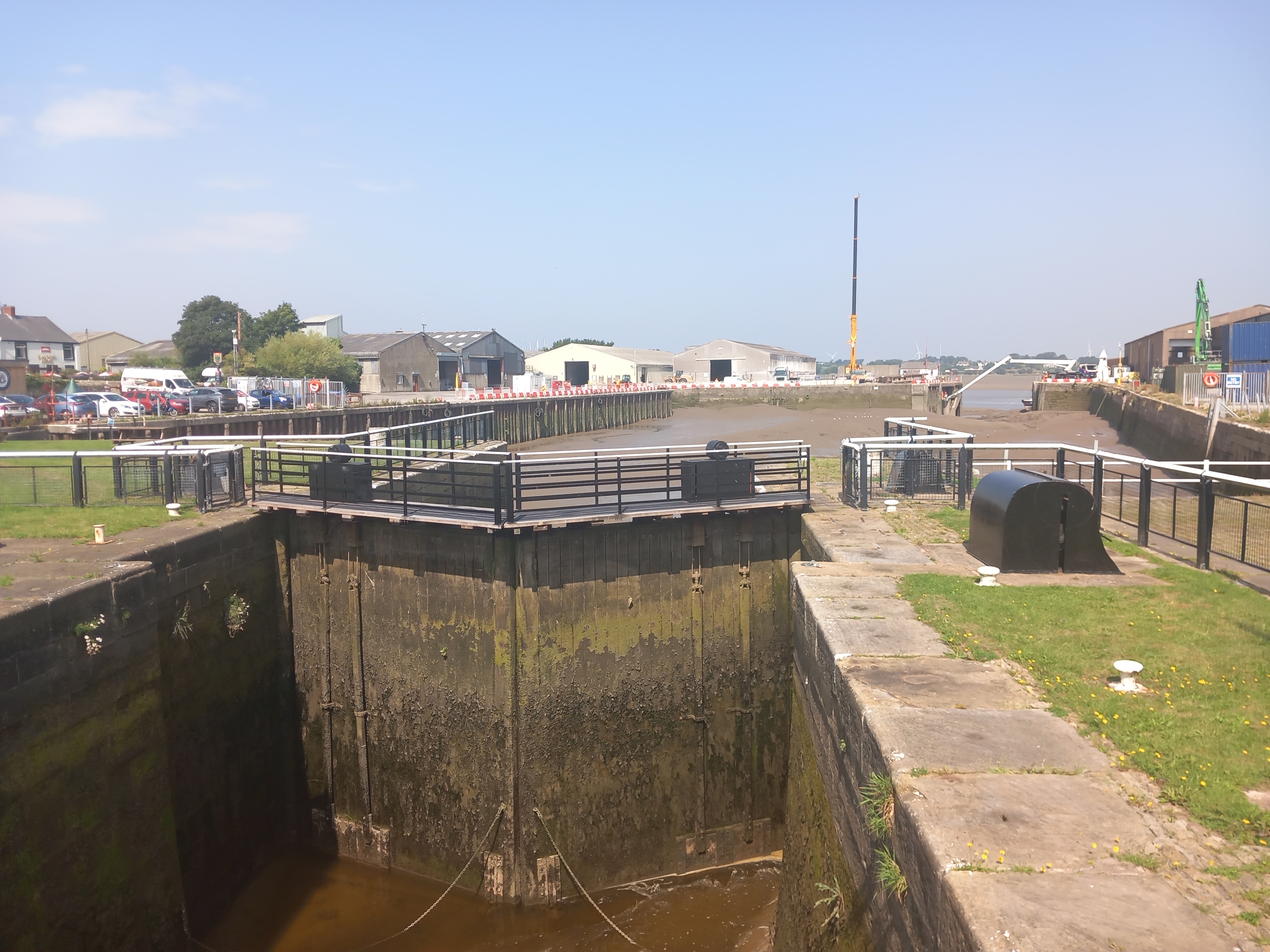
Money came from the Lancaster & Carlisle Railway Company. This was part of a compensation fund for their plan to build a rail bridge across the Lune, which would cut off shipping access to St George’s Quay at Lancaster. The money would be used to construct not only the lighthouses, but also to build a jetty for ships below the new bridge.
John B. Hartley of Liverpool drew up architectural plans for the two light houses. He had previously been commissioned to design Lynas Point lighthouse on Anglesey, which still stands today. A stone lighthouse would be raised on the rock shelf in the sea, and a wooden one on the shore close to the ruins of Cockerham Abbey. Charles Blades and James Hatch of Lancaster were engaged to do the building work.
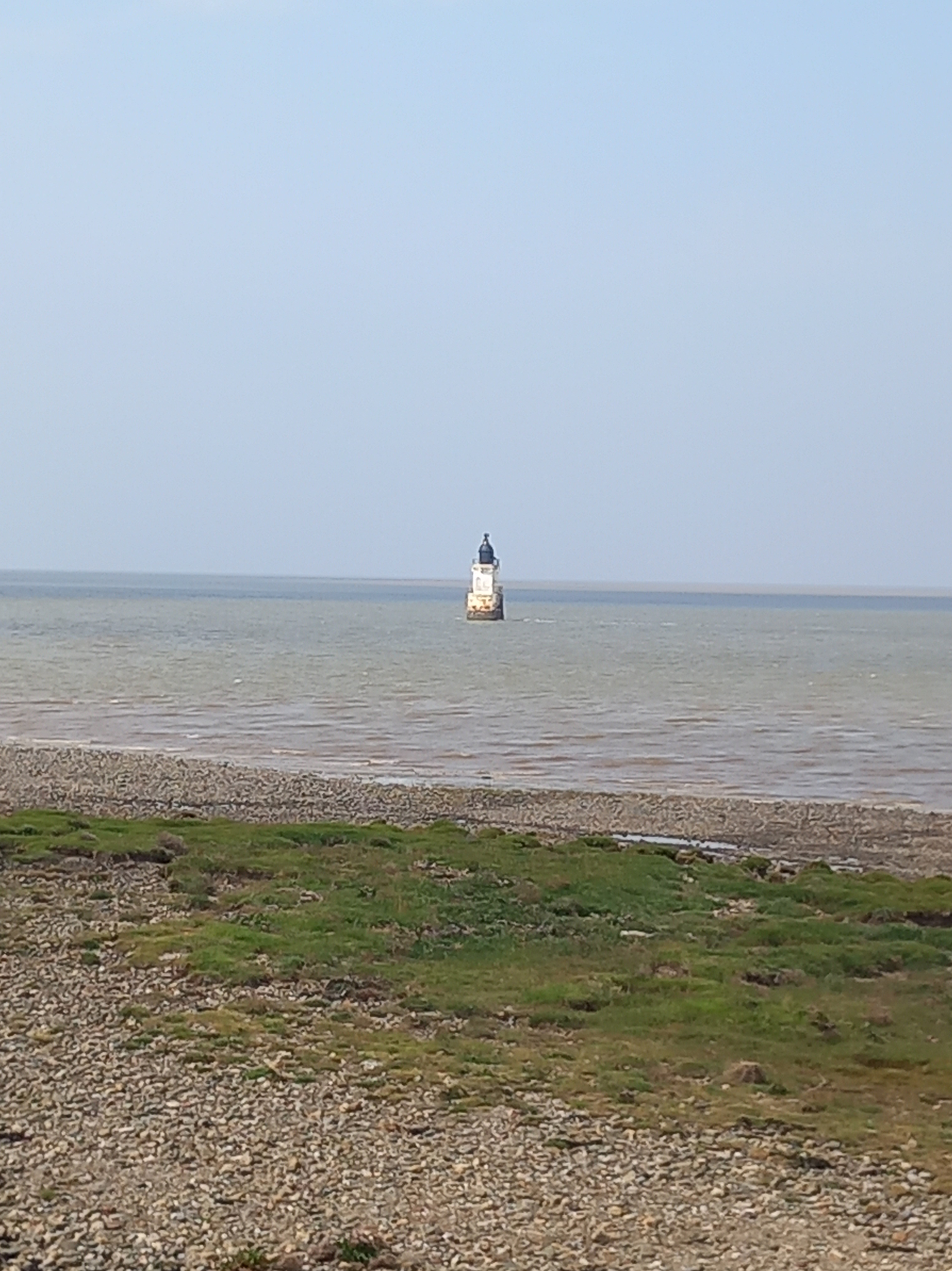
The stone lighthouse was named Plover Scar, and still stands at its original height of 17 metres. The keeper would access it only at low tide by crossing the beach and following a stone causeway. Once at the base, an iron ladder of 25 rungs was climbed to reach a balcony. From there, double doors led through to a circular keeper’s room, only two metres in diameter, with a small fireplace opposite the doorway. A ladder then led up to a trap door through which access was gained to the lantern room.
The lantern room contained two paraffin oil lamps, one of which was a spare. Each had a large reflector, and flat-wick burners. The lamps faced out to sea, but there was also a smaller lamp facing up river to warn approaching ships of the presence of the lighthouse.
The wooden lighthouse, known as Abbey Light, stood on the shore half a mile away from Plover Scar. This had eight sturdy beams reaching from the ground to the tower to support it, two on each side. It originally provided accommodation for the lighthouse keeper and his family in the base. Fifty steps led up to the lantern room, which had two paraffin oil lamps, and silver-mirrored reflectors.
Leading Lights
On January 24th 1848, the Tunnage Office Lancaster issued a notice about the new lighthouses. It stated “The Commissioners of St George’s Quay, Lancaster give notice that on 21st February next, two new lights will be exhibited for the guidance of vessels frequenting the port of Lancaster…Upper light exhibited from a wooden tower on Cockerham promontory. The lower lighthouse on Abbey Perch, stone tower, on rock called Plover Scar. The existing Abbey Perch beacon will be removed. Lights fixed and of natural colour”.
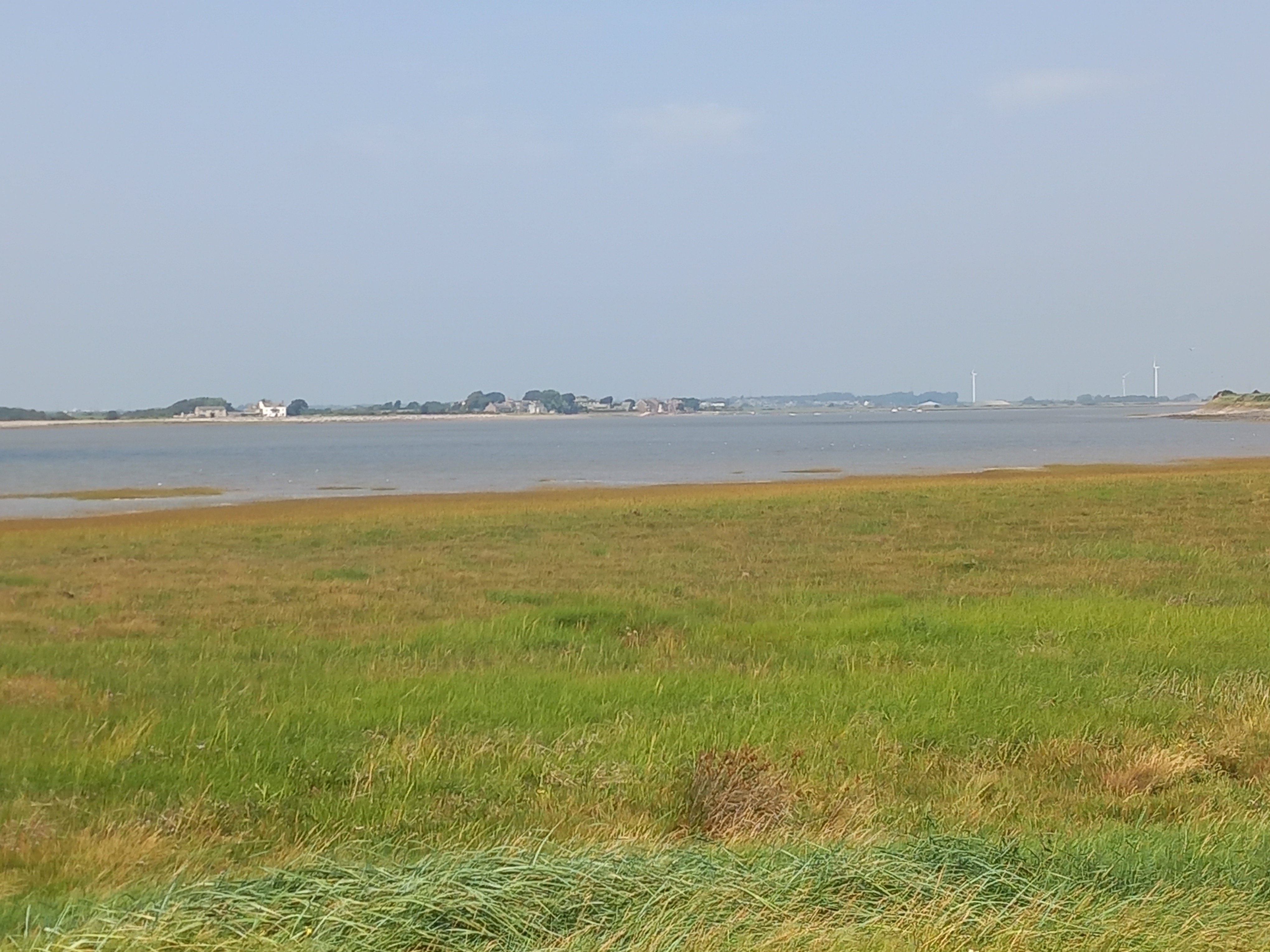
The idea behind having two separate lights was that they could give clear guidance to a safe route for vessels approaching the Lune. Sailors needed to position their ship so that they could see that both lights were lined up, one above the other, and that would indicate how to enter the river safely.
Both lighthouses needed to be visited twice a day for routine maintenance. In the mornings the lamps were turned off, and time was then taken to clean the reflectors and trim the wicks. The lamps needed three gallons of paraffin a week, so the reservoir for this would be regularly checked and topped up.
The Raby Family
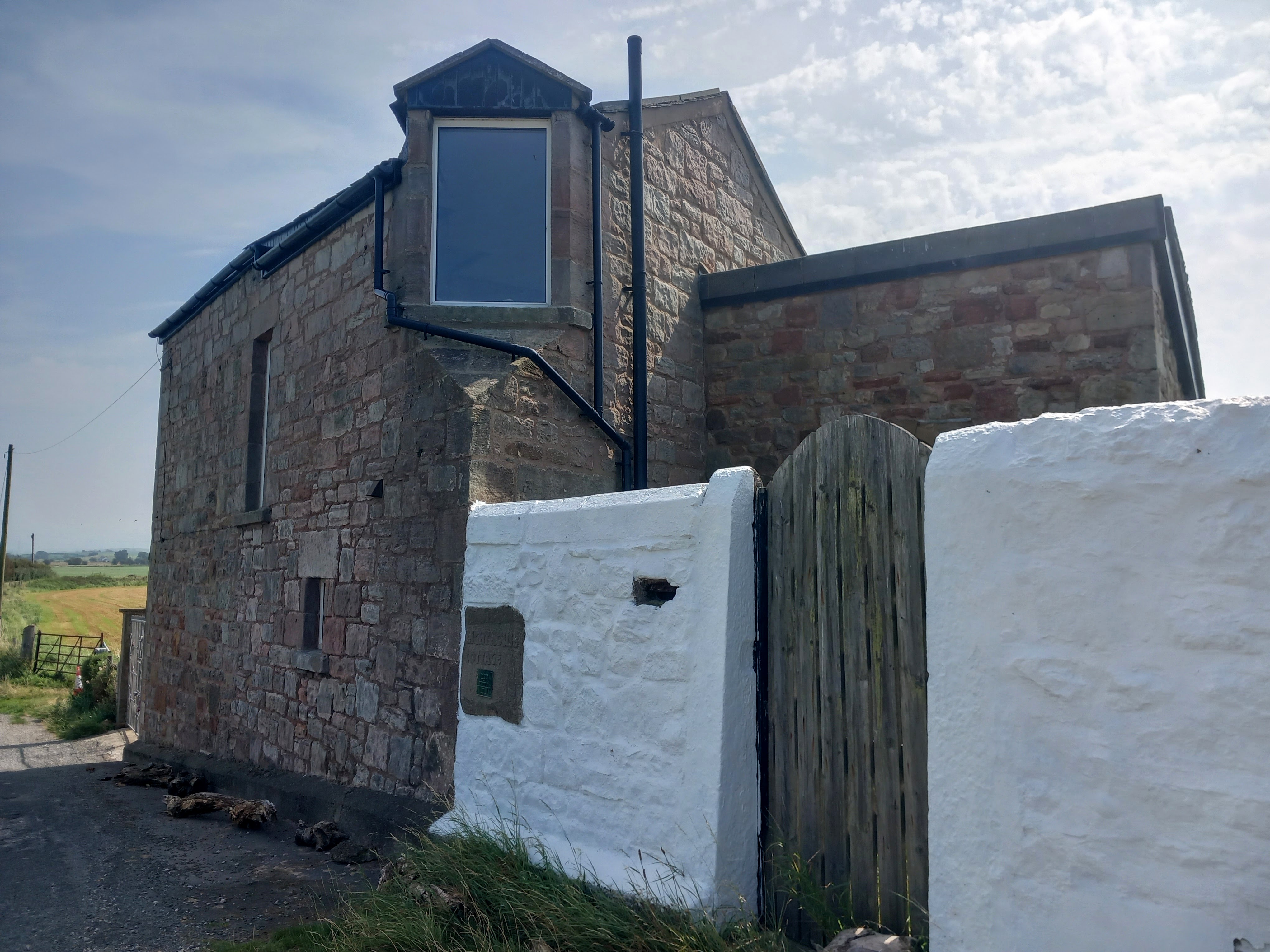
On the 5th October 1847, Frank Raby of Overton became the first keeper of both lighthouses. His family would go onto look after them for almost the next hundred years. After a few years, Frank was finding that accommodation in the base of the wooden lighthouse was insufficient, and so had built the lightkeeper’s cottage that still stands.
Very soon after construction of Plover Scar was completed, it was noted there was a problem with the stonework. Cracks could be seen in the lower half of the structure. It’s unclear if there was put in place an immediate remedy, but records show that, in 1884, a plan was drawn up to use iron straps to reinforce the stonework. Snape Simpson & Co of Phoenix foundry in Lancaster did the work for this.
In the early years of the Second World War, the lights were only turned on when vessels were entering or exiting the Lune. This would be to prevent them being used by enemy fighters to determine their location. The harbour master at Glasson Dock would have had to visit the cottage to tell the keepers when to illuminate the lamps. At that time, brother and sister Dick and Janet Raby were the lighthouse keepers.
The Parkinson Family
After the war was over, Thomas Parkinson was appointed keeper. His wife Beatrice would also take on duties to tend the lights, as did their son Robert. Living conditions were still pretty basic for the family. Water could be gained from a pump by the sink in the kitchen, but this often was tainted by salt. The only source of truly fresh water was from rain which the family collected in a tank. The cottage had no mains electricity until 1963, so for their early years a paraffin lamp was used to illuminate the kitchen, and candles in the rest of the house.
Thomas supplemented his income by salmon fishing, using a ‘heave’ or ‘haaf’ net to catch the fish. In his absence Beatrice would then be in daily charge of the lights, undergoing the duty of cleaning the reflectors, trimming the wicks, and checking the fuel levels. Robert too would take his turn if the tides were right. Both before and after school he would walk out to Plover Scar, sometimes carrying two gallons of paraffin on his back. A short film of Beatrice doing the work in both the lighthouses can be seen on YouTube here.
In 1951, a new lighting system for Plover Scar was installed. The paraffin lamps were taken out and replaced by acetylene gas ones. This now became a flashing light. The Parkinsons had only to go once a month to check the equipment, and the Port Commissioners changed the gas cylinders every six month.
Two years later, the light of the wooden light house was switched off, as a steel tower with an electric beacon was erected to do its job. This had two 12 Volt 12 watt bulbs, one of which was a standby. It was not automatic, but was turned on and off from a switch from the lighthouse cottage. The wooden light house was demolished the next year.
All changed in the early 1960s. In May 1963, Thomas and Beatrice retired and moved out of the keeper’s cottage. The electric beacon by the house was removed, and Plover Scar Lighthouse stood alone.
Disaster struck in March 2016 when a merchant ship on its way to Glasson Dock hit the lighthouse. The collision meant that the upper course of stone had been significantly shifted and the metal reinforcement hoops around the stone work were broken. While there were some voices suggesting it should be completely demolished, the port authorities were clear- it must remain. R G Parkins were commissioned to work out how to do the extensive repairs required. The upper part of the building had to be dismantled, and its blocks were lain out on the beach. The lantern house was renovated, and the whole edifice rebuilt. Plover Scar Lighthouse once again stands proud.
Site visited by A. Bowden 2025. Thanks to Jon and Alan for accompanying me on this visit.
Access
There is a small parking area at Lighthouse Cottage Car Park, off Slack Lane. Alternatively, park at Glasson Dock and head for the coastal path. Proceed southwards towards the ruins of Cockersand Abbey.
Cockerham Lost Augustinian Priory
References
wyrearchaeology.org.uk/index.php/resources/pilling-historical-society?view=article&id=690
sunderlandpoint.net/blog/2-7kj8t
redrosecollections.lancashire.gov.uk/view-item?i=238277&WINID=1759515284984
lep.co.uk/news/ray-of-hope-for-the-historic-plover-scar-lighthouse-655471
rgparkins.com/projects/plover-scar-lighthouse/
 Lancashire Past
Comments are closed.